When a Colombian Emerald Breaks: What Does the Fracture Tell Us About the Stone?
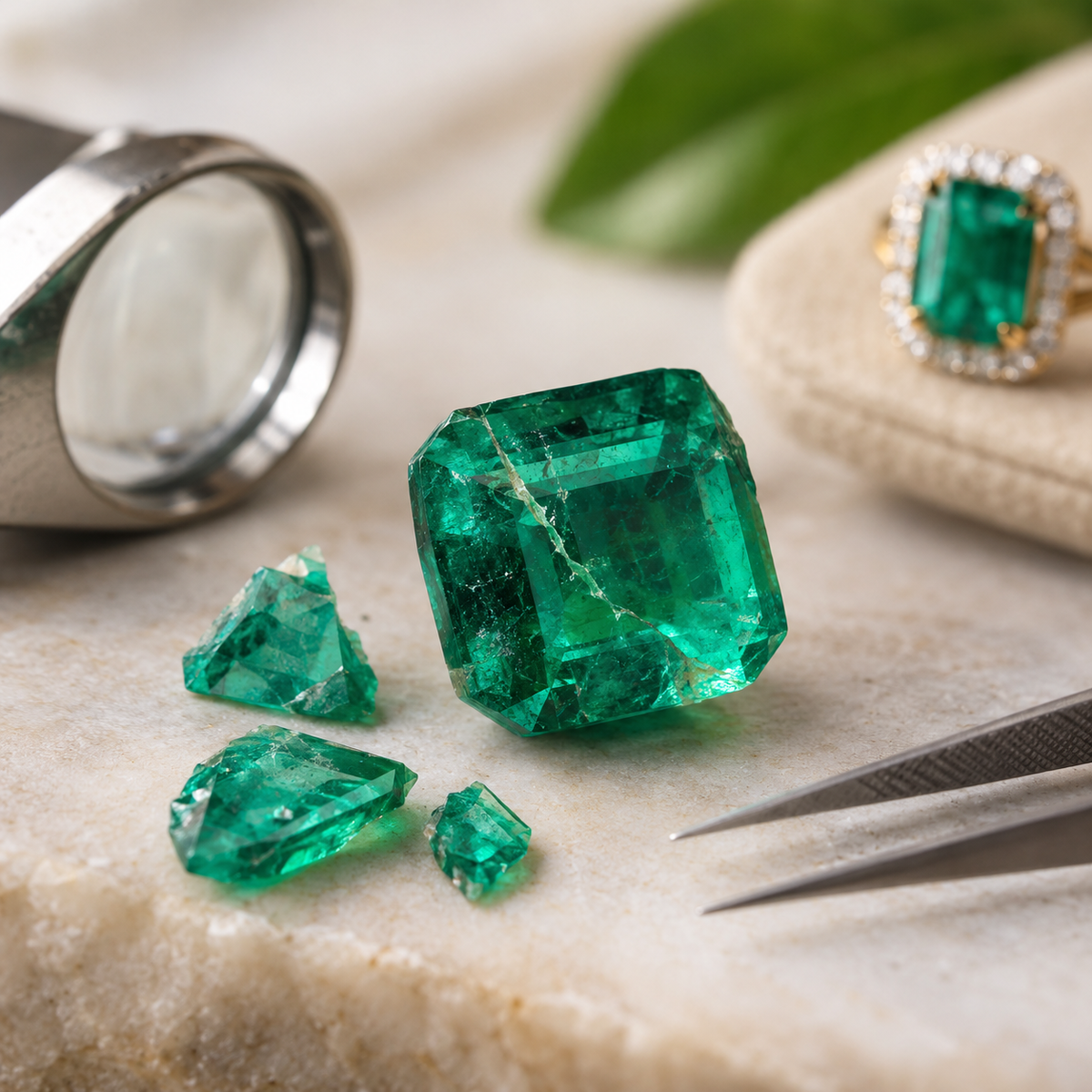
Like other gemstones, Colombian emeralds are not immune to damage. A fall, a blow, or improper pressure can cause a fracture and may even cause a piece of the stone to break off.
But did you know that a fracture can provide information about an emerald's characteristics? Although it cannot reveal the gemstone's entire history on its own, examining where the fracture appears, how it extends, and what it looks like can help us better understand the stone's structure and the conditions that may cause damage.
Why Can a Colombian Emerald Break?
Although emeralds belong to the beryl family and have a hardness of 7.5 to 8 on the Mohs scale, this does not mean they can withstand every type of impact.
Hardness primarily measures a mineral's resistance to scratching, while toughness refers to its ability to withstand impacts and stress without breaking. An emerald can be difficult to scratch and still fracture if it receives an impact in the wrong place.
Several factors can contribute to a fracture:
-
Natural inclusions: A gemstone's internal characteristics can influence its durability, particularly when pre-existing fissures or fractures are present.
-
Accidental impacts: Dropping an emerald onto a hard surface can cause damage, even when the stone is set in a piece of jewelry.
-
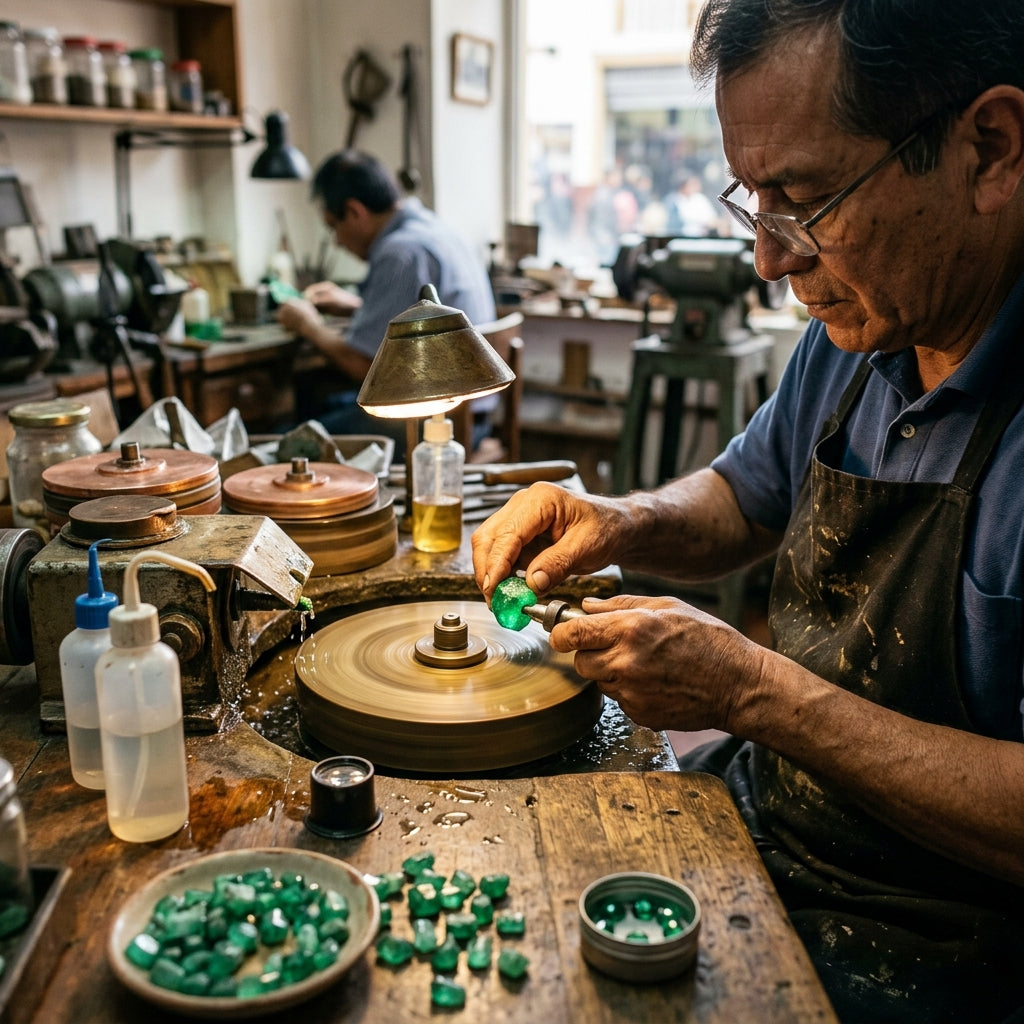
Pressure during cutting: Transforming a rough emerald into a faceted gemstone requires experience, as excessive pressure can cause fractures.
-
Internal stresses: Certain structural characteristics of the stone may make specific areas more vulnerable.
For this reason, every emerald should be evaluated individually. Not all natural stones have the same durability or respond to impacts in the same way.
What Can an Emerald's Fracture Reveal?
A fracture can provide important clues about a gemstone's structure, although interpreting these signs requires care.
1. The Presence of Internal Features
Colombian emeralds can display inclusions popularly known as jardins, the French word for gardens. These may consist of different minerals, fluids, and other natural features trapped inside the crystal as it grew.
In some cases, a fracture may cross an inclusion or appear near a pre-existing fissure. This relationship can help a gemologist better understand the stone's internal structure.
However, not all inclusions weaken an emerald in the same way, and their presence does not necessarily mean the gemstone will break.
2. The Stone's Most Vulnerable Areas
The location of a fracture is also important. If it appears near a corner, an edge, or a thin area of the cut, it may be related to an impact or localized pressure.
This is particularly relevant for faceted emeralds, as certain shapes, such as the emerald cut, have corners that require protection and an appropriate setting.
For this reason, jewelry designs may incorporate settings that help protect the gemstone's most exposed areas.
3. Possible Previous Damage
Sometimes, a fracture may indicate that the stone already had a fissure before experiencing another impact. However, distinguishing a pre-existing feature from a recent fracture is not always straightforward.
A specialist can examine the surface, the continuity of the fracture, and other internal characteristics to determine what conclusions can be drawn from the evidence.
It is important to remember that the appearance of a fracture alone cannot establish with certainty when it occurred or what caused it.
Does a Fractured Emerald Lose Its Value?
An emerald with a fracture may experience a decrease in value, but the impact depends on the stone's specific characteristics and the severity of the damage.
To assess the effect on its value, several factors must be considered:
-
Size and depth: A superficial fracture does not have the same consequences as one that extends through a large portion of the gemstone.
-
Location: The damage may have a greater or lesser effect on the stone's appearance, structural integrity, and potential for recutting.
-
Color and transparency: If the fracture changes how these characteristics are perceived, it may influence the gemstone's evaluation.
-
Stability: A fissure that could spread presents an additional risk during handling or setting.
-
Repair options: Under certain circumstances, the stone may require recutting or specialized treatment.
Can a Broken Colombian Emerald Be Repaired?
The answer depends on the type of damage. If the fracture is small and does not significantly compromise the gemstone's structure, a specialist can assess whether it is possible to preserve the stone as it is or whether an intervention is necessary. In other cases, the gemstone may need to be recut to remove the damaged area, provided its dimensions allow for it.
When an emerald has split into two or more fragments, the possibilities for recovery depend on its size, the shape of the break, and the desired outcome.
There are also gemological treatments that can improve the appearance of certain fractures or fissures by filling internal spaces with specific substances. However, these treatments do not restore the stone's original strength and must be properly evaluated and disclosed.
If an emerald breaks, it is best to avoid applying adhesives, refrain from putting pressure on the damaged area, and keep all the fragments. A gemologist or experienced gem cutter can determine which options are available.
How to Care for a Colombian Emerald to Help Prevent Fractures
Emeralds are gemstones that deserve special care. By following a few simple precautions, you can reduce the risk of damage:
-
Avoid impacts: Remove your rings and bracelets before engaging in activities that could expose them to knocks or impacts.
-
Store each piece of jewelry separately: This reduces the risk of contact with other pieces that could scratch or strike the gemstone.
-
Clean it carefully: Use lukewarm water, mild soap, and a soft-bristled brush when appropriate for the piece. Avoid ultrasonic and steam cleaners, especially if the gemstone has fissures or has undergone fracture-filling treatments.
-
Check the setting: A jeweler can verify that the stone is secure and look for signs of wear or damage.
-
Seek professional advice before attempting repairs: If you notice a new fissure or a small fragment that has broken off, avoid handling the damaged area and seek a professional assessment.
A Fracture Reminds Us That Every Emerald Is Different
A fracture can provide information about a gemstone's structure, but it cannot tell its entire story on its own. To interpret it correctly, the stone must be examined as a whole, distinguishing between its natural characteristics and any damage it may have sustained.
At Emerald By Love, we believe that understanding an emerald goes beyond appreciating its green color. Learning about its origin, characteristics, and care requirements helps you make more informed decisions when choosing a piece of jewelry.
Because every Colombian emerald has its own characteristics, understanding them is part of learning to appreciate what makes each gemstone special.
Paula Bonilla
Social Communicator and Journalist, Sergio Arboleda University, Colombia