Why Aren’t Colombian Emeralds Perfectly Transparent?
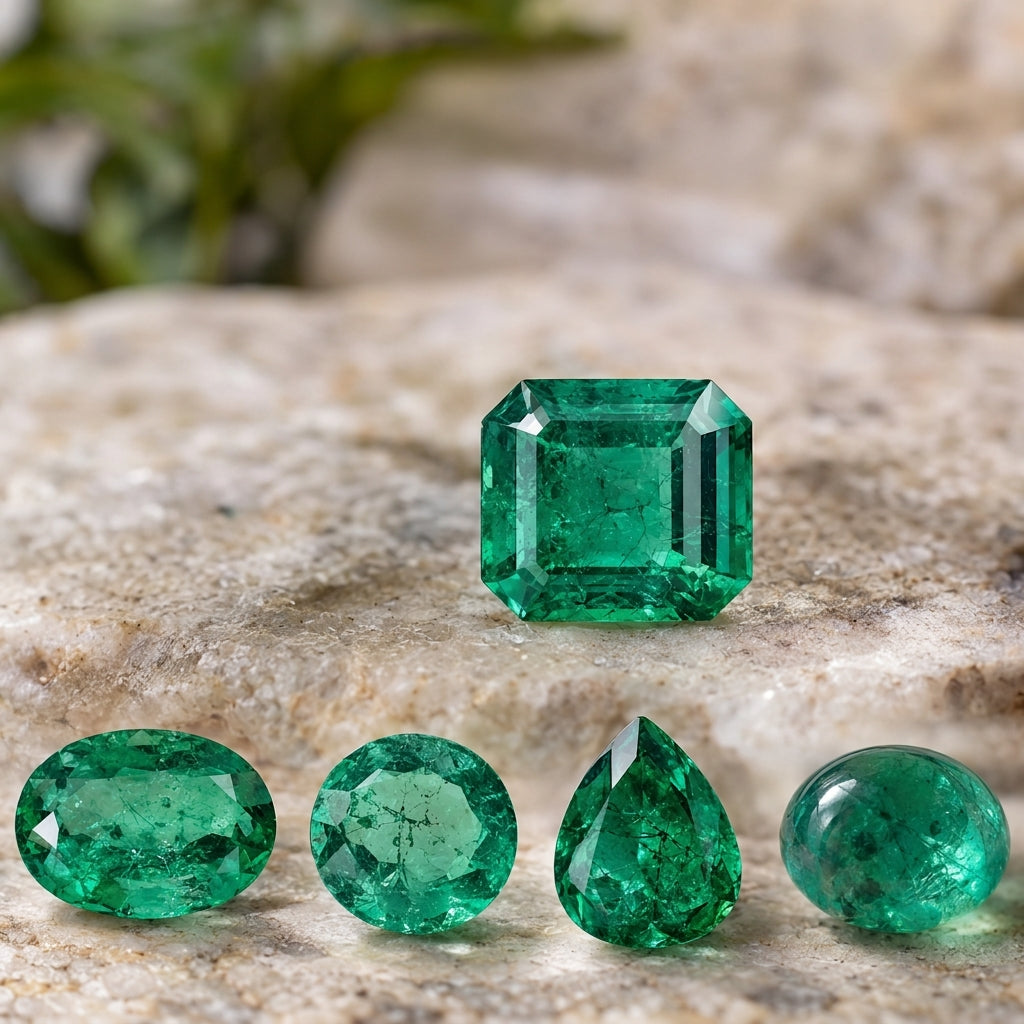
If you have ever seen a natural Colombian emerald, you may have noticed that it is not perfectly clear. When you look closely, you might find tiny lines, cloudy areas, or internal patterns that prevent the gemstone from being completely transparent.
These characteristics can raise many questions: Why do they appear? Do they mean the emerald has a flaw? Is a more transparent gemstone always better?
The answer lies in nature and the way these precious gemstones form. Understanding this process allows us to appreciate them more and make informed purchasing decisions.
The Natural Formation of Colombian Emeralds
Emeralds form through geological processes that take place over thousands or even millions of years. In Colombian emerald deposits, geological conditions allow certain elements to come together and form these green crystals.
During their formation, emeralds can incorporate tiny mineral particles, liquids, and gases, as well as develop internal fractures. These characteristics become trapped within their structure and may remain there even after the gemstone is extracted, cut, and polished.
That is why not all emeralds have the same level of transparency. Each crystal has its own geological history, which influences its final appearance.
What Are an Emerald’s Gardens?
If you have ever looked closely at an emerald, you may have noticed tiny branches, lines, or patterns that resemble leaves, roots, or miniature gardens inside the stone.
In gemology, these characteristics are known as inclusions, and the term garden is commonly used to describe their appearance within an emerald.
Inclusions may consist of mineral crystals, liquids, gases, or combinations of these elements. Small fractures may also be visible, affecting the way light travels through the gemstone.
In Colombian emeralds, certain inclusions can provide valuable information about the conditions under which the crystal formed. Specialists examine these characteristics using magnification tools to help identify the gemstone and assess its possible origin.
However, it is important to remember that not all inclusions are the same or have the same effect on a gemstone’s appearance.
Do Inclusions Affect an Emerald’s Transparency?
Yes. Inclusions and fractures can change the way light travels through an emerald, causing certain areas to appear lighter, hazier, or more opaque.
For example, a gemstone with few visible inclusions and a relatively clean internal structure may allow light to pass through more easily. In contrast, an emerald with numerous inclusions or fractures that interfere with the passage of light may have lower transparency.
But here is something important to understand: transparency and color are two different characteristics.
An emerald may have an intense green color and moderate transparency, while another may be more transparent but display a lighter shade of green. Both characteristics should be evaluated separately, along with other factors such as cut, size, and the gemstone’s overall quality.
The presence of inclusions does not automatically mean that an emerald is of poor quality. What matters is their type, quantity, location, and effect on the stone’s appearance.
Is a More Transparent Emerald Always Better?
Not necessarily, although transparency is an important factor when evaluating an emerald. Gemstones with high transparency and few visible inclusions are uncommon, and this characteristic can positively influence their value. However, it is not the only factor that determines an emerald’s quality.
It is also important to examine the intensity and distribution of its color, the quality of its cut, any fractures, and the gemstone’s overall condition.
Imagine two Colombian emeralds: one has a deep green color and visible inclusions, while the other is more transparent but has a less intense color. Which one is better?
There is no automatic answer. The choice depends on the characteristics of each gemstone and the preferences of the person buying it.
That is why, when evaluating an emerald, it is worth looking beyond transparency and understanding the combination of qualities that makes each stone special.
Can Inclusions Help Identify a Colombian Emerald?
Inclusions can provide important clues about an emerald’s geographic origin. Certain internal characteristics are more common in specific deposits and can help gemologists investigate where a gemstone may have formed.
For example, certain inclusions of minerals such as parisite may indicate Colombian origin. Likewise, multiphase inclusions containing combinations of liquid, gas, and tiny crystals are well-known characteristics of many natural Colombian emeralds.
However, no single visible inclusion can, on its own, guarantee that a gemstone is Colombian. Determining its origin requires an appropriate gemological evaluation and, when necessary, specialized testing.
It is important to remember that a photograph or a visual inspection alone is not enough to confirm an emerald’s authenticity, origin, or treatments.
An Emerald’s Beauty Also Lies in Its Natural Character
A Colombian emerald does not need to be perfectly transparent to be appealing. Its green hues, internal characteristics, and the way light interacts with the crystal all contribute to its individual appearance.
Gardens and inclusions remind us that we are looking at a gemstone formed through complex natural processes, rather than an object manufactured to have identical features throughout.
This does not mean that all inclusions are desirable or that transparency is unimportant. Every emerald should be evaluated individually to understand its qualities, limitations, and value.
At Emerald By Love, we appreciate the distinctive characteristics of natural Colombian emeralds and believe that understanding them helps people make more informed purchasing decisions. Because before becoming a piece of jewelry, every emerald has a story worth understanding.
Paula Bonilla
Social Communicator and Journalist, Sergio Arboleda University, Colombia