Emerald Cutter: The Most Important Craft in Colombian Emeralds
Before an emerald becomes a piece of jewelry, it goes through a process in which one person's experience, patience, and knowledge can make a significant difference: the work of the gemstone cutter.
But did you know that an emerald's appearance can change completely depending on how it is cut? A rough stone may have extraordinary color and interesting internal characteristics, but it takes skilled hands to bring out much of its beauty.
In the world of Colombian emeralds, the cutter plays a fundamental role. Their job is not simply to shape a stone, but to study its characteristics, understand its potential, and make decisions that can influence its appearance, brilliance, and market value.
Join us as we learn about this craft and understand why it is so important to transform a rough emerald into a gemstone ready to become part of a piece of jewelry.
What Does an Emerald Cutter Do?
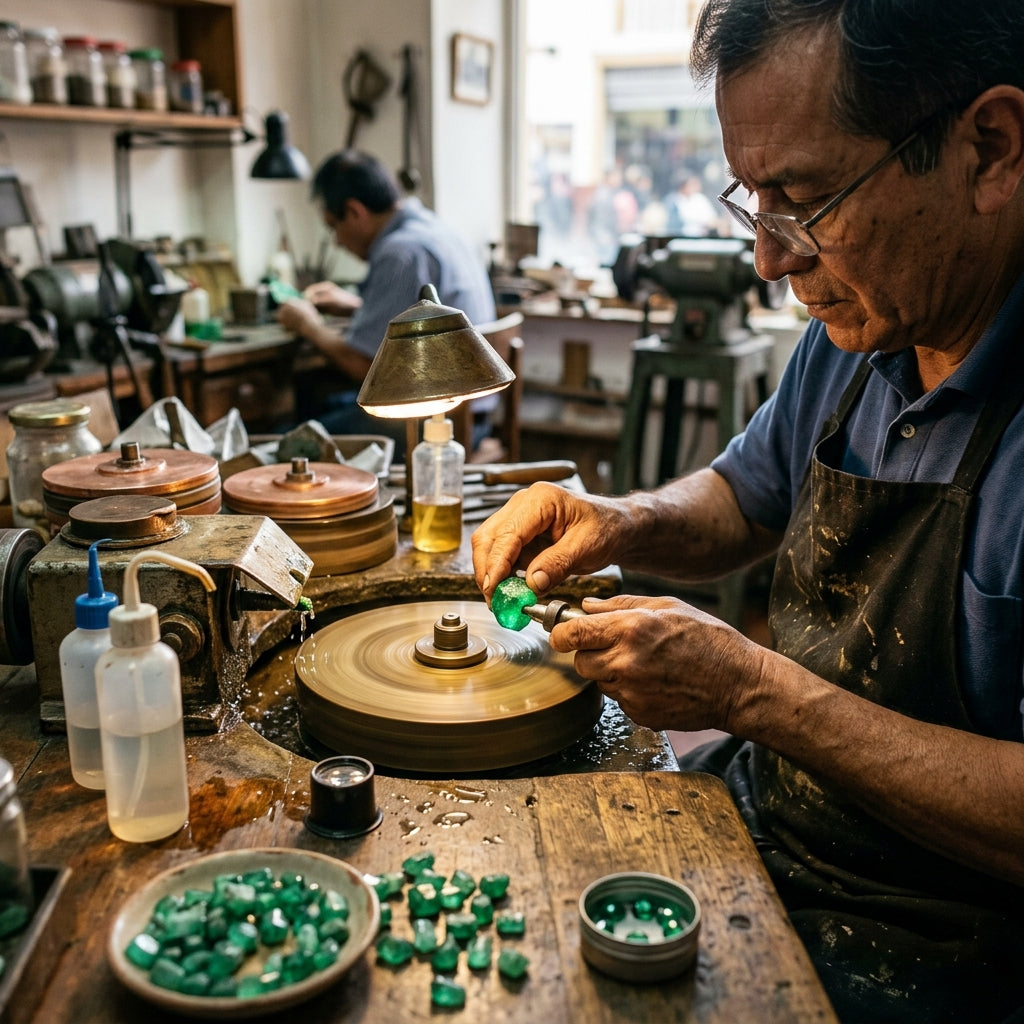
An emerald cutter is a specialist who transforms a rough stone into a gemstone with a specific shape. To do this, they must carefully examine the material, study its characteristics, and determine how to work with it to make the most of its best qualities.
Although the process may seem simple when we look at a finished emerald, every cut involves numerous technical decisions.
Before getting started, the cutter must evaluate aspects such as:
-
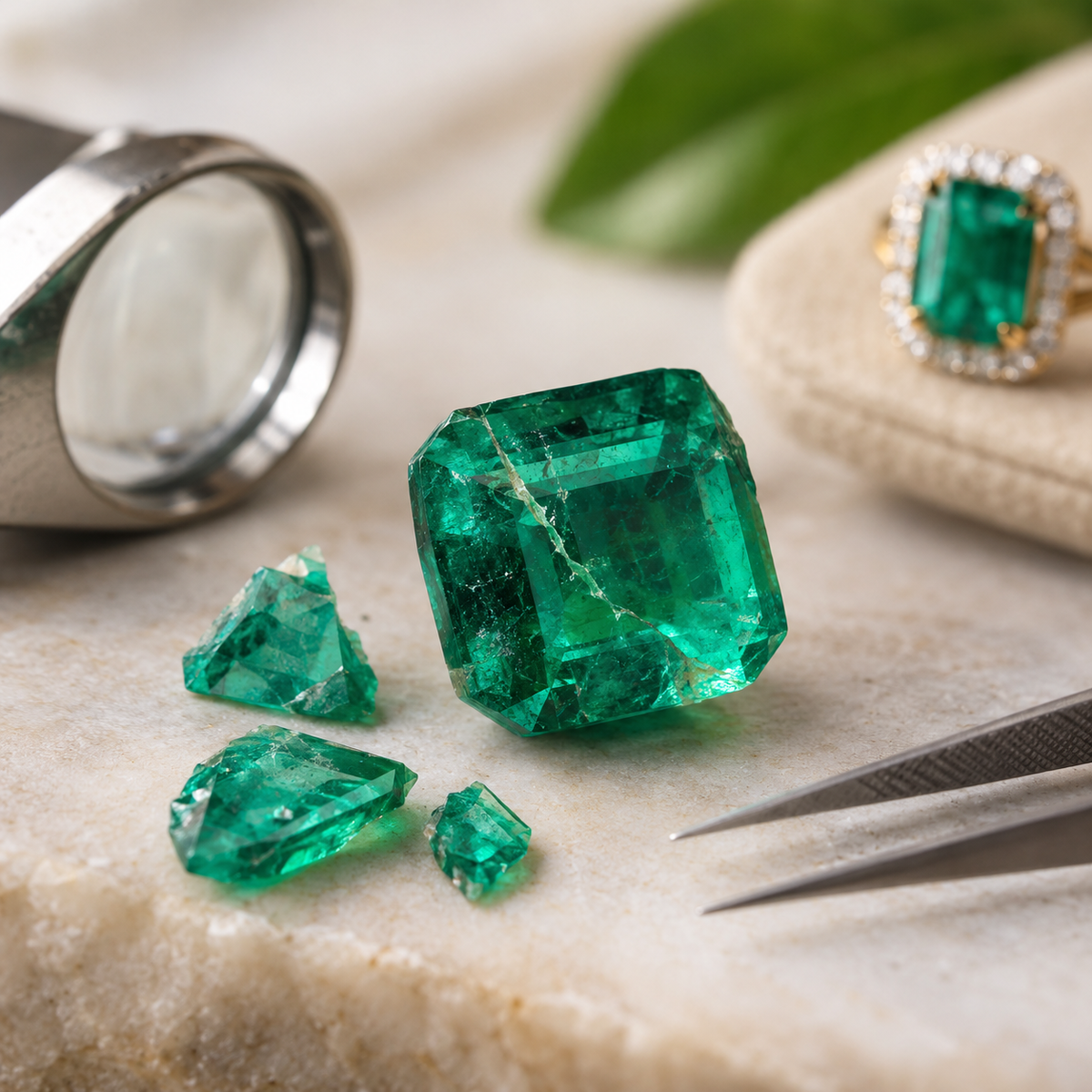
Color: They must identify the areas where the green appears most intense and consider how to preserve an attractive overall appearance.
-
Transparency: Emeralds can have different levels of transparency, so it is important to study how light behaves within the stone.
-
Inclusions: Small internal characteristics can influence how the gemstone is worked and the decisions made throughout the process.
-
Fractures: Emeralds may contain fissures and planes of weakness that require special care during cutting and polishing.
-
The shape of the rough stone: Its size, geometry, and color distribution help determine which type of cut will make the best use of the material.
Every emerald is different. That is why a cutter cannot work every stone in exactly the same way.
Why Is the Cutter So Important for Colombian Emeralds?
Colombia is internationally recognized for its natural emeralds and the variety of characteristics its gemstones can display. However, finding a good rough emerald is only one part of the process. Knowing how to work with it is equally important.
This is where the cutter's experience becomes essential.
A poor decision during cutting can result in the loss of valuable material, affect the gemstone's final shape, or even damage a delicate stone. In contrast, careful planning can help preserve its color, make better use of the material, and produce a gemstone with well-balanced proportions.
This does not mean that a cutter can turn any stone into an exceptionally high-quality emerald. The mineral's natural characteristics are already present from the moment it forms. The cutter's skill lies in recognizing these qualities and working with them as effectively as possible.
How Is a Rough Emerald Transformed?
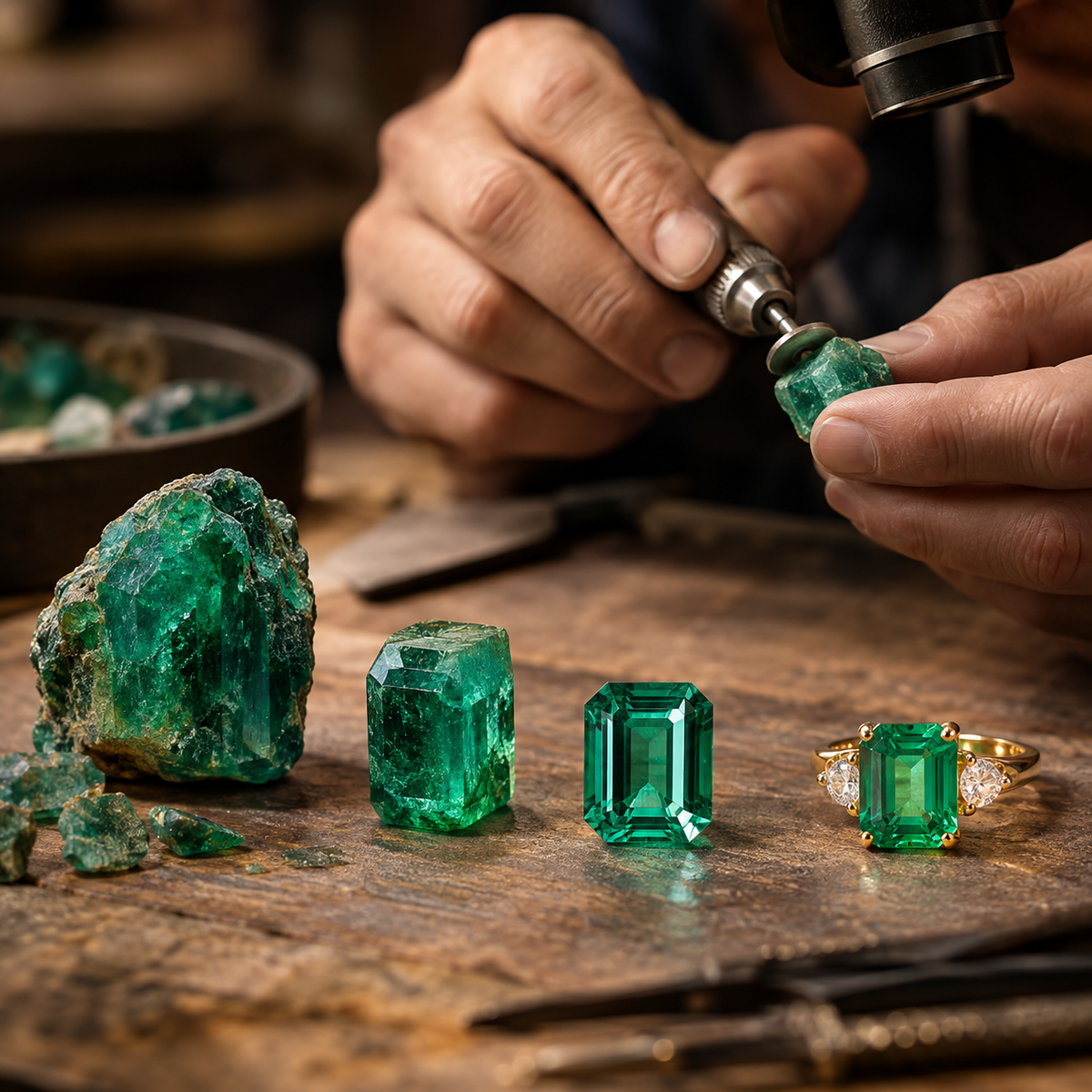
Cutting an emerald requires concentration, precision, and an understanding of how the gemstone behaves. Although techniques may vary depending on the stone and the workshop, the process generally involves several stages.
1. Examining and Evaluating the Stone
Everything begins with a detailed examination of the rough emerald. The cutter analyzes its shape, color, transparency, inclusions, and possible fractures.
At this stage, they must visualize the stone's potential and determine which areas should be preserved. The largest rough emerald does not always produce the highest-value finished gemstone.
2. Planning the Cut
After studying the material, the cutter determines where to make the cuts and which shape is likely to work best.
This is one of the most important decisions in the process because some material will inevitably be lost during the transformation. The goal is to find a balance between retaining weight, achieving an attractive appearance, and ensuring the work can be carried out safely.
3. Cutting and Shaping the Gemstone
Once the plan is established, the cutting process begins. The cutter removes the necessary material to bring the stone closer to its intended shape.
This stage requires particular care because emeralds have a hardness of 7.5 to 8 on the Mohs scale, but they can also be vulnerable to damage because of their inclusions and fractures. Hardness and resistance to impact are not the same thing.
4. Faceting the Gemstone
Once the gemstone has been shaped, the cutter works on its surfaces to control how light enters, reflects within, and exits the stone.
The orientation, size, and angles of the facets influence the emerald's final appearance. A good cut aims for a balanced look while making the most of the stone's natural characteristics.
5. Polishing and Final Inspection
Finally, the surfaces are polished to achieve an appropriate finish. The gemstone is then inspected to evaluate its shape, facets, brilliance, and overall appearance.
Only after this work is complete can the emerald move on to the next stages of the sales process or jewelry manufacturing.
Why Are So Many Emeralds Cut in the Emerald Cut?
The emerald cut is one of the best-known shapes in jewelry. It is characterized by its generally rectangular outline and step-cut facets, which create an appearance distinct from traditional brilliant cuts.
But why is it so widely used for emeralds?
In addition to being a classic shape, the emerald cut can be well suited to many rough stones. Its design allows the facets to be arranged in a way that gives the gemstone's color and internal characteristics an important role in its overall appearance.
However, not every emerald should be cut this way. Depending on the rough material, a cutter may choose an oval, round, pear, cushion, or even cabochon cut, which features a curved surface rather than traditional facets.
The decision depends on the characteristics of each stone and the desired result.
Can a Cutter Increase an Emerald's Value?
The cutter's work can significantly influence an emerald's market value, but there is no rule stating that a more complex cut or a gemstone with more facets will always be more valuable.
To understand this, imagine two rough stones with similar characteristics. One is carefully cut, preserving its best areas of color and achieving well-balanced proportions. The other loses unnecessary material or ends up with less favorable proportions.
Although both come from similar rough material, their final results may be very different.
However, other factors must also be considered, including the weight retained, color quality, transparency, inclusions, fractures, treatments, and market demand.
An experienced cutter knows that preserving as much weight as possible is not always the best decision. In some cases, removing more material can produce a gemstone with a more attractive appearance or better proportions.
The real challenge lies in finding the right balance between making the most of the stone and achieving the best possible result.
From the Cutter's Work to a Colombian Emerald Jewelry Piece
When we look at a finished emerald, we often focus on its green color, size, or jewelry design. However, behind that appearance lies a chain of knowledge and decisions that begins long before the gemstone reaches our hands.
The cutter is an essential part of this process. Their work connects the stone's natural characteristics with the possibilities of jewelry design, allowing each emerald to take on a suitable shape that showcases its beauty.
At Emerald By Love, we value the knowledge behind Colombian emeralds and the importance of understanding each stone before choosing it. Our work focuses on natural Colombian emeralds and jewelry designed to highlight their individual characteristics.
Because choosing an emerald is about more than simply looking for a green stone. It also means understanding its origin, its qualities, and the craftsmanship that transforms it into a gemstone ready to become part of a special piece of jewelry.
Paula Bonilla
Social Communicator and Journalist, Sergio Arboleda University, Colombia