What Questions Should You Ask Before Buying a Colombian Emerald?
Buying a Colombian emerald is an exciting decision. Whether you are looking for a gemstone to create a custom piece of jewelry, give someone a special gift, or start a collection, it is important to understand a few key details before making your purchase.
Although two emeralds may look similar at first glance, they can have significant differences in their origin, color, transparency, treatments, and overall quality. Asking the right questions will help you make an informed decision and know exactly what you are buying.
But what should you ask a seller before choosing your emerald? Here is a practical guide to help you.
Questions to Ask When Buying a Colombian Emerald
1. Is the Emerald Truly Natural and Colombian?
This should be one of your first questions. Not all green emeralds come from Colombia, and not every stone marketed as an emerald is natural.
It is important to confirm two things:
-
Is it a natural emerald? This helps distinguish it from synthetic or laboratory-created stones.
-
What is its geographical origin? If you are looking for a Colombian emerald, ask whether its origin is supported by gemological information.
Origin cannot be determined by color alone. Specialized testing is required to identify the gemstone's internal and chemical characteristics.
2. What Treatments Has It Received?
Natural emeralds may contain inclusions and small internal fractures. For this reason, some undergo treatments to improve their appearance, particularly through the use of oils or resins.
Before buying, ask:
-
Has the emerald received any treatments?
-
Has oil or resin been used?
-
What is its degree of treatment?
-
Does the treatment require any special care?
This information is important because treatments can influence the gemstone's market value and maintenance requirements.
Remember that a treated emerald is still natural. However, knowing the type and degree of treatment allows you to compare different options more fairly.
3. Does It Have a Gemological Certificate?
A gemological certificate can provide technical information about an emerald and help verify its characteristics.
Ask whether the gemstone comes with a gemological report and which laboratory issued it.
Depending on the document, you may find information about:
-
Gemstone identification.
-
Geographical origin, when it can be determined.
-
Detected treatments.
-
Carat weight and measurements.
-
Gemological characteristics.
It is important to understand that not all certificates provide the same information. Some only identify the mineral species, while others also examine geographical origin and treatments.
4. How Would You Describe Its Color?
Color is one of the most important factors when evaluating a Colombian emerald.
However, it is not simply about finding the greenest stone. Emeralds come in different shades, color intensities, and color distributions.
You can ask the seller:
-
Is its color intense green, medium green, or light green?
-
Is the color evenly distributed?
-
Does it have areas with a higher concentration of color?
-
How does it look under different lighting conditions?
A good recommendation is to observe the emerald under both natural and artificial light. This will give you a more realistic idea of its appearance.
5. How Transparent Is It and What Inclusions Does It Have?
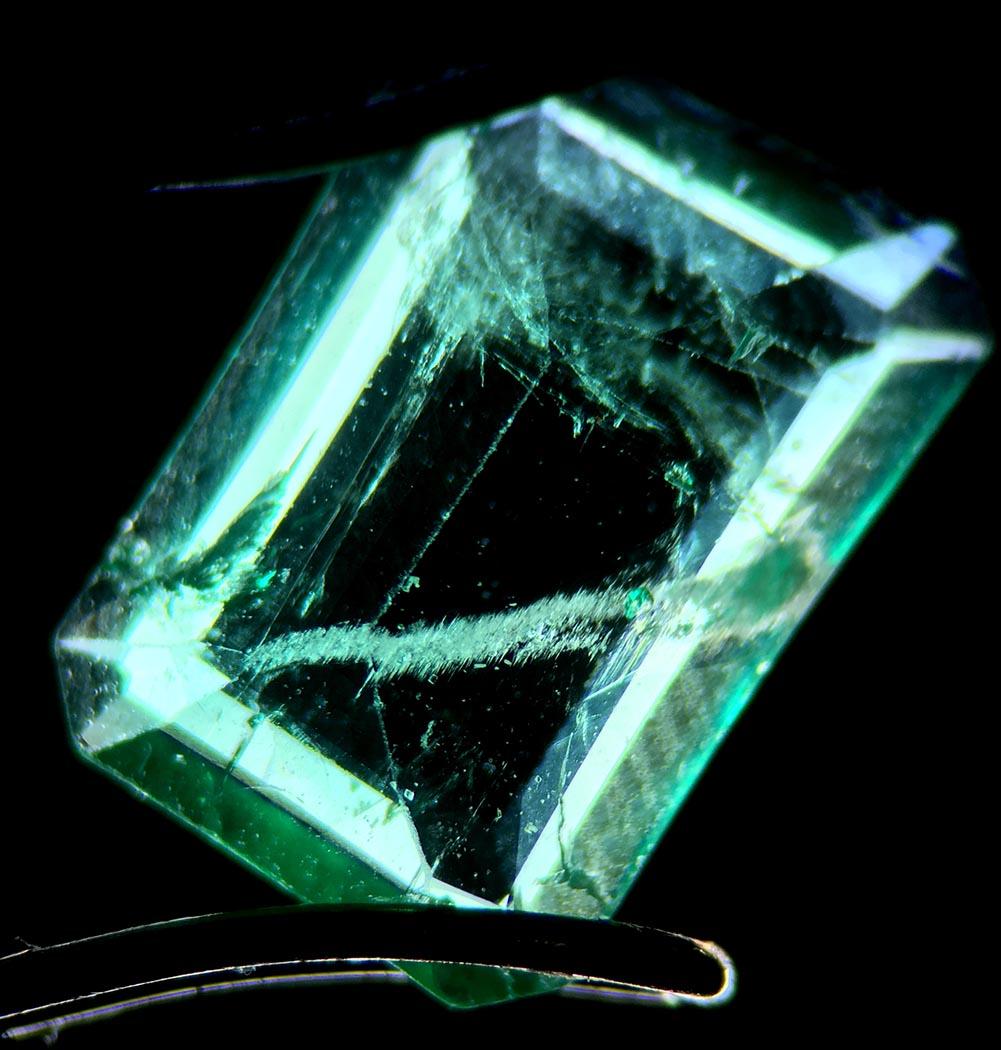
Inclusions are part of the natural characteristics of many emeralds. In fact, their internal gardens can provide information about their geological formation.
However, not all inclusions have the same effect on a gemstone's appearance or durability.
Before buying, ask:
-
What level of transparency does it have?
-
Are the inclusions visible to the naked eye?
-
Does it have surface or internal fractures?
-
Are there any characteristics that could affect its durability?
You should not assume that an emerald with no visible inclusions is necessarily better. What matters is evaluating all its characteristics together.
6. What Is Its Carat Weight and What Are Its Measurements?
An emerald's weight is expressed in carats (ct), but this information alone does not determine how large the gemstone will look.
Two emeralds weighing 2 carats may have completely different dimensions and proportions.
That is why you should ask:
-
How many carats does it weigh?
-
What are its measurements in millimeters?
-
What type of cut does it have?
-
How is its volume distributed?
If you are purchasing a gemstone for a custom jewelry piece, its measurements are especially important because they help determine the design and setting.
7. Does the Emerald Have Any Fractures or Characteristics I Should Know About?
This question is essential, especially when considering a larger gemstone or making a significant investment.
Ask for photographs and videos of the emerald from different angles. If possible, request magnified images to examine its internal characteristics.
You can also ask whether it has open fractures, delicate areas, or any particular features that may require special precautions during setting and everyday wear.
Good guidance is not just about highlighting a gemstone's positive qualities. It also means explaining its individual characteristics.
8. How Was Its Price Determined?
The price of a Colombian emerald depends on several factors. There is no single price per carat that can be used to evaluate every gemstone equally.
Some of the factors that influence its value include:
-
Color and hue.
-
Transparency.
-
Cutting quality.
-
Carat weight and dimensions.
-
Inclusions and fractures.
-
Treatments.
-
Geographical origin and documentation supporting its provenance.
Ask which characteristics justify the price of the emerald you are considering and whether there are other options within your budget.
Remember that a larger gemstone does not necessarily have a higher market value than a smaller one.
9. What Warranty and Support Does the Seller Offer?
Buying an emerald also means placing your trust in the person or company selling it.
Before making a payment, ask:
-
Does the purchase include an invoice?
-
Do they provide a certificate of authenticity?
-
What warranty does the gemstone have?
-
Do they offer maintenance or after-sales assistance?
-
What is their exchange or return policy?
A trustworthy seller should be willing to answer your questions and provide clear information about the product.
10. Can I See the Emerald in Person or Receive Real Videos?
Photographs are useful for comparing gemstones, but they do not always accurately represent their appearance.
Color, transparency, and brilliance can change depending on lighting, camera angles, and photographic settings.
For this reason, if you are buying online, request real videos of the emerald:
-
Under natural light.
-
Under indoor lighting.
-
From different angles.
-
In motion, to observe how it interacts with light.
This will help you get a better understanding of the gemstone before making a decision.
Buy Your Colombian Emerald with Confidence
Choosing a Colombian emerald goes far beyond finding a gemstone with a beautiful green color. It is about knowing its origin, understanding its natural characteristics, and being fully informed about what you are purchasing.
At Emerald By Love, we believe every customer deserves transparent information and personalized guidance to help them make their choice with confidence. We work with natural Colombian emeralds, from their origin to their transformation into jewelry, and offer options for those looking for loose gemstones or custom-designed pieces.
Our final advice: Never be afraid to ask questions. A good emerald deserves a good explanation, and an important purchase deserves your full attention.
Are you thinking about buying a Colombian emerald? At Emerald By Love, we can help you explore different options and find a gemstone that matches your expectations and budget.
Paula Bonilla
Social Communicator and Journalist, Sergio Arboleda University, Colombia