How Is the Origin of a Gemstone Determined?
Have you ever wondered how it is possible to tell whether an emerald comes from Colombia, Zambia, or Brazil? Although some gemstones may have very similar colors and characteristics, each one carries information about the place where it was formed.
Determining the geographic origin of a gemstone is a process that combines gemological knowledge, technology, and scientific analysis. It is not enough to examine its color, transparency, or size. Specialists need to study different internal and chemical characteristics to find clues about its origin.
But how is this process carried out, and what information can a gemstone reveal? We explain everything in this new article.
Why Is It Important to Know the Origin of a Gemstone?
Knowing the origin of a gemstone helps us better understand its history and the natural conditions under which it was formed.
It can also be an important factor when purchasing jewelry, especially when the gemstone's origin holds particular significance for the buyer.
In the case of Colombian emeralds, their origin is connected to a very special geological history and mining regions that are internationally recognized.
For this reason, when purchasing an emerald jewelry piece, it is important to look beyond its color, size, or design. It is also worth asking about its origin, the treatments it has undergone, and the documentation supporting the information provided.
How Is the Origin of a Gemstone Determined?
1. Examining Internal Inclusions
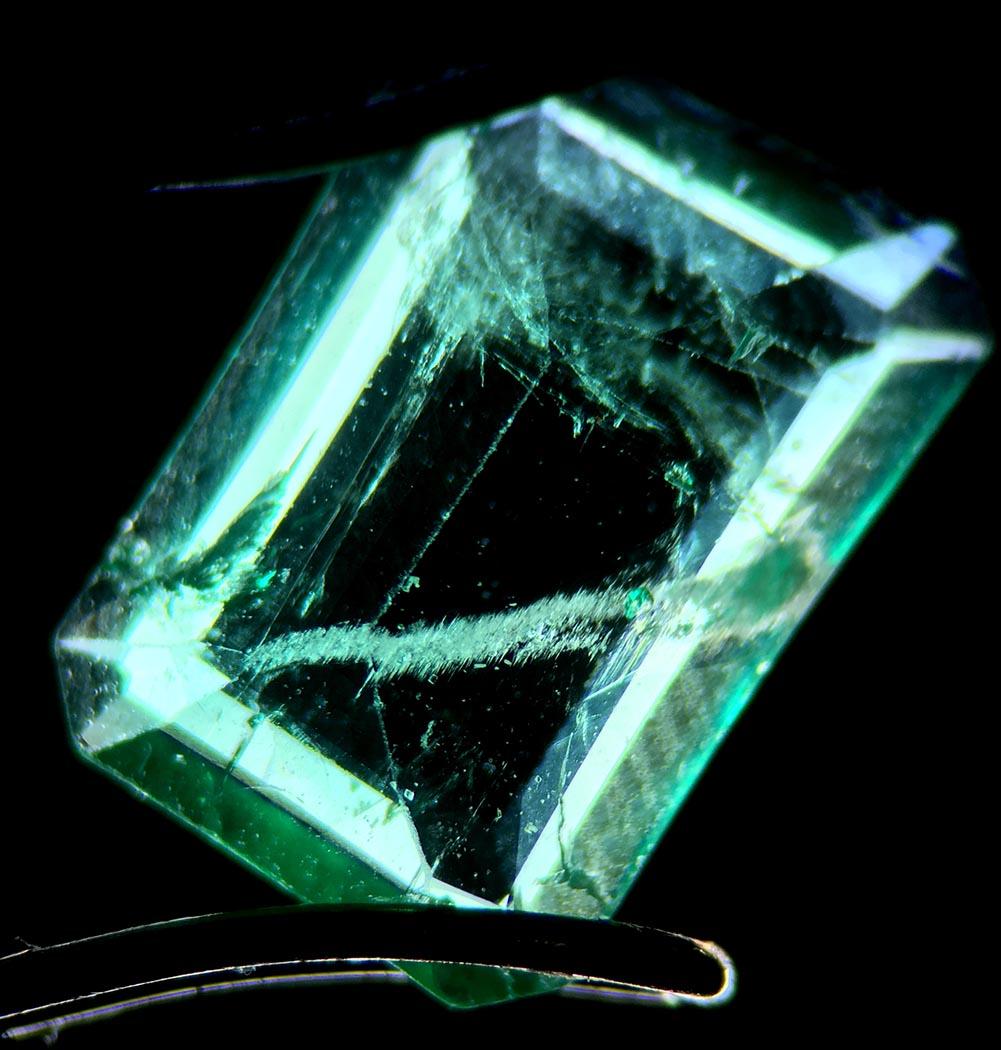
One of the first steps in investigating the origin of a gemstone is examining its interior using a gemological microscope.
Inclusions are small features trapped inside a gemstone during its natural formation. They may consist of crystals from other minerals, liquids, gases, or tiny fractures.
In emeralds, for example, it is common to find the well-known gardens, or jardins, a collection of internal inclusions that give each stone its own distinctive characteristics.
Some emeralds may contain three-phase inclusions, consisting of a liquid, a gas bubble, and a small solid crystal. The presence and distribution of these inclusions can provide information about the geological conditions under which the gemstone formed.
However, no single inclusion can confirm a specific geographic origin. Specialists must examine the combination of characteristics and compare them with samples of known origin.
2. Analyzing Chemical Composition
Another essential tool is studying the chemical elements present in a gemstone.
Although two gemstones may belong to the same mineral species, their chemical compositions can differ depending on the conditions under which they formed.
In emeralds, laboratories can analyze elements such as:
-
Chromium.
-
Vanadium.
-
Iron.
-
Magnesium.
-
Sodium.
The concentration and relationship between these elements can help identify patterns associated with specific deposits.
For example, Colombian emeralds form under particular geological conditions related to hydrothermal processes in sedimentary rocks. These conditions influence their chemical composition and help distinguish them from many emeralds originating in other geological environments.
3. Spectroscopic Testing
To obtain more detailed information, gemological laboratories use specialized equipment to study how light interacts with a gemstone.
Some of the most commonly used techniques include:
UV-Vis Spectroscopy: Analyzes how the gemstone absorbs specific wavelengths of light. This information helps study the elements responsible for its color.
Infrared Spectroscopy: Helps identify characteristics related to the composition and structure of the materials present in the gemstone.
Raman Spectroscopy: Helps identify minerals and tiny crystals that may be found inside a gemstone.
These techniques complement microscopic and chemical analysis, providing information that cannot always be observed with the naked eye.
4. Comparing Samples from Different Deposits
Once the information has been collected, specialists compare the results with databases and samples of gemstones whose geographic origin is already known.
This makes it possible to identify similarities and differences between gemstones from various regions.
In the case of emeralds, some of the main producing regions that can be studied include:
-
Colombia: Recognized for its Muzo, Coscuez, Chivor, and Gachalá deposits.
-
Zambia: Known for its emerald deposits, particularly in the Kafubu region.
-
Brazil: Home to several emerald-producing areas.
-
Afghanistan: Has important deposits in the Panjshir Valley.
-
Ethiopia: Has also become an emerald-producing region.
Each region has particular geological conditions that can leave identifiable characteristics in its gemstones.
5. Issuing a Gemological Report
After conducting the analyses, a specialized laboratory can issue a gemological report containing the results.
Depending on the laboratory and the type of examination requested, this document may include:
-
Identification of the gemstone.
-
Confirmation of whether it is natural or synthetic.
-
Information about detected treatments.
-
Relevant gemological characteristics.
-
An opinion regarding its possible geographic origin, when it can be established.
It is important to clarify that not all gemstone reports include a geographic origin assessment. Some focus exclusively on identifying the gemstone and describing its characteristics.
Additionally, there are situations in which a laboratory cannot determine the origin with sufficient certainty. In such cases, it may issue an inconclusive opinion rather than assign an origin without scientific support.
Can You Tell If an Emerald Is Colombian Just by Its Color?
This is one of the most frequently asked questions among people who purchase Colombian emeralds.
Although Colombian emeralds are recognized for their green hues and certain internal characteristics, their geographic origin cannot be confirmed simply by looking at their appearance.
A Colombian emerald may have an intense green color, while another may display a lighter shade. Similarly, emeralds from other countries may share similar visual characteristics.
Color, transparency, inclusions, and overall quality are important factors when evaluating a gemstone, but they cannot replace the analyses required to determine its geographic origin.
At Emerald By Love, Origin Is Part of the Story
At Emerald By Love, we believe that getting to know an emerald goes far beyond appreciating its beauty. Understanding where it comes from, how it was formed, and what characteristics it possesses allows us to appreciate each gemstone even more.
We specialize in natural Colombian emeralds and work to connect our customers with gemstones whose origin we know. Our mine-to-market business model allows us to maintain a close relationship with the selection and commercialization process.
If you are considering purchasing a piece of jewelry featuring a Colombian emerald, remember that knowing its origin is just as important as finding the color, size, and design you love most.
Paula Bonilla
Social Communicator and Journalist, Sergio Arboleda University, Colombia