The Shapes Hidden Within a Rough Colombian Emerald
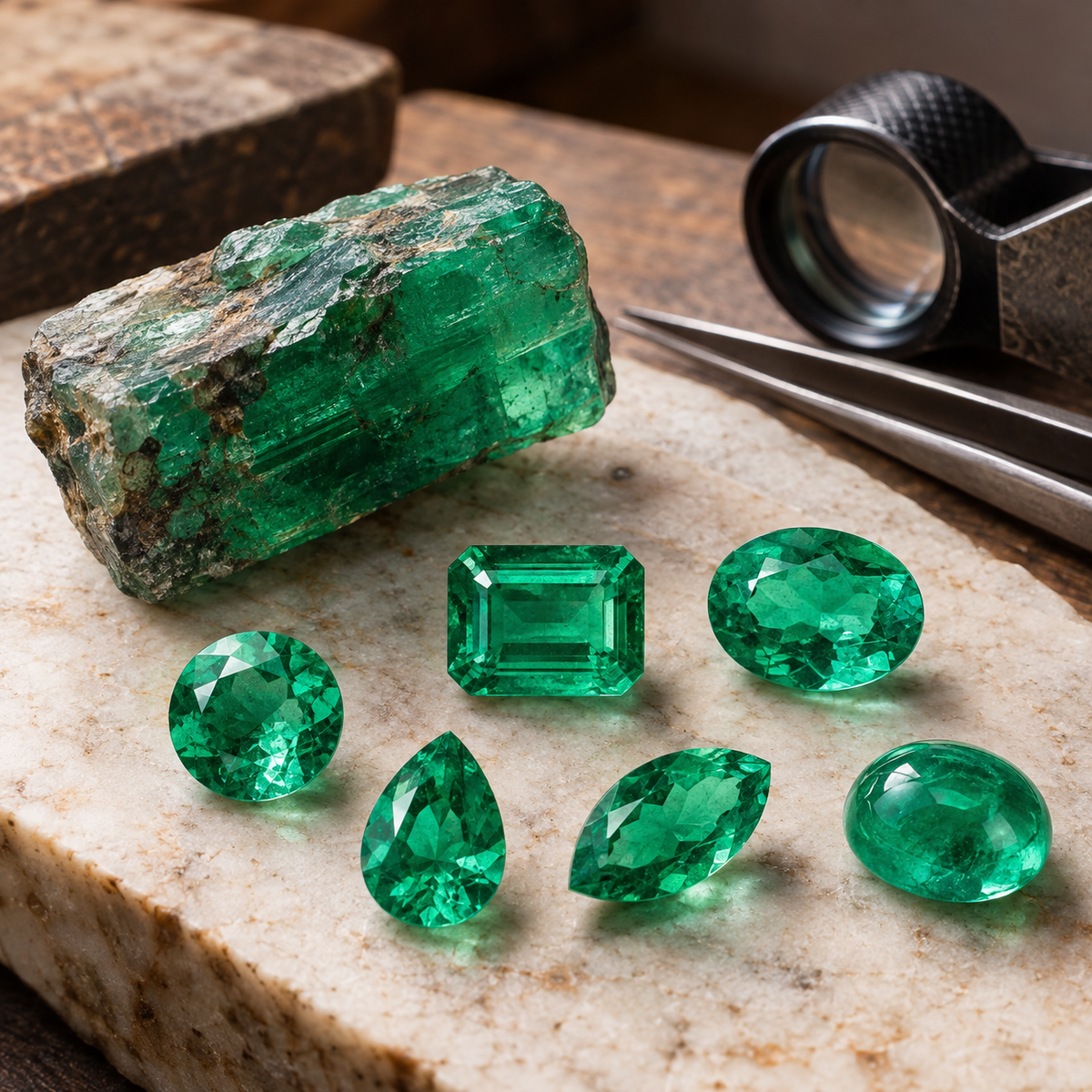
When we think of a rough Colombian emerald, we often imagine a green, rugged stone that looks very different from the brilliant gemstone we see in a jewelry store. However, behind its natural appearance lie many possibilities. The same emerald can be transformed into an emerald-cut gemstone, a round or oval stone, or even a cabochon, depending on its characteristics and the cutter’s decision.
But how do you determine the best shape for each emerald? The answer lies in examining the stone, understanding its internal characteristics, and finding the best way to bring out its natural beauty.
In this article, we explain the different shapes a rough Colombian emerald can take, the factors a gem cutter considers when choosing its final shape, and why their experience is so important throughout this process.
Why Can a Rough Emerald Be Cut Into Different Shapes?
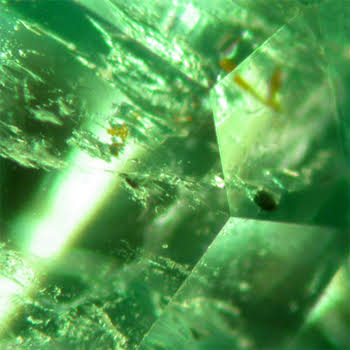
Every Colombian emerald has its own characteristics. Some have elongated crystals, others have more compact proportions, and some contain inclusions, fractures, or areas with varying levels of transparency.
These characteristics influence the cutting possibilities. The goal is not simply to give the stone an attractive shape, but to find the cut that makes the best use of the material while highlighting its qualities.
Before beginning, the gem cutter examines aspects such as color, transparency, the distribution of inclusions, fractures, and the crystal’s dimensions. Based on this information, they can determine which shape has the greatest potential and how to position the cuts to achieve the best possible result.
That is why two emeralds that look similar at first glance can end up as completely different gemstones.
The Different Shapes Hidden Within a Rough Emerald
One of the most interesting parts of the cutting process is discovering all the possibilities a stone may offer. Although every crystal has its own limitations, different shapes can be considered depending on its characteristics.
1. Emerald Cut: A Classic Shape
The emerald cut is one of the most recognizable cuts in the jewelry world. It generally features a rectangular or square shape, step-cut facets, and cropped corners.
It can be a good option when the proportions of the rough material allow a gemstone with this structure to be created. Its design allows the emerald’s color to stand out while making its interior more visible, which is why inclusions and fractures must be carefully evaluated before choosing this cut.
2. Round Cut: Another Way to Highlight Color
A Colombian emerald can also be transformed into a round gemstone when the available material allows it.
This shape changes the way light interacts with the stone, creating an appearance that differs from a step cut. To achieve a good result, the gem cutter must carefully evaluate the crystal’s size and the amount of material that will need to be removed.
The decision is not simply about whether the stone can be made round, but whether the final result will allow its qualities to shine through.
3. Oval Cut: Making the Most of the Stone’s Proportions
The oval cut is another possibility for certain rough emeralds. Its elongated shape can suit the proportions of some crystals, making it a great option for rings, pendants, and other jewelry designs.
The gem cutter must determine how to orient the gemstone to distribute its color favorably and make the most of the available material. The right choice can make the difference between a simply cut stone and a gemstone whose characteristics are more effectively showcased.
4. Fancy Cuts: When the Stone Offers Other Possibilities
Not every emerald has to end up in one of the most traditional shapes. Depending on the material’s dimensions and characteristics, cuts such as pear, marquise, or various custom designs may also be considered.
These alternatives require careful evaluation, as some shapes may result in greater material loss or may not be suitable for crystals with certain fractures.
This is where the gem cutter’s experience becomes especially important. They must find a balance between the desired shape, the emerald’s condition, and the intended result.
5. Cabochon: Beauty Without Facets
In some cases, an emerald can be shaped into a cabochon, a form with a smooth, curved upper surface instead of facets.
This option may be suitable for certain materials whose characteristics lend themselves to this type of finish. The result is very different from a faceted gemstone because the focus shifts to the surface, color, and overall appearance of the stone.
Not every emerald is an ideal candidate for a cabochon, but this possibility shows that there is no single approach to gemstone cutting.
How Does a Gem Cutter Decide Which Shape Is Best for an Emerald?
Choosing the cut is one of the most important decisions in the process. Once the gem cutter begins removing material, the changes are irreversible. That is why the initial assessment requires technical knowledge, experience, and the ability to interpret each crystal.
Here are some of the factors they consider:
-
Color: They examine how the green color is distributed throughout the stone and which orientation may enhance its appearance.
-
Transparency: They assess how clearly the interior of the gemstone can be seen and how this may influence the choice of cut.
-
Inclusions and fractures: They identify internal features that could limit certain shapes or affect the stone’s durability.
-
Size and proportions: They determine which shape can be achieved without unnecessarily wasting material.
-
The final result: They consider how the emerald will look once finished and the types of jewelry in which it could be used.
Sometimes, the most obvious shape is not necessarily the best choice. A different cut may make better use of the crystal, preserve more material, or showcase its characteristics more effectively.
That is why cutting an emerald is not simply a matter of following a design. It also involves interpreting the stone and making decisions based on what it can actually offer.
One Emerald, Different Possibilities
Imagine an elongated rough emerald. At first glance, it might seem that the best option is to turn it into a rectangular gemstone. However, after examining its interior, the gem cutter might determine that an oval shape would make better use of the material, or that a different orientation would help bring out its color.
This does not mean every shape is possible for the same stone. The crystal’s characteristics establish certain limits, and every decision involves advantages and trade-offs.
What makes the process interesting is that the final shape is not determined solely by the appearance of the rough emerald. It also depends on how the gem cutter interprets its potential and decides which cut will deliver the best result.
Every decision matters because once the material has been removed, it cannot be recovered.
The Art of Revealing the Beauty of a Colombian Emerald
A rough Colombian emerald is much more than an uncut green stone. It is a crystal with unique characteristics that may offer different cutting possibilities, provided its condition allows them.
The gem cutter’s expertise lies in recognizing those possibilities, studying the particular features of each gemstone, and choosing the shape that makes the best use of its material while highlighting its color, transparency, and natural beauty.
That is why two emeralds do not have to follow exactly the same path. Each one deserves an individual assessment and a decision based on what the stone has to offer.
At Emerald By Love, we value the entire journey of Colombian emeralds, from their origin to their transformation into jewelry. Because behind every cut gemstone lies a fundamental decision: finding the shape that reveals the best in each stone.
Paula Bonilla
Social Communicator and Journalist, Sergio Arboleda University, Colombia