Can Inclusions Make a Colombian Emerald More Interesting?
If there is one topic that sparks debate when discussing Colombian emeralds, it is the presence of gardens or inclusions within these precious gemstones. Many people love this characteristic because they believe it adds authenticity and beauty to an emerald. However, others feel that these natural features can reduce the stone’s value.
But who is right? Are inclusions a flaw, or can they become one of the most interesting characteristics of a Colombian emerald?
The answer depends on several factors, including the type of inclusions, their quantity, their location, and how they affect the gemstone’s appearance. In this article, we explain why these tiny natural features can make an emerald special and what you should consider when choosing one.
What Are Inclusions in a Colombian Emerald?
Inclusions are internal characteristics that form as an emerald grows or become trapped within its crystal structure. They can appear as small fractures, crystals of other minerals, fluid-filled cavities, or combinations of different materials.
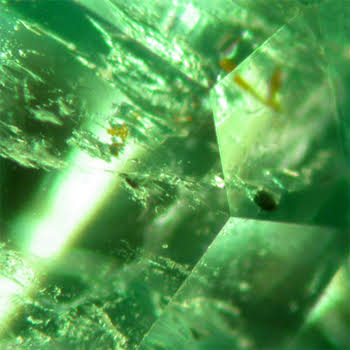
In the world of emeralds, the word garden is commonly used to describe the collection of inclusions that, when viewed inside the stone, may resemble branches, leaves, or small plant-like shapes.
These characteristics are related to the geological conditions under which the gemstone formed. That is why, when examining a Colombian emerald with a suitable magnifying loupe, it is possible to find details that reveal part of its natural history.
However, it is important to understand that not all inclusions are the same or have the same effect on a stone. Some are small and subtle, while others may be more visible or affect the gemstone’s transparency and durability.
Why Can Inclusions Make an Emerald More Interesting?
For some people, the beauty of an emerald is not found solely in its green color or transparency. It also lies in the internal details that give each stone its own distinctive appearance.
Here are some of the reasons why inclusions can attract so much interest.
1. Every Garden Has a Different Appearance
Just as no two natural gardens are exactly alike, the inclusions in an emerald can form unique patterns.
Some stones feature tiny intersecting lines, others contain small crystals, and some display internal structures that resemble natural drawings. The combination of these elements can give each gemstone its own visual identity.
For those who enjoy observing the details of precious stones, these characteristics can make an emerald particularly interesting.
2. They Reveal Part of Its Geological History
An emerald does not form overnight. Its growth takes place under specific geological conditions, and its inclusions can preserve evidence of that process.
Some of these internal characteristics help gemologists study how a gemstone formed and, together with other evidence, can contribute to the assessment of its geographic origin.
However, it is important to remember that inclusions alone do not guarantee that an emerald is Colombian. Determining its origin requires a gemological evaluation and, when appropriate, specialized testing.
3. They Can Give a Piece of Jewelry Its Own Personality
Imagine two emeralds of a similar size. One has a relatively clean interior, while the other features a visible garden that creates distinctive patterns as light passes through the stone.
Although both may be beautiful, each might appeal to people with different tastes.
Those who prefer a more uniform appearance may lean toward the first. In contrast, those who appreciate natural characteristics and internal details may find the second particularly attractive.
This shows that the perception of beauty also depends on personal preferences.
Do Inclusions Reduce the Value of a Colombian Emerald?
This is one of the most common questions when buying a Colombian emerald. The answer is that inclusions can influence its value, but they do not necessarily make a stone less valuable.
When assessing an emerald commercially, several characteristics are considered, including color, transparency, cut, carat weight, and the gemstone’s overall quality.
Inclusions can influence a stone in different ways:
-
When they are small and barely visible: They may have a limited effect on the stone’s overall appearance.
-
When they affect transparency: They may reduce its visual brightness or change how its color is perceived.
-
When they form significant fractures: They may compromise the emerald’s durability, especially if they reach the surface or create vulnerable areas.
-
When they create distinctive visual patterns: They may appeal to certain buyers, although this does not automatically increase the stone’s price.
For this reason, it is not accurate to claim that an emerald with many inclusions is always worth less or that one with a striking garden is necessarily worth more. Each gemstone must be evaluated individually.
Is a Cleaner Emerald Always Better?
Not necessarily. Greater transparency can be a desirable characteristic, but it is not the only factor that determines an emerald’s quality.
Color often plays a very important role in its appeal and commercial value. Color distribution, transparency, cut quality, carat weight, and the presence of fractures or other characteristics that may affect durability are also taken into account.
Additionally, natural emeralds commonly contain inclusions to varying degrees. Finding a stone that is completely free of visible internal characteristics is not a requirement for it to be authentic or beautiful.
What matters is understanding what you are buying and how the gemstone’s particular characteristics influence its appearance, durability, and price.
How to Examine Inclusions Before Buying an Emerald
If you are thinking about purchasing a Colombian emerald, examining its inclusions can help you better understand the stone and make an informed decision.
Keep these tips in mind:
-
Examine the gemstone under good lighting. Light helps you better appreciate its color, transparency, and certain internal details.
-
Look at the stone from different angles. Inclusions may appear differently depending on the viewing angle and lighting conditions.
-
Distinguish inclusions from fractures that affect durability. Not all internal characteristics present the same risks. If you have any doubts, consult a specialist.
-
Ask about treatments. Some emeralds undergo oil or resin treatments to improve the appearance of certain fractures. These treatments should be considered when evaluating the stone.
-
Request a gemological evaluation when necessary. A certificate can provide information about the gemstone’s characteristics and detected treatments, as well as its geographic origin, depending on the laboratory and the tests performed.
Remember that a photograph or video can help you appreciate an emerald, but it cannot replace a professional gemological evaluation.
So, Should We Fall in Love With the Inclusions in a Colombian Emerald?
Inclusions can be a fascinating part of a Colombian emerald. Their shapes, colors, and internal structures allow us to appreciate details that often go unnoticed by the naked eye.
However, admiring a garden does not mean overlooking characteristics that may affect the stone’s transparency, durability, or value. The key is learning to recognize its individual features and understanding how they influence the gemstone’s overall quality.
At Emerald By Love, we believe that choosing an emerald goes beyond finding a green stone. It is about understanding its characteristics, appreciating its natural formation, and finding a gemstone that connects with your personal taste and expectations.
If you are looking for a Colombian emerald for a special piece of jewelry, our team can guide you through its characteristics and help you choose a stone that suits your needs.
Because every emerald has its own personality, and learning to recognize it is part of the experience of choosing a natural gemstone.
Paula Bonilla
Social Communicator and Journalist, Sergio Arboleda University, Colombia