The World of Colombian Emeralds Through the Lens of Light
Have you ever observed a Colombian emerald under different lighting conditions and noticed that its color seems to change? At times, it may appear deep and intense green, while at other moments, it may display lighter, darker, or slightly bluish undertones. Although this may seem like a small mystery, the phenomenon has an explanation related to the way light interacts with the gemstone.
Natural emeralds are known for their distinctive green color, but their appearance depends on more than just the stone itself. Lighting, surroundings, transparency, inclusions, and the way the gemstone has been cut can all influence how we perceive its color.
In this article, we explain why an emerald can look different depending on the lighting, which factors influence its appearance, and how you can better appreciate the characteristics of a natural Colombian emerald.
Why Can Emeralds Look Different Under Different Lighting Conditions?
To understand this phenomenon, we first need to know that white light is composed of different wavelengths corresponding to the colors we can perceive. When light reaches an emerald, some of it is absorbed, while the rest is transmitted through the stone or reflected toward our eyes.
The green color of emeralds is primarily due to the presence of small amounts of elements such as chromium and, in some gemstones, vanadium. These elements influence how the crystal absorbs certain wavelengths of light and transmits others.
However, the light illuminating the stone also matters. Natural daylight, a warm light bulb, and artificial white lighting do not have exactly the same spectral composition. As a result, the same emerald may display differences in color intensity and undertones depending on the conditions in which it is viewed.
The Green of a Colombian Emerald: A Color Full of Nuances
When we talk about Colombian emeralds, we often immediately think of the intense green that has made them recognized worldwide. However, not all emeralds display exactly the same shade.
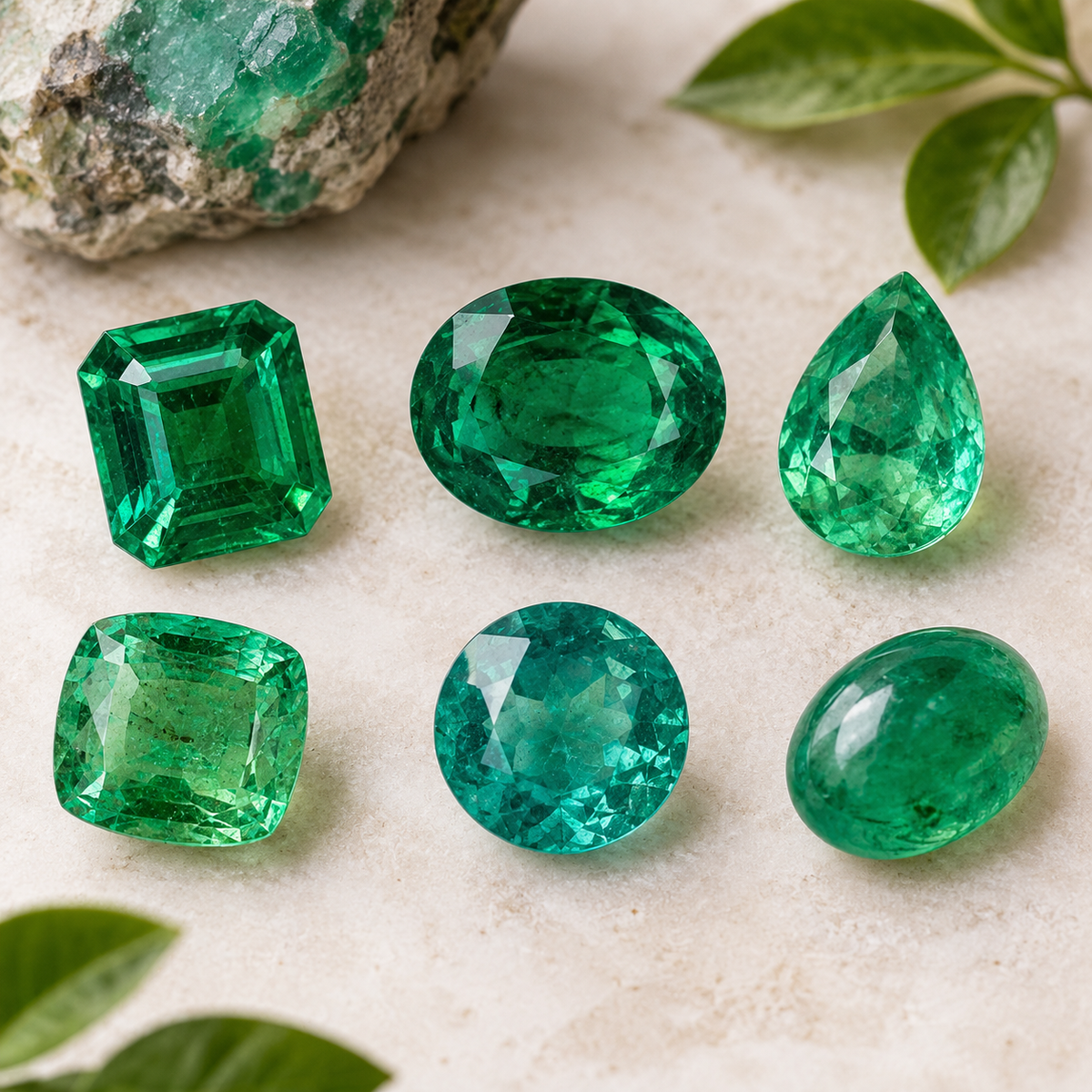
Some have a deep, saturated green, while others show lighter, bluish, or yellowish undertones. These differences depend on several factors, including chemical composition, the internal characteristics of the crystal, and the conditions under which the gemstone formed.
Lighting can make some of these characteristics more noticeable. For example, an emerald that looks bright under intense light may appear darker in a dimly lit environment. Similarly, a warm light source can create a different visual impression than white light.
That is why, when observing a Colombian emerald, it is worth taking a moment to appreciate its different nuances. Color is not always perceived in the same way under every lighting condition.
Does an Emerald's Cut Influence How It Reflects Light?
Yes! The cut is one of the factors that most strongly influences how we perceive an emerald.
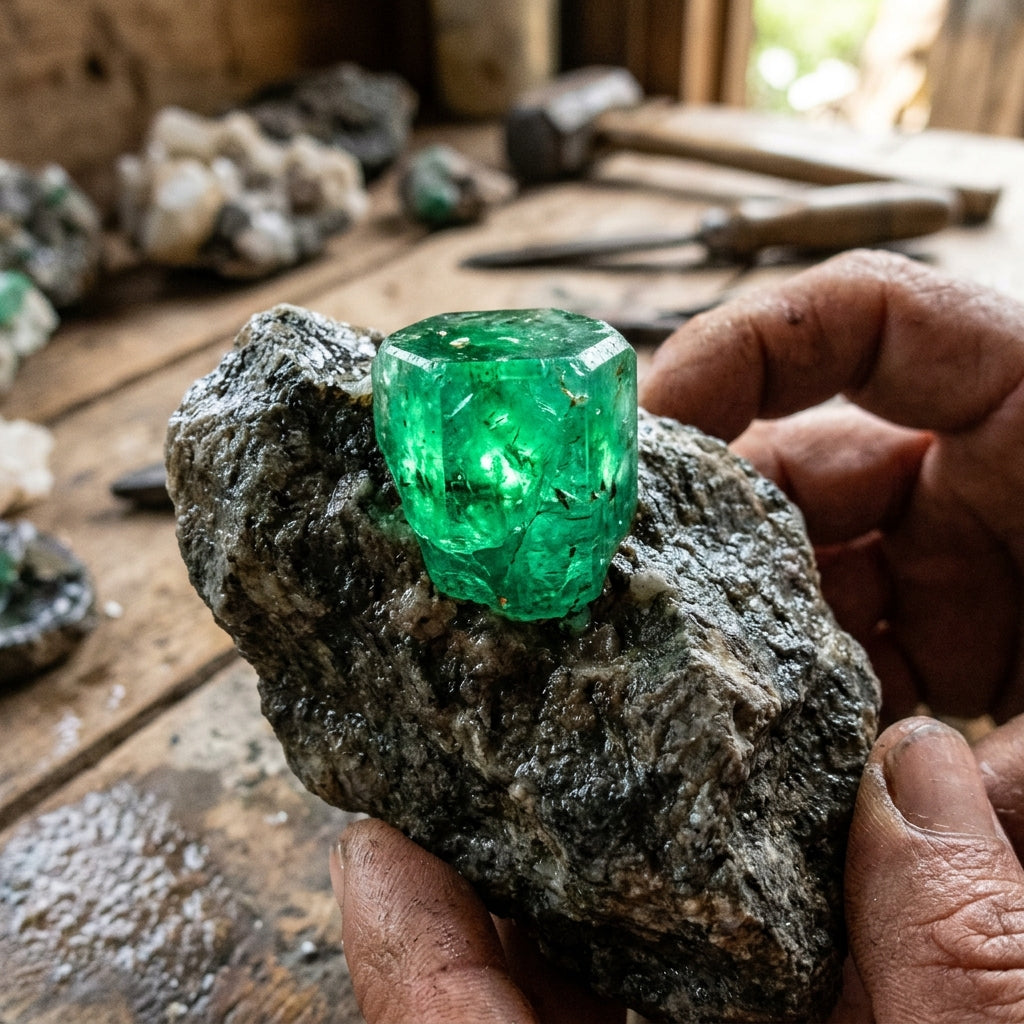
Contrary to what many people imagine, cutting an emerald is not simply about giving it an attractive shape. The cutter must study the rough crystal, analyze its characteristics, and determine how to make the best use of the available material.
During this process, the cutter must consider the crystal's orientation, color, transparency, inclusions, and the presence of potential fractures. Based on these observations, they decide which shape and proportions may best showcase the gemstone's qualities.
A well-executed cut can help distribute light within the stone and bring out its color. Conversely, certain proportions or orientations can make some areas appear darker or cause the color to look less uniform.
That is why two emeralds from the same origin with similar green tones can look very different once they have been cut.
What Role Do Inclusions Play in an Emerald's Appearance?
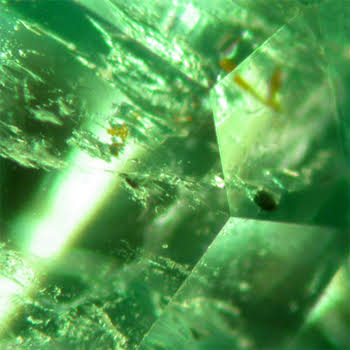
Inclusions, popularly known as jardins or gardens, are internal characteristics that may be found in natural emeralds. They can include tiny crystals, cavities, fluids, and other features associated with the gemstone's geological formation.
In addition to being part of the stone's natural history, inclusions can influence the way light travels through it. Depending on their quantity, size, location, and nature, they may create areas with different levels of transparency or alter the visual appearance of certain sections.
This does not mean that all inclusions are beneficial or that an emerald with more inclusions is necessarily more valuable. Its evaluation depends on how they affect transparency, overall appearance, and the gemstone's structural integrity.
What makes this particularly interesting is that every emerald has its own combination of internal characteristics. As a result, even two stones that look similar at first glance may behave differently when observed more closely.
How to Observe a Colombian Emerald Under Different Lighting Conditions
If you own an emerald or are considering buying one, you can perform a simple observation to better understand its appearance.
1. Observe it under indirect natural light.
Find a well-lit spot, preferably near a window and away from direct sunlight. This allows you to appreciate the color without the extreme contrasts that intense sunlight can create.
2. Look at it under white artificial light.
Compare the gemstone's appearance with what you observed earlier. Pay attention to any changes in the intensity of its green color, transparency, or visual color distribution.
3. Try warm lighting.
Warm light bulbs can alter how an emerald's undertones are perceived. Notice whether the green appears warmer or whether certain characteristics become less noticeable.
4. Slightly change your viewing angle.
The stone's orientation also influences how light interacts with its facets. Gently turn it and observe how the appearance of its different areas changes.
5. Avoid judging its quality under just one lighting condition.
Very intense lighting can make a stone appear brighter, while dim lighting can make it look darker. When evaluating an emerald, it is important to consider its color, transparency, cut, inclusions, and overall condition under suitable lighting conditions.
Remember that this observation is a way to appreciate the gemstone, but it does not replace a professional gemological evaluation.
Does an Emerald That Changes Appearance Have Better Quality?
Not necessarily. Although the way an emerald responds to light can be fascinating, this behavior alone does not determine its quality or value.
An emerald's evaluation takes several characteristics into account, including color, transparency, cut, inclusions, size, and any treatments it may have received. Other factors, such as market demand and origin, may also influence its value when the origin is properly documented.
An emerald that maintains an attractive appearance under different lighting conditions may be particularly appealing to someone viewing it, but there is no rule stating that greater changes in appearance indicate a superior gemstone.
It is also important to distinguish between normal changes in appearance caused by lighting and specific optical phenomena that may occur in certain gemstones. Not all emeralds display the same effects.
Therefore, if you wish to purchase a natural Colombian emerald, it is best to examine it in person whenever possible and request clear information about its origin, characteristics, and any treatments it may have received.
Do Natural Colombian Emeralds Need Treatments to Display Different Shades?
No. A natural emerald can show variations in appearance simply because the lighting or viewing angle changes. This does not mean it has been treated.
However, many natural emeralds on the market undergo treatments to improve the appearance of their fractures and their perceived clarity. Filling fractures with oils or resins is a recognized practice in the gemstone trade, and the presence of these treatments should be disclosed transparently.
Treatments and a gemstone's response to light are two different things. An emerald can display visual changes without having received any treatment, and the appearance of a treated gemstone alone cannot determine which substance was used.
If natural origin and provenance are important to you, ask for information about the gemstone and, when appropriate, a gemological report describing its characteristics and any detected treatments. Visual appearance alone cannot confirm Colombian origin or rule out the possibility that a stone has been treated.
Discover the Nuances of Colombian Emeralds with Emerald By Love
One of the most interesting things about Colombian emeralds is that every gemstone has its own characteristics. Its color, inclusions, transparency, and cut come together to create a distinctive appearance.
At Emerald By Love, we work with natural Colombian emeralds and believe that understanding each stone's characteristics is essential to choosing a piece of jewelry with confidence. That is why we invite our customers to examine the gemstones, learn about their unique features, and ask questions before making a decision.
If you are looking for an emerald for a special piece of jewelry or would like to learn more about customization options, our team can guide you in finding a gemstone that suits your preferences.
Because behind every Colombian emerald lies much more than a green color: there is a geological history, the craftsmanship of gemstone cutting, and a combination of characteristics that makes every gem different.
Paula Bonilla
Social Communicator and Journalist, Sergio Arboleda University, Colombia