The Crown of the Andes and the Atahualpa Emerald
Among the most fascinating historical treasures associated with Colombian emeralds are the Crown of the Andes, a remarkable piece covered with hundreds of Colombian emeralds, and the legendary Atahualpa Emerald, a gemstone whose name is associated with the last emperor of the Inca Empire.
Although their stories are different, both represent something that has accompanied emeralds for centuries: the fascination inspired by their intense green color and the meaning people have attributed to these gemstones.
What Is the Crown of the Andes?
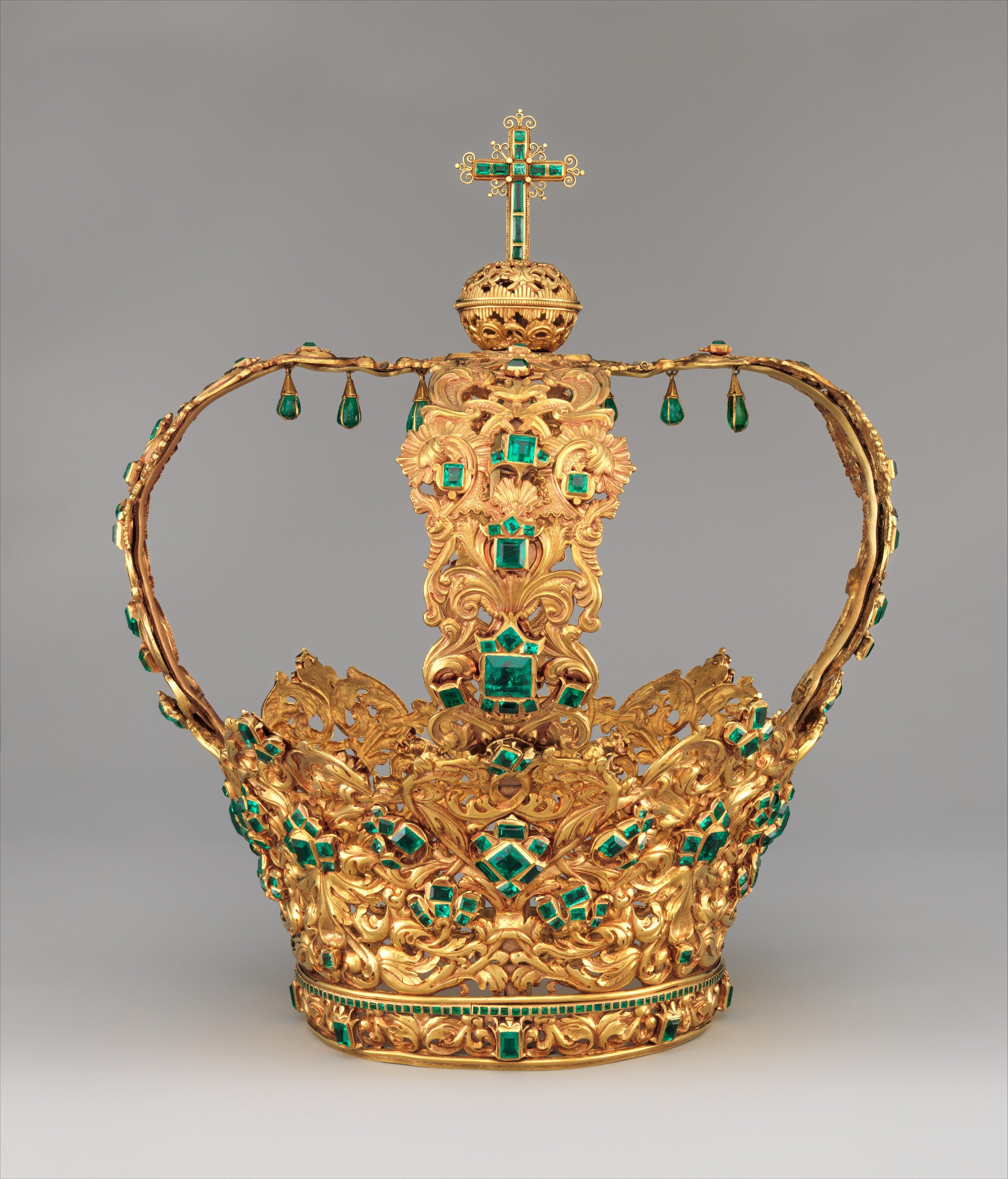
The Crown of the Andes, also known as the Crown of the Andes, is one of the most famous historical pieces associated with Colombian emeralds.
The crown was created during the colonial period and is historically associated with the city of Popayán, Colombia. According to historical tradition, it was made using emeralds from Colombian mines.
Its most impressive feature is precisely the number of gemstones it contains. The crown is covered with hundreds of emeralds of different sizes, set into a gold structure.
For centuries, the piece was associated with religious ceremonies and with the tradition of offering valuable objects to the Virgin of the Immaculate Conception of Popayán.
How Many Emeralds Are in the Crown of the Andes?
The Crown of the Andes contains more than 400 emeralds, although the exact number may vary depending on the source and how the individual stones are counted.
One of the crown's most famous features is a large central emerald known as the Atahualpa Emerald.
This gemstone is said to have received its name as a reference to Atahualpa, the last emperor of the Inca Empire.
The combination of gold and its numerous emeralds makes the crown an exceptional piece in the history of Latin American jewelry.
The Famous Atahualpa Emerald
The so-called Atahualpa Emerald is probably one of the elements that generates the most curiosity surrounding the Crown of the Andes.
Tradition tells us that this enormous emerald occupied a central position in the crown and was named after Atahualpa.
However, it is important to distinguish between tradition and historical documentation. The story of this gemstone is surrounded by accounts that have been passed down through generations, meaning that some details regarding its origin and its direct connection to the Inca emperor cannot be considered fully proven.
This does not make the story any less interesting. On the contrary, part of the fascination surrounding great historical gemstones lies precisely in the questions they continue to raise.
Did Atahualpa Really Own This Emerald?
This is one of the most intriguing points in the story.
Atahualpa was the last sovereign of the Inca Empire and died in 1533, during the early years of the Spanish conquest.
There are numerous stories about the wealth of the Inca Empire and the treasures that Spanish conquistadors encountered in South America. However, there is no conclusive historical evidence proving that the emerald in the Crown of the Andes personally belonged to Atahualpa.
The name "Atahualpa" is deeply connected to the legend surrounding the gemstone, but it should not be confused with proof of ownership.
Stories like this demonstrate how, over time, great gemstones can acquire an identity of their own and become part of the historical imagination.
Where Did the Emeralds in the Crown of the Andes Come From?
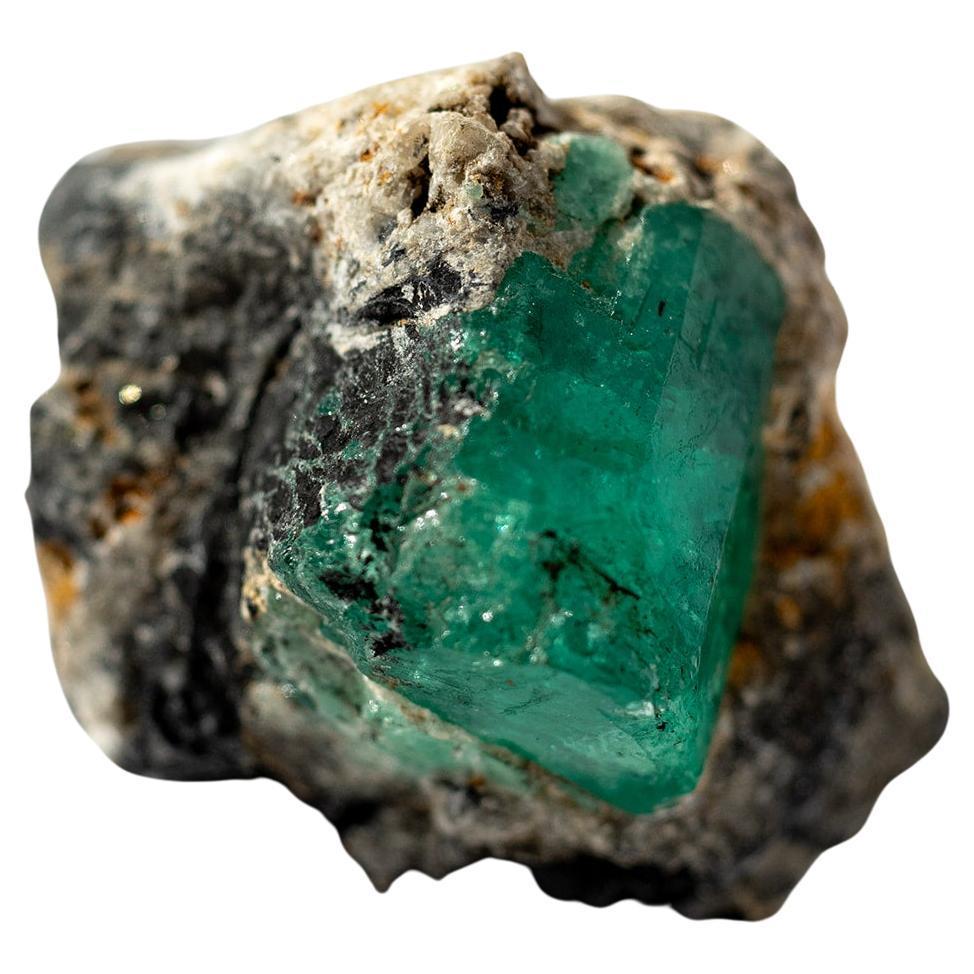
The Crown of the Andes is historically connected to Colombia, one of the world's most important emerald-producing regions.
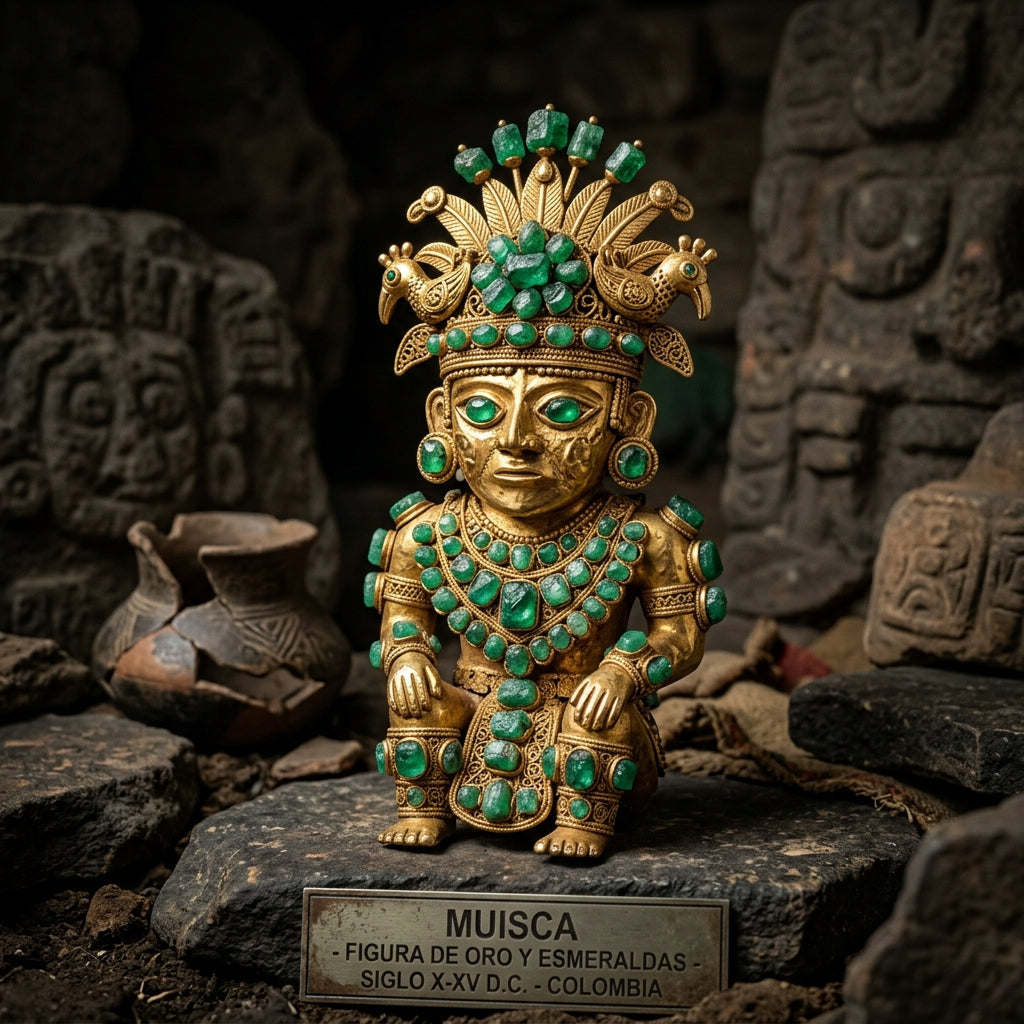
Colombian emeralds were known and valued long before the arrival of the Spanish. Different Indigenous peoples living in what is now Colombia used these gemstones as ornamental and symbolic objects.
Later, during the colonial period, emeralds from Colombian mines began circulating through trade networks controlled by the Spanish.
That is why, when we talk about the Crown of the Andes, we are also talking about an important part of the history of Colombian emeralds.
What Happened to the Crown of the Andes?
The crown's modern history is equally fascinating. For a long time, the piece remained connected to the city of Popayán and religious institutions. It later passed through different owners before eventually entering private hands.
Today, the crown is internationally recognized and has been part of important collections and exhibitions.
The piece was acquired by The Metropolitan Museum of Art in New York in 2022, as part of an acquisition made together with other objects related to Latin American colonial art.
Its history demonstrates how a piece created centuries ago can continue to attract the attention of collectors, historians, museums, and jewelry enthusiasts.
The Crown of the Andes: Much More Than a Piece of Jewelry
The Crown of the Andes is not simply a piece covered with precious gemstones.
It is an object that brings together different chapters in the history of Colombia and Latin America: Indigenous traditions, the arrival of the Spanish, religion during the colonial period, the gemstone trade, and the evolution of jewelry.
And at the center of it all is one of the gemstones that has fascinated humanity for centuries: the emerald.
Its history also reminds us of something important: the value of an emerald can go far beyond its price. A gemstone may have economic value, but it can also hold historical, cultural, sentimental, or artistic value.
Is the Atahualpa Emerald the Same Emerald That Is in the Crown?
The answer should be given with some caution.
Tradition identifies a large emerald in the Crown of the Andes as the Atahualpa Emerald. However, the stories about its origin and its supposed connection to the Inca emperor belong primarily to the realm of tradition and legend.
For this reason, when discussing this gemstone, it is better to present its story as a combination of historical documentation and oral tradition rather than stating every surrounding account as a proven fact.
And perhaps that uncertainty is precisely one of the reasons why it remains so fascinating.
Emerald By Love: A Story That Lives On
The Crown of the Andes and the legendary Atahualpa Emerald are reminders of the historical relationship between Colombia, emeralds, and the world of jewelry.
The crown brings together hundreds of these gemstones in a single piece and represents one of the most extraordinary examples of jewelry heritage associated with Colombian emeralds.
The Atahualpa Emerald, meanwhile, remains surrounded by questions, tradition, and mystery. And perhaps that is the magic of great emeralds: some can be studied, certified, and valued, while others also preserve stories that have survived for centuries.
Paula A. Bonilla
Social Communicator and Journalist from Universidad Sergio Arboleda in Colombia.