How Much Is a Rough Colombian Emerald Worth?
When we talk about rough Colombian emeralds, one of the first questions that comes to mind is: how much is a rough emerald worth? The answer is not as simple as looking at its weight and multiplying it by a price per carat.
An emerald freshly extracted from a mine can have very different characteristics from another stone found even in the same region. Its color, transparency, size, and inclusions can have a significant impact on its value.
In addition, not every piece of rough material containing emerald has the same potential to become a high-quality gemstone. That is why understanding the different types of rough Colombian emeralds is essential before buying or evaluating one.
What Is a Rough Colombian Emerald?
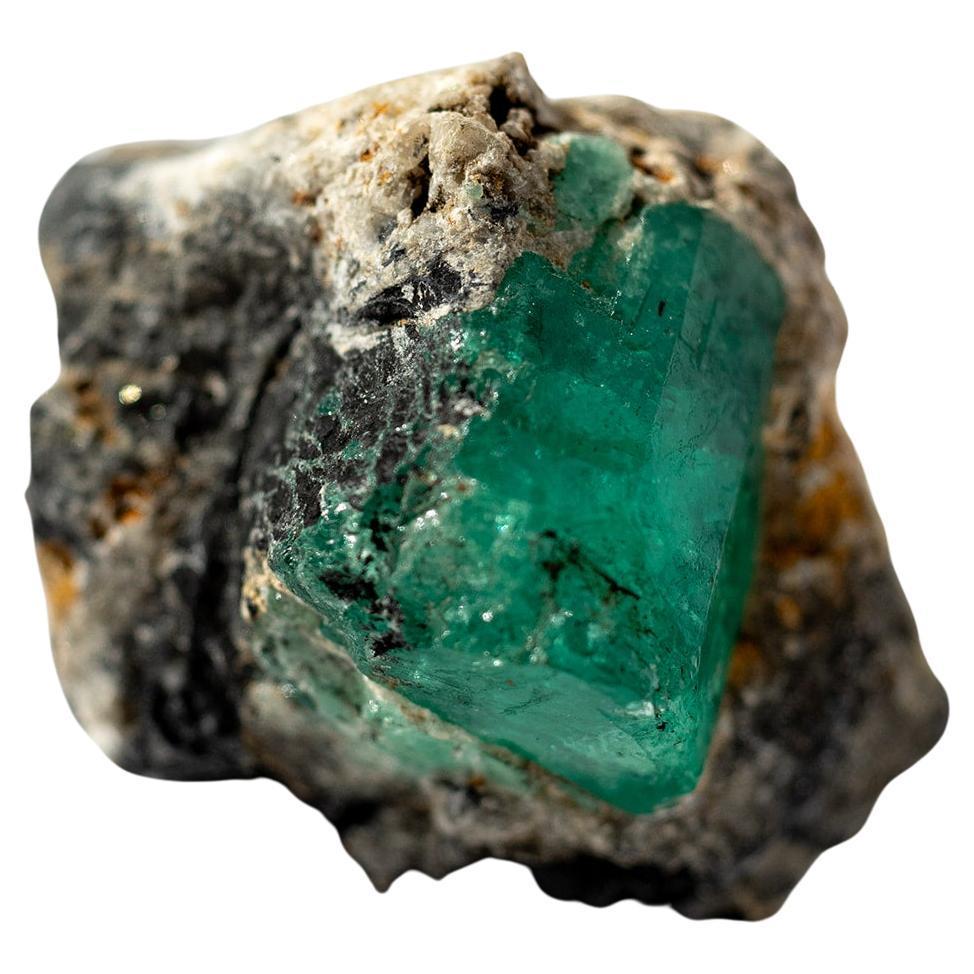
A rough emerald is a piece of mineral that has been extracted from the earth and has not yet undergone the cutting and polishing process required to turn it into a finished gemstone.
Unlike a cut emerald, a rough stone retains its natural shape and may display different crystal formations. Some pieces show well-defined hexagonal crystals, while others appear as small fragments, aggregates, or material mixed with the surrounding rock.
In Colombia, the main historic emerald-producing regions include Muzo, Coscuez, Chivor, and Gachalá. Each region can produce material with particular characteristics in terms of color, crystal formation, and matrix.
A rough emerald may not look particularly impressive at first glance. However, within it there may be a crystal with excellent potential to become a highly valuable gemstone.
How Much Is a Rough Colombian Emerald Worth?
There is no single price per carat for rough Colombian emeralds. The value can range from relatively small amounts for low-quality material or stones with limited cutting potential to considerably higher figures when dealing with an exceptional crystal.
Some of the main factors that determine how much a rough emerald is worth include:
1. Color
Color is one of the most important factors. Colombian emeralds are generally recognized for their green hues, which can range from light greens to more intense and saturated shades.
A stone with greater color intensity and good color distribution may be worth more than another stone of similar weight but with a less attractive color.
2. Transparency
Transparency is also very important. A completely clean emerald is extremely rare. Inclusions are common in these gemstones and can, in fact, help identify their natural origin.
However, there is a difference between a stone with interesting inclusions and one with so many fractures or inclusions that it has virtually no potential as a gemstone.
3. Crystal Size
Size alone does not determine price, but a large crystal with good characteristics can be particularly valuable.
For example, a 20-carat rough stone is not necessarily worth more than a 5-carat stone. If the larger crystal has poor transparency, significant fractures, or very little usable material for cutting, its value may be lower.
4. Shape and Crystal Formation
The natural shape of the crystal is also important.
Emerald crystals can display different shapes and mineral associations. A piece with a well-defined and attractive crystal formation can be of interest both from a gemological and a collector's perspective.
5. Cutting Potential
This is one of the most important aspects when evaluating a rough Colombian emerald.
A crystal with a high rough weight can lose a considerable amount of material during the cutting process. Therefore, the value of the rough stone should be evaluated based on its potential yield after cutting.
6. Origin
Origin can also influence the interest and value of an emerald.
Colombia has several mining regions recognized for emerald production, including Muzo, Coscuez, and Chivor.
For a buyer, knowing the origin can provide additional information about the characteristics of the material.
7. Treatments
It is also important to know whether the emerald has received any treatment.
Emeralds can undergo clarity treatments, and when purchasing a rough stone, it is important to determine exactly what you are buying and whether the material is genuinely natural.
Types of Rough Colombian Emeralds
Within the Colombian emerald trade, different terms are used to describe material found in mines and different types or qualities of rough emeralds. These include:
Emerald Canutillo
Canutillo is one of the terms used to describe certain rough emerald crystals. It is generally associated with elongated crystals or crystals with a tubular or prismatic appearance.
The shape of the crystal can be particularly interesting to collectors and buyers looking to preserve the stone in its natural state.
A canutillo crystal can have different levels of transparency and color. Therefore, simply identifying a stone as canutillo does not automatically determine its price.
Emerald Morralla
Morralla generally refers to small fragments or smaller pieces of emerald material. It may occur as small crystals or fragments that, individually, do not necessarily display the characteristics of a large gemstone.
This does not mean that all morralla has no value. Some fragments can be used for small jewelry pieces, collections, decorative objects, or other projects depending on their quality.
The price of morralla is usually very different from that of a large crystal with good gemological characteristics. In many cases, its value is calculated by lots containing larger quantities.
Emerald Ganga
The word ganga refers to the rock or minerals that accompany the mineral of interest.
In a rough emerald specimen, it is possible to find emerald crystals associated with other minerals and with the surrounding rock in which they formed.
For this reason, an emerald with ganga may preserve part of the natural matrix in which it was formed. These specimens can be particularly attractive to collectors because they provide a glimpse into the geological history of the gemstone.
An emerald specimen with ganga can also be used as a collector's or display piece, although its value should not be confused with that of a faceted emerald of gem quality.
Emerald Twin Crystal (Macla)
A macla is an association of two or more crystals that have a specific crystallographic relationship. In emeralds, twinning can produce particular shapes and patterns within the crystal.
This type of formation can be very interesting from a mineralogical perspective and for crystal collectors.
A well-formed twin crystal with good color and attractive characteristics can be especially interesting, even if it is not intended to be cut into a gemstone.
Is a Rough Emerald Worth More Than a Cut Emerald?
Not necessarily. This is one of the most important ideas to understand when discussing Colombian emerald prices.
A rough stone should be evaluated based on its potential after cutting. During the cutting process, material is removed to improve the gemstone's appearance, transparency, color, and proportions.
Therefore, a 10-carat rough emerald does not necessarily produce a 10-carat cut emerald.
Depending on the crystal's shape, fractures, inclusions, and cutting design, the final weight can be considerably lower.
On the other hand, some rough emerald specimens have their own value as natural crystals or collector specimens and should not necessarily be cut.
Is Buying a Rough Colombian Emerald a Good Idea?
It can be, but it depends entirely on the buyer's goal.
If you want to purchase a stone to create a piece of jewelry, you should pay particular attention to its cutting potential.
If you want to preserve a natural specimen, well-formed crystals, twin crystals, or pieces with natural matrix can be particularly interesting.
And if you are a collector, a rough mineral specimen can have value because of its natural formation, even if it does not have the characteristics necessary to become a jewelry gemstone.
That is why, before buying, it is important to determine what type of rough emerald you are looking for and what you intend to use it for.
Buy Rough Colombian Emeralds with Emerald By Love
If you are thinking about buying a rough Colombian emerald, having specialized guidance can help you understand what you are purchasing and avoid common mistakes.
At Emerald By Love, you can find Colombian emeralds and receive guidance on their characteristics, quality, origin, and potential depending on the type of stone you are looking for.
The key is not simply to find the largest emerald, but to learn how to recognize what makes a rough emerald valuable.
Paula A. Bonilla
Social Communicator and Journalist from Sergio Arboleda University in Colombia.