Cleopatra’s Emeralds: The History, Myth, and Reality Behind the Legendary Gems
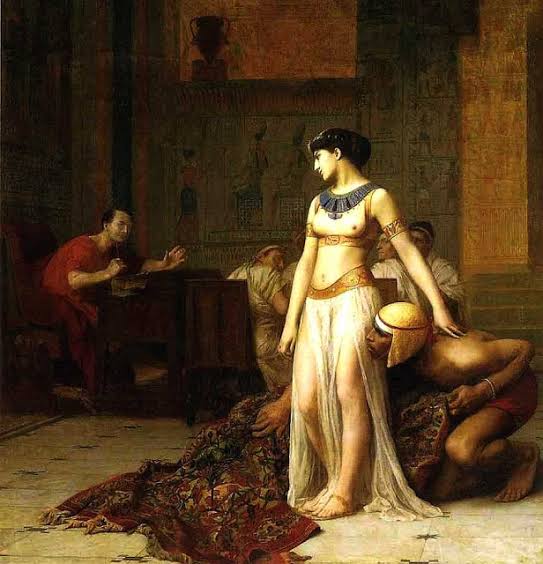
Few historical figures have been surrounded by as many mysteries and legends as Cleopatra VII, the last great queen of Egypt. Her beauty, intelligence, political power, and tragic story have inspired countless accounts for more than two thousand years.
Among the many stories associated with Cleopatra is her alleged fascination with gemstones, especially emeralds. Some versions of her story portray her covered in jewelry featuring large green gemstones, surrounded by luxurious pieces worthy of a queen.
But how much truth is there behind these stories? Did Cleopatra really have a collection of emeralds? Were Cleopatra’s emeralds Colombian? Is there an emerald that we can identify today as a gemstone that once belonged to the queen?
Who Was Cleopatra?
Cleopatra VII Philopator was born in 69 BC and was the last active ruler of the Ptolemaic Kingdom of Egypt. She belonged to the Ptolemaic dynasty, a family of Macedonian-Greek origin that came to power in Egypt after the death of Alexander the Great.
Cleopatra became queen in 51 BC and ruled Egypt during one of the most politically complex periods in the ancient Mediterranean world.
Her story became closely connected to two of Rome’s most important figures: Julius Caesar and Mark Antony. Her political alliances had significant consequences for both Egypt and the future of the Roman Empire.
Cleopatra died in 30 BC, and shortly afterward, Egypt became part of Roman territory.
Her image has survived for centuries through historical texts, archaeology, art, literature, and, of course, countless legends. Among these legends, gemstones hold a particularly fascinating place.
Did Cleopatra Really Have Emeralds?
This is where the story becomes much more interesting.
We know that emeralds were known in ancient Egypt. There were areas where green beryl was extracted in Egypt’s Eastern Desert, particularly in the region associated with Wadi Sikait.
These mines are considered among the oldest known emerald mining sites.
However, there is an important difference between knowing that emeralds were known in Egypt and being able to state that specific emeralds personally belonged to Cleopatra.
To this day, there is no definitive archaeological evidence that allows us to identify a specific collection of emeralds as the personal property of Cleopatra VII.
This does not mean that Cleopatra never wore emeralds. As the queen of Egypt, it is entirely possible that she had access to jewelry made with precious gemstones. What we cannot do is present as historical fact something that has never been proven.
The Ancient Emerald Mines of Egypt
The connection between Cleopatra and emeralds makes sense when we look at the history of ancient Egyptian mines.
Egypt’s Eastern Desert contains some of the oldest known emerald deposits in the world.
The Wadi Sikait region is particularly important in the history of emerald mining.
Ancient miners searched for green beryl crystals that could later be used in jewelry, ornamental objects, and pieces intended for the elite.
These mining operations existed long before Cleopatra and continued to be important during later periods.
For this reason, emeralds are an important part of Egypt’s mineralogical history, although we should not confuse ancient Egyptian emeralds with the famous Colombian emeralds of today.
Were Cleopatra’s Emeralds Colombian?
No.
This is one of the main misconceptions that appears when people talk about Cleopatra and emeralds.
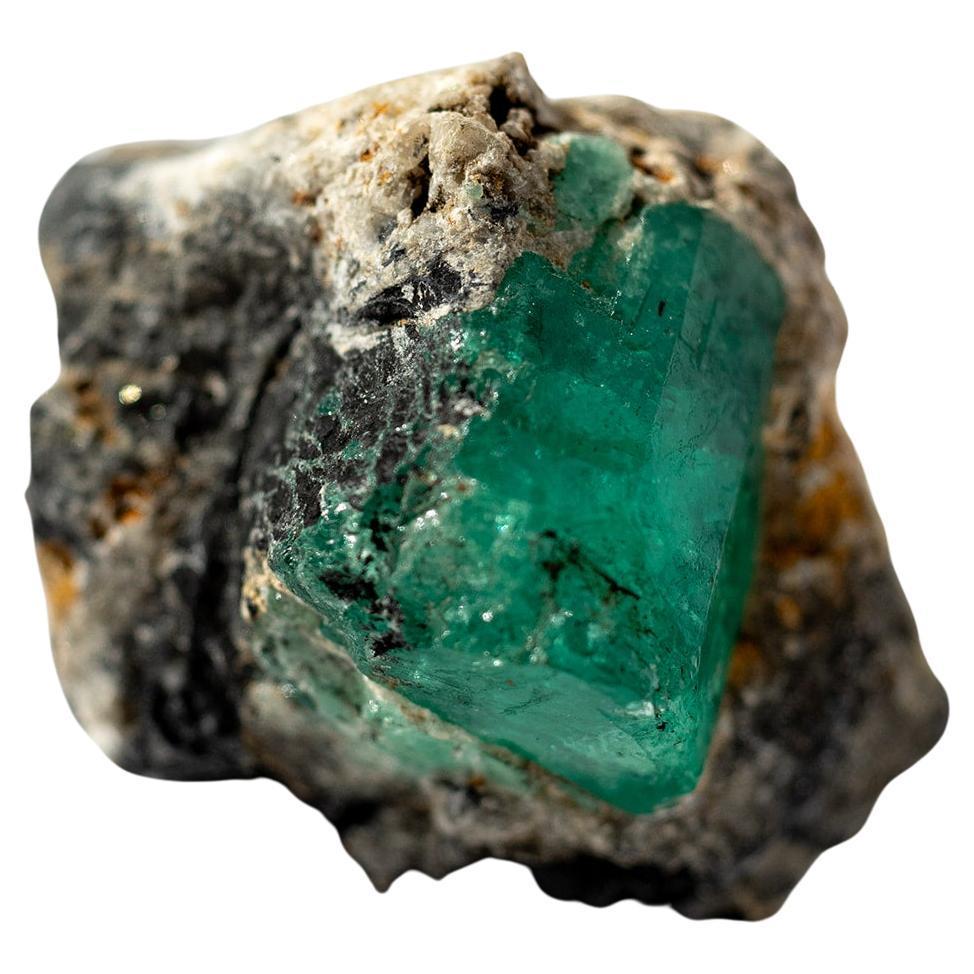
Colombian emeralds come from deposits located in what is now Colombia. Among the country’s most historically important emerald-producing regions are Muzo, Coscuez, Chivor, and Gachalá.
These mines are thousands of miles from Egypt and belong to a completely different mining tradition.
During Cleopatra’s time, the civilizations of the ancient Mediterranean did not know about Colombian emeralds.
Colombian emeralds began to gain international importance many centuries later, particularly after the arrival of the Spanish in the Americas during the 16th century.
Therefore, Cleopatra could not have owned Colombian emeralds. The emeralds that may have been available to the Egyptian elite during her time came from sources known in the ancient world, including the mining regions of Egypt.
The Myth of Cleopatra’s Great Emerald Collection
One of the most frequently repeated stories today is that Cleopatra owned a vast personal collection of emeralds. Some popular versions describe large necklaces, crowns, rings, and other pieces of jewelry decorated with enormous emeralds.
The problem is that we do not have a historical inventory that can confirm such a collection. Nor are there scientifically identified pieces that can be recognized as "Cleopatra’s emeralds."
This does not mean that the queen did not own jewelry. It means that we cannot determine with certainty which of the pieces or gemstones known today once belonged to her.
This distinction is fundamental: something being historically possible is very different from something being documented.
Did Emeralds Have Special Powers?
Emeralds and other gemstones have been surrounded by beliefs and superstitions for centuries. In different cultures, they were attributed with protective, healing, and even supernatural properties.
Emeralds have subsequently been associated with concepts such as:
- Protection
- Love
- Fertility
- Vision
- Youth
- Good fortune
- The ability to reveal the truth
However, it is important not to automatically attribute these beliefs to Cleopatra. Many of these stories developed across different cultures and historical periods.
This is another example of how the history of gemstones can become intertwined with mythology.
Does an Emerald That Belonged to Cleopatra Still Exist Today?
This is probably one of the most fascinating questions.
So far, there is no widely accepted and scientifically documented emerald that can be identified with certainty as the personal property of Cleopatra VII.
The problem is that gemstones can change hands over centuries. A stone can be removed from a piece of jewelry, recut, repolished, sold, inherited, or incorporated into another piece.
Therefore, even when we find an ancient piece of jewelry, proving that a particular gemstone belonged specifically to Cleopatra requires solid historical and archaeological evidence.
Without such documentation, any claim should be considered a possibility or a legend, rather than a proven fact.
The True Legacy of Cleopatra’s Emeralds
More than two thousand years after her death, Cleopatra continues to inspire designers, artists, writers, and jewelry lovers. Her connection with emeralds is part of that enduring image.
However, perhaps the most interesting thing is understanding that the true history of emeralds is already fascinating enough without turning every legend into fact.
The ancient mines of Egypt represent one of the most interesting chapters in the history of this gemstone. Centuries later, Colombia would develop its own history with emeralds, becoming one of the places in the world most recognized for producing these gemstones.
From the ancient mines of the Eastern Desert to the mountains of Muzo, Coscuez, and Chivor, emeralds have accompanied different civilizations and cultures for thousands of years.
From Cleopatra’s Emeralds to Colombian Emeralds
At Emerald By Love, you can find Colombian emeralds and receive guidance on their characteristics, quality, origin, and possibilities based on the type of gemstone you are looking for.
Because buying an emerald should not simply be about finding the largest stone.
It is about understanding what makes each emerald special, where it comes from, and what story it tells.
And perhaps that is the true connection between Cleopatra and emeralds: we do not know exactly which gemstones were hers, but we do know that more than two thousand years ago, emeralds were already inspiring admiration.
Paula A. Bonilla
Social Communicator and Journalist from Universidad Sergio Arboleda in Colombia.