History of the Colombian Emerald Trade
Talking about Colombian emeralds means talking about a history that began hundreds of years ago, long before jewelry stores, international markets, or even the arrival of the Spanish in the Americas.
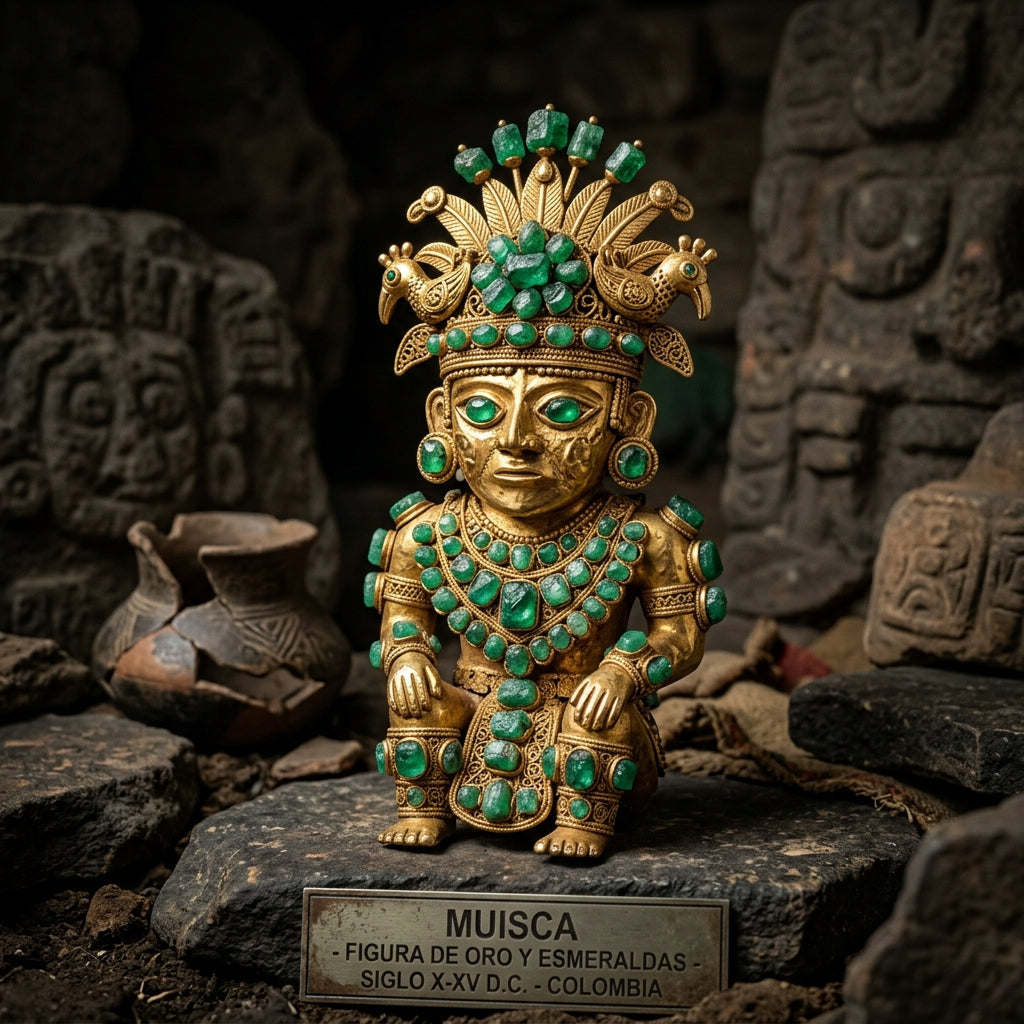
Emeralds were already known by the Indigenous peoples who inhabited what is now Colombia. They found them, used them as ornaments and special objects, and, above all, traded them with other communities.
With the arrival of the Spanish, this history changed. Emeralds began to play an increasingly important role in trade, and some of the stones extracted in Colombia eventually made their way to Europe. But how did an emerald from the mountains of Boyacá become one of the most recognized gemstones in the world?
Emeralds Before the Arrival of the Spanish
Long before the Spanish conquest, Indigenous peoples already knew the areas where emeralds could be found.
In what is now known as Boyacá, some of Colombia’s most important emerald-producing regions are located, including Muzo and Chivor.
For Indigenous peoples, an emerald was not simply a beautiful stone. Its intense green color had a special meaning and was connected to nature, fertility, and different beliefs. Emeralds could be used as ornaments and ceremonial objects, but they could also be traded for other goods.
How Were Emeralds Traded?
At that time, there were no Colombian pesos, U.S. dollars, or currencies like the ones we use today. Trade was mainly based on barter.
For example, a community with access to emeralds could exchange them for products it needed that were available in other regions. In this way, emeralds could travel far beyond the mountains where they were originally found.
Other products also circulated through these trade networks, including:
- Salt.
- Gold.
- Cotton.
- Food.
- Ceramics.
- Textiles.
- Feathers.
- Decorative objects.
This is how some of the earliest trade routes connected to emeralds began to develop across what is now Colombia.
Muzo and Chivor: Key Places in This History
When we think about Colombian emeralds, two names come up again and again: Muzo and Chivor.
These regions of Boyacá have historically been recognized for their emerald deposits and were important long before the arrival of the Spanish.
The Indigenous peoples living in these areas knew about the stones and incorporated them into their own traditions and systems of exchange.
What Happened When the Spanish Arrived?
With the arrival of the Spanish in the 16th century, everything began to change. The conquistadors discovered that different parts of the territory were rich in valuable natural resources, including gold and emeralds.
Emeralds attracted particular attention because of their rarity and beauty.
After the conquest, the Spanish began searching for and gaining control over areas where these stones could be found. This also led to conflicts with the Indigenous peoples who had already inhabited these territories and known about the mines for generations.
Emeralds Begin to Travel Beyond Colombia
This was one of the major turning points in the history of these gemstones.
Before the arrival of the Spanish, emeralds mainly moved between different Indigenous communities. During the colonial period, they became part of a much larger trading system.
Stones extracted in the regions of Boyacá were transported to different commercial centers and could eventually reach ports along the Caribbean coast.
One of the most important was Cartagena de Indias, from where many goods traveled to Spain. In this way, a stone that began its journey in the Colombian mountains could eventually end up on the other side of the ocean.
Why Were Emeralds So Important?
Emeralds have always attracted attention because of their green color, but Colombian emeralds developed a particularly strong reputation.
Their rarity and the characteristics of many of the crystals found in Colombia made them highly valued.
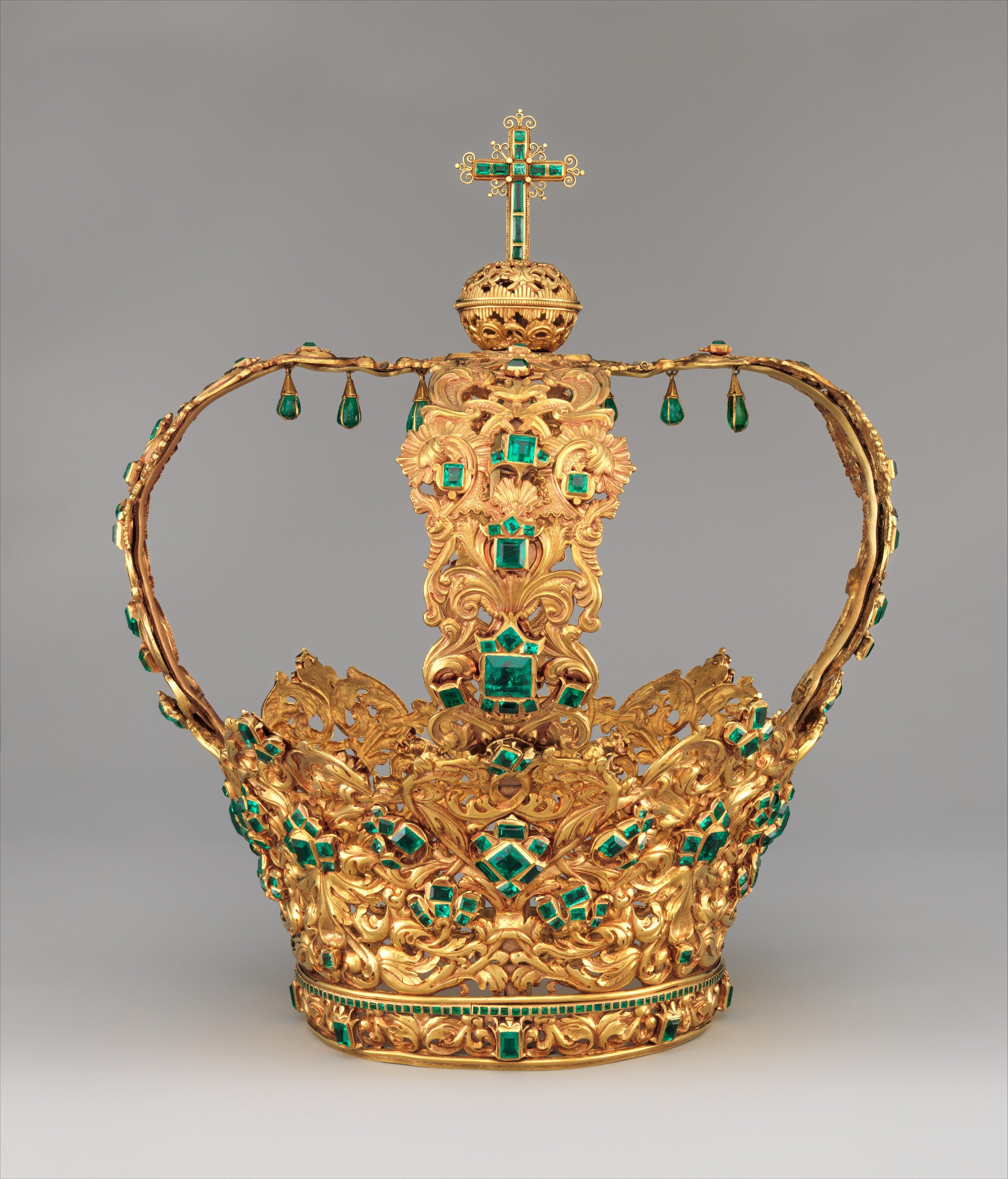
During the colonial period, Colombian emeralds began reaching people of great wealth and power in Europe. Emeralds started appearing in jewelry, luxury objects, and pieces associated with powerful social classes. Their value was no longer only cultural; it also became commercial.
From Indigenous Trade to International Commerce
We can understand this evolution in a very simple way:
- First: Indigenous peoples found emeralds and used or traded them.
- Then: emeralds began circulating between different regions of what is now Colombia.
- Next: the Spanish arrived and began taking control of the producing areas.
- Finally: emeralds became part of the trade routes connecting the Americas with Europe.
In other words, Colombian emeralds went from being part of small-scale exchanges between communities to becoming a product known and traded far beyond Colombian territory.
A Gemstone with Centuries of History
The history of the Colombian emerald trade is fascinating because it shows us that these stones were important long before they became part of the international jewelry industry.
An emerald found in Colombia could begin its journey in the mountains of Boyacá, pass through different hands, travel along ancient trade routes, and centuries later become part of a piece of jewelry.
And that story continues to this day.
Emerald By Love: A Story That Continues
At Emerald By Love, we believe that learning about the history of Colombian emeralds also means understanding the value behind every stone. Our passion for these gems comes from the connection between land, culture, mining, and tradition. We select natural Colombian emeralds and create jewelry in Colombia, with the goal of preserving a part of each stone’s story in every piece. Because an emerald is more than just a gemstone: it is the result of a story that began long before it became a piece of jewelry.
Paula A. Bonilla
Social Communicator and Journalist from Universidad Sergio Arboleda in Colombia.