What Is the Difference Between Oil and Resin in a Colombian Emerald?
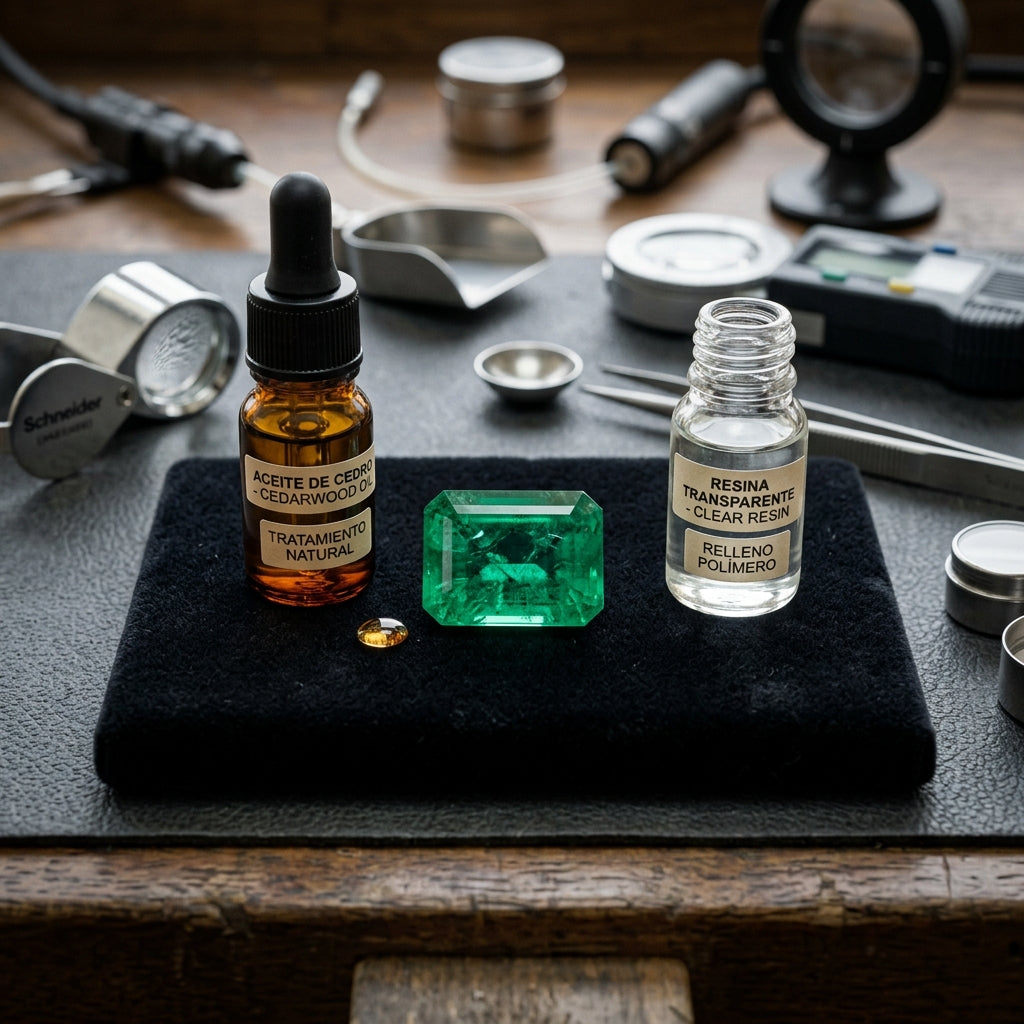
When talking about Colombian emeralds, it is common to hear that a stone has been oiled or treated with resin. Although both methods are used to improve the appearance of an emerald, they are not exactly the same. The main difference lies in the material used to fill the small fractures and cavities that reach the surface of the gemstone.
There are many questions and misconceptions about these treatments, so in this article, we address the most relevant concerns to help you make an informed decision when purchasing your next piece of emerald jewelry.
What Is Oil Treatment in an Emerald?
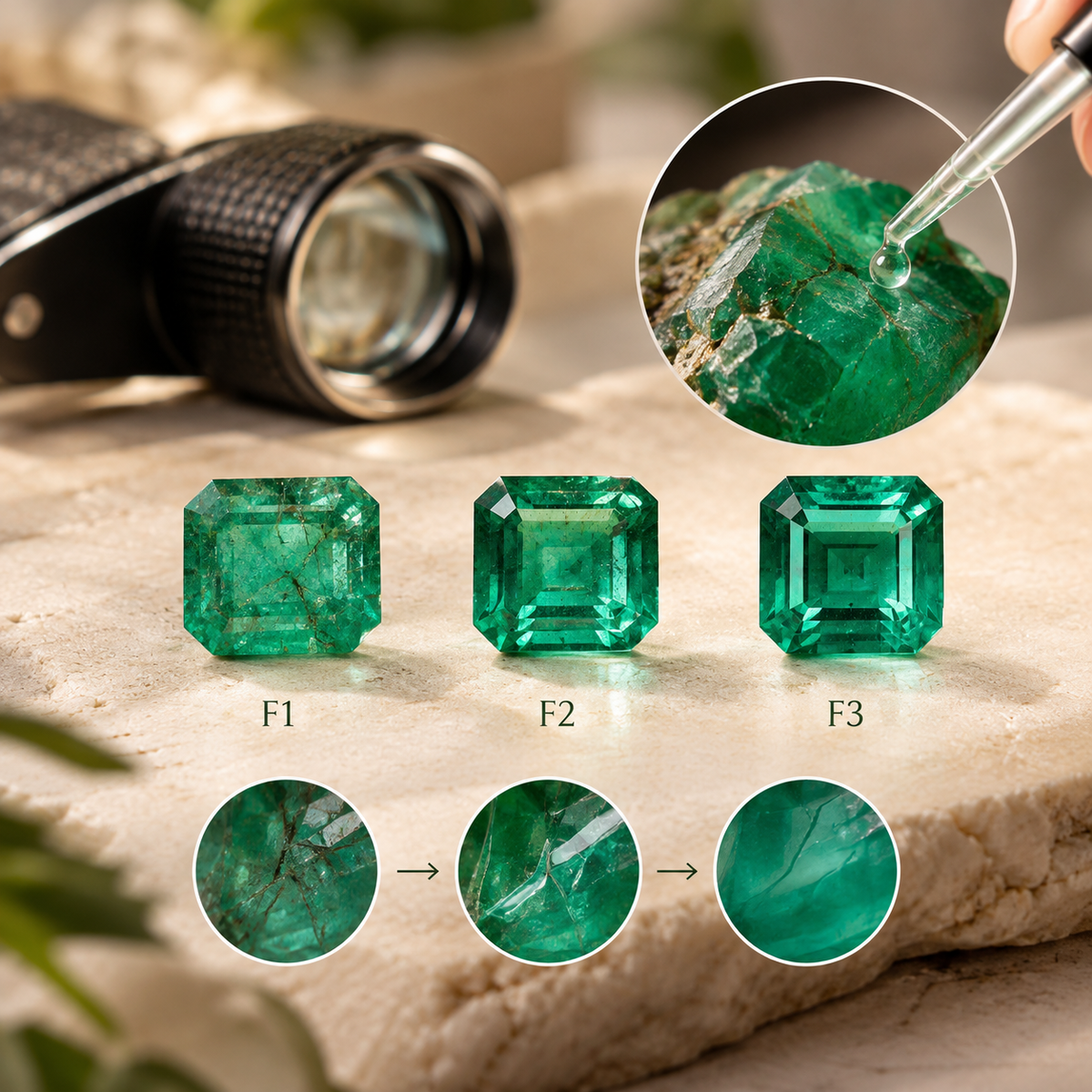
Oil treatment is one of the most traditional treatments used for emeralds. It involves introducing an oil or similar substance into small fractures that reach the surface of the gemstone.
The main purpose is to make these fractures less visible, allowing light to pass through the stone more evenly and making the emerald appear clearer.
Different types of oils and colorless substances have been used in emeralds. In gemology, the presence and degree of treatment should be evaluated to determine how significant the treatment is in a specific stone.
An important point to understand is that oil treatment does not turn a natural emerald into a synthetic emerald. If the gemstone formed naturally in the Earth, it remains a natural emerald even if it has received treatment.
What Is Resin Treatment in a Colombian Emerald?
Resin can also be used to fill fractures and improve the apparent clarity of an emerald. However, unlike oil, it is a material that can be more permanent and has different properties.
Some resins can harden after being introduced into the fractures. Depending on the material used and the amount of filler present, the treatment may have different characteristics from those of an emerald that has only been oiled.
For this reason, when an emerald has been treated with resin, it is especially important to know what material was used and to what degree the stone was treated.
Is an Emerald Treated with Resin Worth Less?
This question cannot necessarily be answered simply by saying “oiled = good” or “resin-treated = bad.” The value of an emerald depends on many factors, including color, transparency, clarity, size, origin, quality of the cut, and degree of treatment, among others.
The important thing is to know exactly what the stone you are purchasing contains. Two Colombian emeralds of the same size can have very different prices depending on their characteristics and the extent of their treatment.
How Can You Tell if an Emerald Has Oil or Resin?
It is not always possible to determine this with certainty just by looking at the gemstone. To identify the treatment and evaluate its degree, it is recommended to consult a gemologist or gemological laboratory that can examine the stone using the appropriate equipment.
This is especially important when dealing with a high-value emerald. A gemological certificate can provide information about whether the stone has received treatment and, when possible, what type of treatment has been identified.
At Emerald By Love
At Emerald By Love, we believe that understanding an emerald is an important part of buying one. That is why, in addition to considering its color, clarity, size, and cut, we can guide you through its treatment and the particular characteristics of each stone.
A treated Colombian emerald is still a natural gemstone. What matters is knowing what treatment it received and understanding how that treatment may affect its appearance, care, and value.
Paula Bonilla
Social Communicator and Journalist, Universidad Sergio Arboleda, Colombia