The History of Emeralds in Ancient Egyptian Civilization
The history of emeralds in ancient Egypt is fascinating to explore, but it is also surrounded by certain mysteries. It is important to clarify that there is no evidence that ancient Egyptians used Colombian emeralds or that the famous “Cleopatra’s Mines” necessarily produced emeralds as we know them today.
However, in this article, we want you to discover more about the myths and legends of Egyptian culture associated with emeralds, as well as learn about the culture and beliefs surrounding this important gemstone.
Emeralds in Ancient Egyptian Civilization
The ancient Egyptians had a deep fascination with green stones. The color green was associated with life, fertility, renewal, and vegetation, which is why green gemstones and minerals held important symbolic meaning.
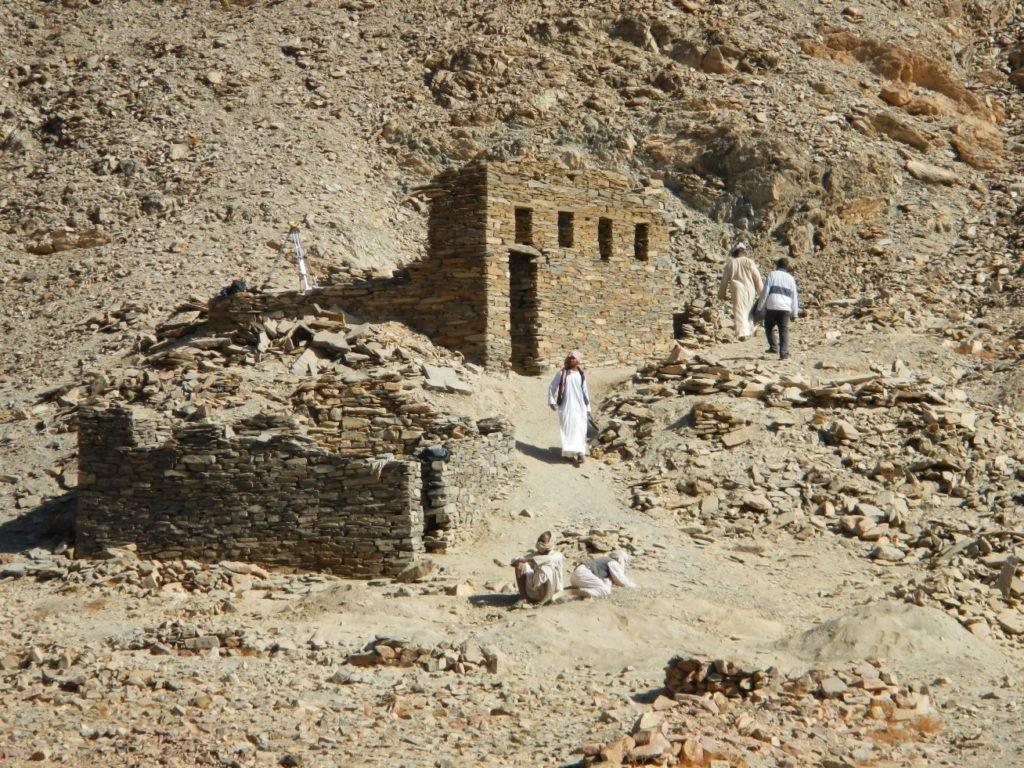
Historical tradition attributes the exploitation of green beryl deposits in Egypt’s Eastern Desert to the ancient Egyptians, particularly in the Wadi Sikait area. These workings are popularly known as “Cleopatra’s Mines” because of their later association with Cleopatra VII and emeralds.
Did Cleopatra Really Have Emeralds?
Cleopatra VII is probably the Egyptian figure most closely associated with emeralds. Later sources describe her interest in gemstones and their use as symbols of wealth and power.
However, we should be cautious about a widely repeated claim: we cannot confirm that Cleopatra’s jewelry was decorated with emeralds from the mines that now bear her name. The available archaeological evidence does not allow many of the stones used in her personal jewelry to be identified with certainty.
In addition, ancient Egyptian workings produced green beryl and other green stones, and the mineralogical identification of ancient materials does not always correspond to the way emeralds are classified today.
The Meaning of the Color Green
For the Egyptians, green had special significance. It was associated with Osiris, the god connected with death, resurrection, and regeneration.
For this reason, green stones could have a deeper meaning than simply being ornamental. Green represented that which grows again after death: vegetation, nature, and the renewal of life.
There was also a strong connection between the color green and the ideas of protection and rebirth, concepts that were fundamental to ancient Egyptian funerary culture.
The So-Called Cleopatra’s Mines
The ancient mines of Wadi Sikait are located in Egypt’s Eastern Desert, in a region where beryl deposits were exploited.
Their modern name is associated with Cleopatra, but this does not mean that Cleopatra personally discovered the mines or that they belonged exclusively to her. The exploitation of these deposits took place during different periods of Egyptian history and continued to be significant during the Roman period.
The stones obtained from this region eventually became part of the trade in gemstones and minerals throughout the ancient world.
Were They the First Emeralds in the World?
It depends on how we define “emerald.” Ancient Egyptians knew and used green beryl, but identifying an ancient stone as an “emerald” can be problematic. In modern gemological terms, emerald is a variety of the mineral beryl, with its green color primarily caused by the presence of chromium, vanadium, or both.
Therefore, when referring to the “first emeralds of Egypt,” it is more accurate to speak of ancient deposits of green beryl that were historically considered emeralds.
Egypt and Colombian Emeralds: An Important Difference
Egyptian and Colombian emeralds have different geological histories and characteristics.
Colombian emeralds primarily come from regions such as Muzo, Coscuez, Chivor, and Gachalá, while the ancient Egyptian deposits were located in the Eastern Desert.
This also helps dispel a common misconception: Colombian emeralds were not part of the ancient Egyptian world. There was no trade between the Americas and the civilizations of the Mediterranean during that period.
A History Connecting Geology, Religion, and Power
The importance of emeralds and other green stones in Egypt was not limited to their beauty. For the ancient Egyptians, the color green could represent life, regeneration, and eternity.
Centuries later, the association between Cleopatra and emeralds turned Egypt into one of the most famous historical stories connected to this gemstone. However, separating archaeological evidence from later legends is essential to telling its history accurately.
Paula Bonilla
Social Communicator and Journalist, Universidad Sergio Arboleda, Colombia