How to Start Working with Colombian Emeralds
For many people, working with these gemstones represents a business opportunity, whether through the sale of loose stones, jewelry creation, or buying and selling for collectors.
However, entering this market requires much more than having capital available. Understanding the gemstone, learning how to evaluate its quality, working with reliable suppliers, and understanding how its value is determined are all essential aspects of getting started correctly.
What Does It Mean to Work with Colombian Emeralds?
Working with Colombian emeralds can involve different activities within the gemstone trade. It does not necessarily mean becoming a dealer of large stones from day one.
Some possibilities include:
- Buying and selling loose Colombian emeralds.
- Selling cut emeralds for jewelry.
- Buying rough stones and having them cut.
- Creating jewelry with Colombian emeralds.
- Working with collectors.
- Supplying emeralds to jewelers and designers.
- Creating a store specializing in Colombian gemstones.
- Selling emeralds in international markets.
Each business model requires different levels of knowledge, capital, and legal requirements.
How to Start Working with Colombian Emeralds
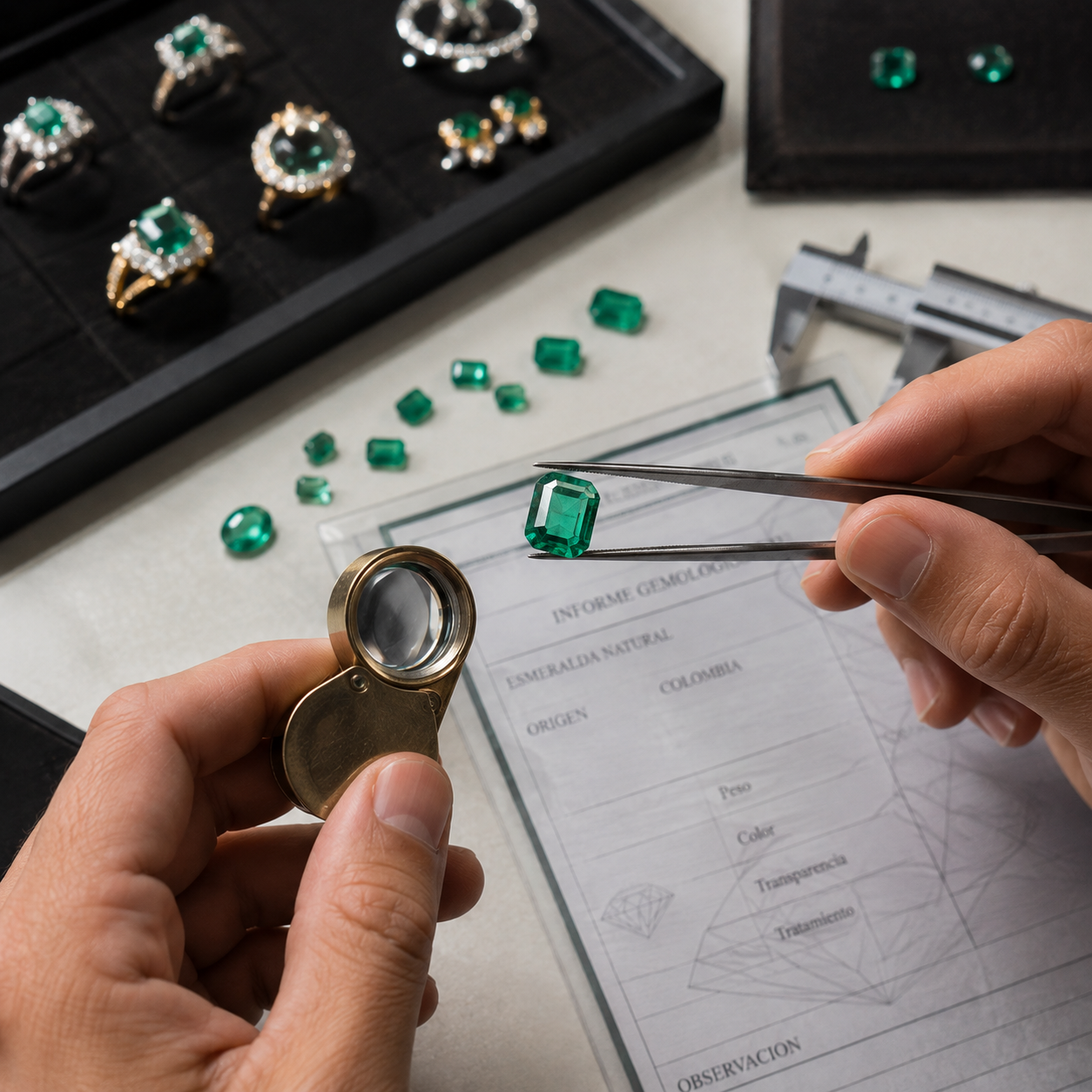
1. Learn About Emeralds Before Investing
The first step to starting a business with Colombian emeralds should not be buying a stone, but learning how to recognize and evaluate one.
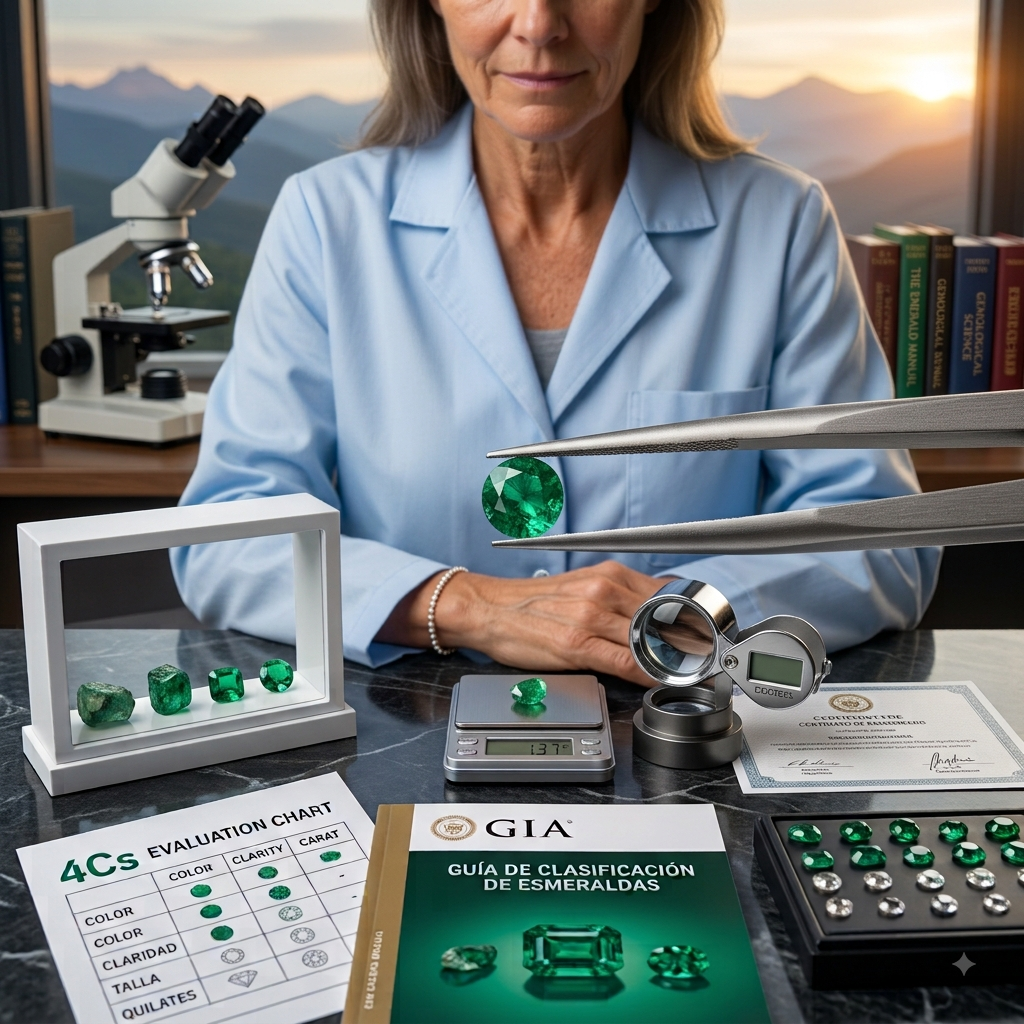
It is important to understand basic gemological concepts and the characteristics that influence an emerald's value.
Among the main factors are:
Color
Color is one of the most important elements when evaluating an emerald. Its hue, saturation, and intensity are considered.
Colombian emeralds can display different shades of green and, depending on the stone, may have very distinctive visual characteristics.
Transparency
Transparency also has a significant influence on how an emerald is perceived and valued.
A stone may have an attractive color, but if it contains a considerable number of fractures or inclusions that affect its transparency, its commercial value may differ from that of another stone of the same weight.
Inclusions
Inclusions are a common characteristic of natural emeralds.
Rather than assuming that a "perfect" emerald is necessarily better, it is important to learn how to interpret its inclusions and understand how they affect its appearance, durability, and value.
Cut
A good cut can help make the gemstone's color and overall appearance more attractive.
Some cuts found in Colombian emeralds include emerald cut, oval, pear, round, heart, and various fancy cuts.
Weight
Weight is normally expressed in carats.
But there is one fundamental point every new emerald dealer should understand: an emerald's price is not determined solely by its carat weight.
2. Understand That There Is No Universal Price Per Carat
One of the biggest challenges when starting to work with Colombian emeralds is learning how to determine their price.
Two stones weighing exactly one carat can have completely different values.
For example, a 1 ct emerald with excellent color, good transparency, and an attractive cut may be worth significantly more than another 1 ct emerald with less intense color, numerous fractures, and lower transparency.
For this reason, using price per carat as the only reference can lead to significant mistakes. Valuation must consider the combination of characteristics of each individual gemstone.
3. Learn About Emerald Treatments
Another essential area of knowledge is understanding what it means for an emerald to have received a treatment.
Many emeralds contain fractures and fissures that can be treated to improve their appearance.
Treatments found in the market include different types of oils, resins, and other materials used to improve the gemstone's visual appearance.
This does not automatically mean that a stone is fake.
What matters is understanding and properly disclosing the treatment.
If you are going to sell emeralds, you should learn to ask:
- Has the stone been treated?
- What type of treatment did it receive?
- Has the treatment been disclosed?
- Is there a gemological report?
- Who performed the identification?
Transparency with the customer is essential.
4. Know Colombia's Main Emerald-Producing Regions
Colombia has several regions historically associated with emerald production.
Among the best known are Muzo, Coscuez, Chivor, and Gachalá.
Each area may be associated with particular geological and gemological characteristics.
For someone who wants to work professionally with these gemstones, understanding their geographic origin can be an important tool, especially when selling special stones or gemstones intended for collectors.
However, it is important not to assume that a particular origin automatically guarantees a higher price. The individual quality of the gemstone remains fundamental.
5. Buy From Reliable Suppliers
When you begin investing in Colombian emeralds, one of the most important decisions is choosing your suppliers carefully.
You should not base a purchase solely on a photograph, an informal recommendation, or a claim that a stone is "high quality."
Look for suppliers who can provide:
- Clear information about the stone.
- An invoice or commercial documentation.
- Treatment disclosure.
- Information about origin when available.
- Certificates or gemological reports when necessary.
- Clear purchasing conditions.
- A proven track record within the industry.
For higher-value transactions, documentation and traceability become even more important.
6. Start With a Small Inventory
One of the most common mistakes made by people entering the gemstone business is thinking they need to start with extremely large and expensive stones.
Not necessarily.
A more cautious approach is to begin with a small and diversified inventory.
You could start with:
- Small emeralds.
- Stones for earrings.
- Stones for rings.
- Cabochons.
- Cut stones.
- Small collector's stones.
This allows you to understand how the market behaves and discover which characteristics your customers are actually looking for.
7. Learn to Buy With Your Customer in Mind
Not every emerald is suitable for every buyer. A jeweler may be looking for a stone with specific dimensions for a particular design.
A collector may be interested in an unusual gemstone. A customer looking for a ring may prioritize color and appearance. Therefore, before purchasing large quantities, it is advisable to identify who your final customer will be.
The question should not simply be:
"Is this a good emerald?"
You should also ask yourself:
"Who is this emerald good for?"
8. Colombian Emeralds for Jewelry
One of the most interesting ways to enter this market is by working with jewelry.
You can purchase stones and then create:
- Rings.
- Earrings.
- Pendants.
- Bracelets.
- Charms.
- Custom jewelry.
In this business model, the final value does not depend solely on the emerald.
The design, type of metal, craftsmanship, diamonds or other gemstones, presentation, and overall purchasing experience also play a role.
A Colombian emerald can therefore become the centerpiece of a jewelry piece with a completely different identity.
9. Do You Need a Certificate?
Not every emerald necessarily needs an individual gemological certificate to be sold, especially lower-value stones.
However, as the value of a gemstone increases, having an independent and reliable gemological report can provide greater security for both the buyer and the seller.
A report can help document aspects such as gemstone identification and, depending on the laboratory and type of report, characteristics related to treatments and origin.
It is important to distinguish between a commercial certificate of authenticity and a gemological report issued by a specialized laboratory.
10. Comply With Legal Requirements
If you want to turn this activity into a formal business, you should not overlook the legal and tax aspects.
The sale of minerals and precious gemstones may be subject to specific requirements in Colombia, while international transactions may involve additional documentation.
If you also plan to export emeralds, you should research the applicable requirements related to:
- Invoicing.
- Commercial documentation.
- Export declarations and procedures.
- Requirements related to mining activities.
- Secure transportation.
- Insurance.
- Requirements in the destination country.
Before starting significant operations, it is advisable to obtain professional guidance regarding current requirements.
12. How Much Money Do You Need to Get Started?
There is no single required amount. You can start with a relatively small budget by purchasing smaller stones and gradually expanding your inventory.
The most important thing is not to invest all your capital in a single emerald while you are still learning.
Mistakes to Avoid When Getting Started
If you are considering working with Colombian emeralds, avoid:
- Buying simply because a stone has a low price per carat.
- Assuming that all Colombian emeralds have the same value.
- Buying expensive stones without understanding their treatment.
- Relying solely on photographs.
- Mixing stones with different characteristics without keeping proper inventory records.
- Failing to document purchases.
- Assuming that a natural, low-quality stone has high value simply because it is Colombian.
- Investing large amounts of money before understanding the market.
Is It Worth Working With Colombian Emeralds?
Yes, but it is a business that requires knowledge, patience, and commercial judgment.
The advantage of working with Colombian emeralds is that there is an international market interested in these gemstones, as well as a wide variety of stones, from commercial-grade examples to exceptional collector's pieces.
However, true expertise begins when you learn to look at an emerald beyond its size.
An emerald is not necessarily more valuable simply because it is large. Its color, transparency, inclusions, cut, treatment, documented origin, and market demand can completely change its value.
Emerald By Love: Colombian Emerald Knowledge
At Emerald By Love, we believe that understanding an emerald is the first step toward learning how to value it.
Our goal is to bring Colombian emeralds closer to buyers, collectors, and jewelry enthusiasts by providing information about their characteristics, varieties, treatments, and provenance.
From Colombia's emerald-producing regions to a finished piece of jewelry, every stone has a story. And if you are thinking about starting to work with Colombian emeralds, the best place to begin is not by buying—it is by learning.
Paula A. Bonilla
Social Communicator and Journalist from Universidad Sergio Arboleda in Colombia.