History of Emerald Mining in Colombia
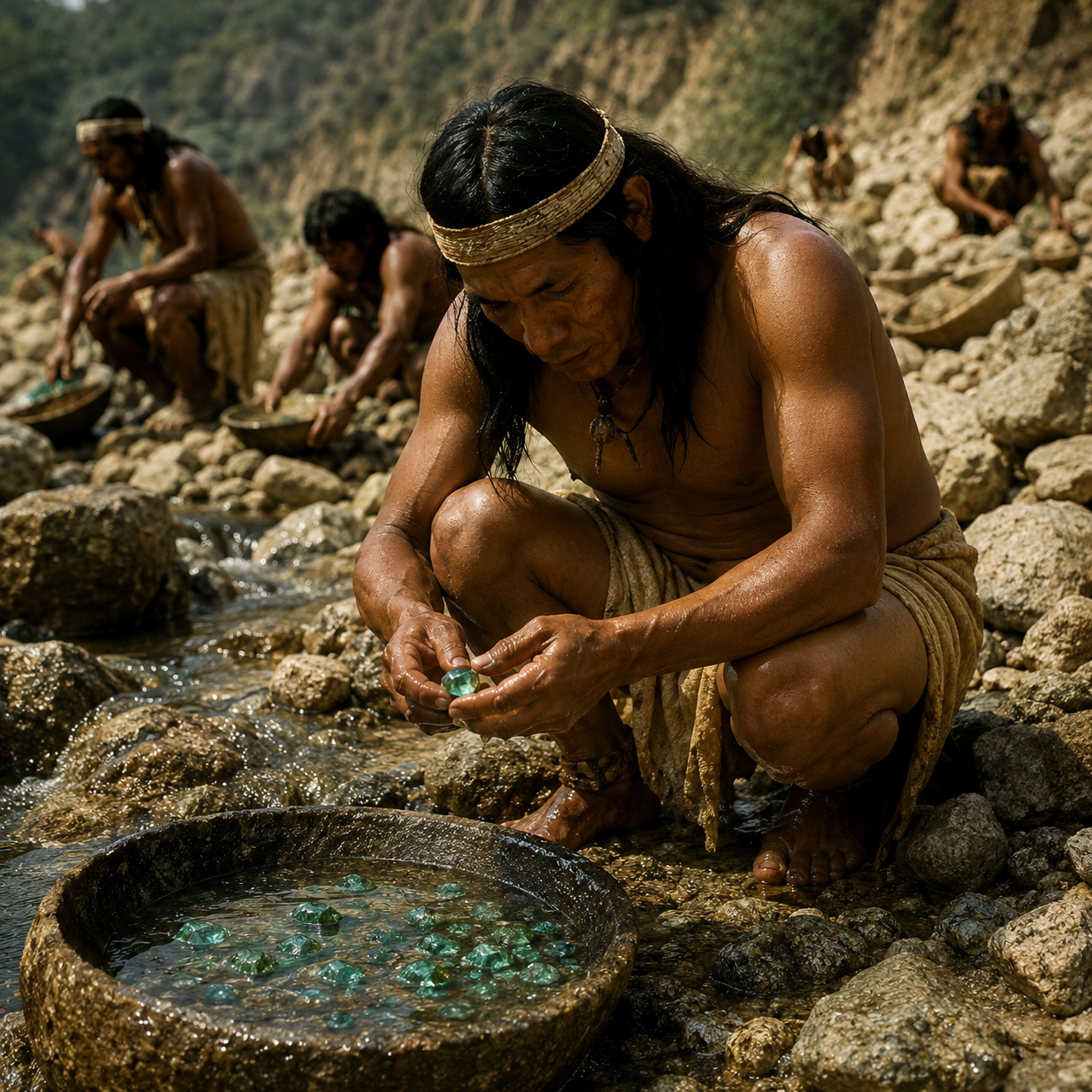
The history of emerald mining in Colombia spans more than a thousand years of tradition, culture, and natural wealth. Long before the arrival of the Spanish conquistadors, Indigenous communities were already extracting these extraordinary green gemstones, using them as symbols of power, trade, and sacred ceremonies.
Today, Colombia is recognized as the world's leading producer of high-quality emeralds. Their incomparable deep green color, exceptional transparency, and unique geological origin have made Colombian emeralds the most sought-after gemstones among collectors, jewelers, and gem enthusiasts worldwide.
The First Miners: Indigenous Cultures
Long before the 16th century, the Indigenous peoples who inhabited the Cundiboyacense Highlands, particularly the Muisca civilization, had mastered the art of emerald mining.
The Somondoco mines—known today as Chivor—were among the most important sources of these precious gemstones. Emeralds represented far more than wealth; they held profound spiritual significance. They were offered in religious rituals, worn as ceremonial ornaments, and traded with other civilizations throughout the Americas.
These Indigenous communities possessed extensive knowledge of natural emerald deposits and developed artisanal mining techniques that allowed them to recover gemstones while causing minimal impact on the surrounding environment.
The Arrival of the Spanish and the Beginning of Colonial Mining
With the arrival of the Spanish conquistadors, the future of Colombia's emerald mines changed forever.
Recognizing the extraordinary value of Colombian emeralds, the Spanish Crown assumed control over the country's principal mining regions. Guided by Indigenous knowledge, the conquistadors located the mines and began intensive extraction, primarily to supply the European aristocracy.
Thousands of Colombian emeralds were shipped to Spain before making their way to India, Persia, and the Ottoman Empire, where they adorned royal crowns, ceremonial swords, religious relics, and magnificent jewelry.
During this colonial period, mining relied heavily on forced Indigenous labor, marking one of the darkest chapters in Colombia's mining history.
The Abandonment of the Mines
Following Colombia's independence during the 19th century, many emerald mines were abandoned.
Limited investment, difficult access to the mountainous regions, and ongoing political instability caused numerous mining operations to remain inactive for decades.
Yet Colombia's extraordinary geological potential never disappeared.
Over time, new expeditions rediscovered ancient deposits and opened additional mining areas, laying the foundation for the modern emerald industry.
The Discovery of the Great Modern Mines
During the 19th and 20th centuries, the mines that are now internationally renowned became firmly established.
- Muzo
Known as the Emerald Capital of the World, Muzo produces some of the most intensely green emeralds ever documented in gemology.
The legendary "Muzo Green" has become an international benchmark for evaluating emerald quality.
- Chivor
Located within Colombia's Eastern Emerald Belt, Chivor is one of the country's oldest emerald mines.
Its gemstones are admired for their slightly bluish-green hues and remarkable transparency, qualities highly prized in fine jewelry.
- Coscuez
The Coscuez mine has produced some of the largest and most valuable emeralds ever discovered.
Many historic gemstones displayed in museums around the world originated from this remarkable region of Boyacá.
Together, these three legendary mines continue to position Colombia as the global leader in the production of exceptional natural emeralds.
The Green Wars
During the 1960s, 1970s, and 1980s, Colombia's emerald industry experienced one of the most turbulent periods in its history.
Disputes over control of the mines led to violent conflicts known as the "Green Wars," involving rival families and business groups. These confrontations left a lasting impact on the Boyacá region.
Beginning in the 1990s, and especially throughout the 21st century, the industry entered an important period of modernization and formalization, strengthening government oversight, improving security, and promoting responsible business practices.
Emerald Mining Today
Today, Colombia's emerald mining industry looks very different from what it was only a few decades ago.
Leading mining companies operate under legally granted concessions, employ modern extraction technologies, and invest in environmental and social programs designed to benefit surrounding communities.
Traceability, origin certification, and responsible mining practices have become essential to meeting the expectations of the international luxury jewelry market.
Why Are Colombian Emeralds Unique?
The answer lies in their extraordinary geological origin.
Unlike most emerald deposits around the world, Colombian emeralds formed through unique sedimentary hydrothermal processes that created their intense green color, exceptional transparency, and remarkable brilliance.
For this reason, gemologists and prestigious jewelry houses widely regard Colombian emeralds as the highest standard of quality in the global gemstone market.
Emerald By Love: A Legacy That Continues to Shine
Every Colombian emerald carries within it millions of years of geological formation and centuries of mining tradition. Choosing a natural emerald from Colombia means acquiring not only an extraordinary gemstone but also a piece of a remarkable story that continues to be written in the mountains of Boyacá.
At Emerald By Love, we honor this extraordinary legacy by carefully selecting natural Colombian emeralds to create fine jewelry that reflects the authenticity, beauty, and heritage of our country. Every piece is handcrafted in 18-karat gold and represents our commitment to sharing the excellence of Colombian emeralds with the world, transforming a thousand-year-old legacy into a timeless jewel that can be treasured for a lifetime.
Paula A. Bonilla
Social Communicator and Journalist from Sergio Arboleda University, Colombia.