Euclasas: Colombia’s Blue Emeralds
When we talk about Colombia’s precious gemstones, we immediately think of the famous Colombian emeralds. However, there is another much lesser-known gemstone that can be found associated with some of these mining areas: euclase.
Sometimes informally referred to as “Colombia’s blue emerald,” euclase is of particular interest to collectors and mineral enthusiasts because of its transparent crystals, blue color, and extraordinary rarity.
But what exactly is euclase? Why is it found associated with Colombian emeralds? And why can some specimens reach considerable value among collectors?
What Is Euclase?
Euclase is a very uncommon mineral belonging to the silicate group. Unlike emerald, which is a variety of beryl, euclase is an entirely different mineral species.
Its name refers to its excellent cleavage, a characteristic that also means the stone requires special care when it is handled or cut. Euclase can occur in different colors, but blue, blue-green, and aqua-blue specimens are particularly sought after.
Why Is It Called Colombia’s “Blue Emerald”?
There is an important distinction here. From a gemological standpoint, euclase is not a blue emerald. Emeralds are green varieties of the mineral beryl, while euclase belongs to a completely different mineral species.
The term “blue emerald” is primarily used as a descriptive or commercial expression to draw attention to the geological relationship between certain euclase specimens and Colombia’s famous emerald deposits.
In fact, geological research has documented the presence of euclase within mineralized veins associated with Colombian emeralds. This is particularly interesting because euclase occurs in different geological environments in other parts of the world.
Colombian Euclase: An Extremely Rare Gem
One of the characteristics that makes Colombian euclase so fascinating is precisely its rarity.
While emeralds are commercially mined in significant quantities in certain areas of Colombia, euclase occurs much more sporadically.
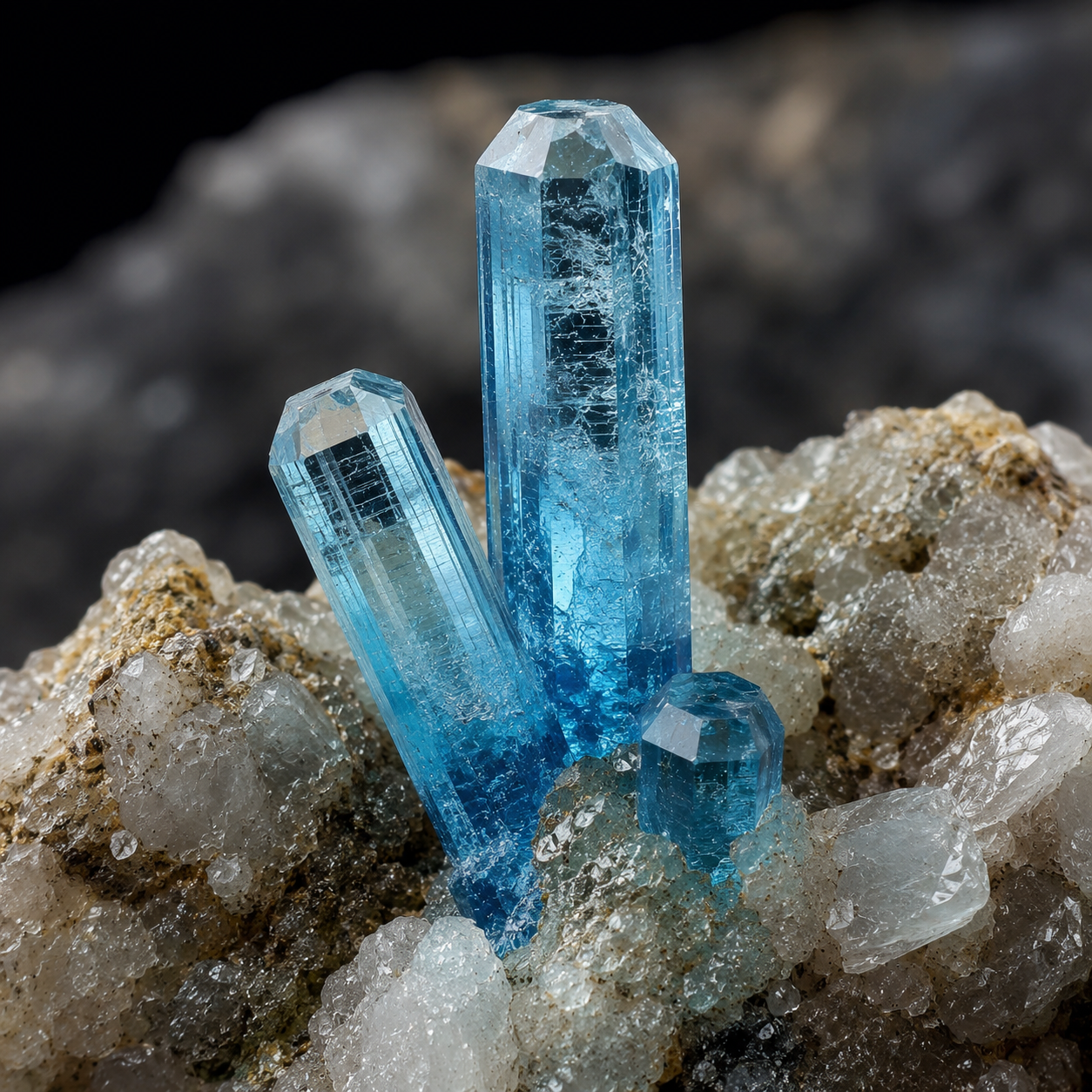
Colombian specimens may display transparent crystals in blue or blue-green shades, some of which exhibit exceptional quality for gemological or collectible purposes.
For this reason, finding a Colombian euclase with excellent color, transparency, size, and crystal formation can be an extraordinary opportunity for a collector.
Where Is Euclase Found in Colombia?
The presence of euclase has been documented in different areas associated with Colombia’s emerald mineralization.
Euclase from Chivor
Chivor, in the department of Boyacá, is one of Colombia’s best-known localities for euclase.
Gemological literature has documented blue euclase crystals from the Chivor area. Some specimens were found in specific tunnels within the mine and later entered the mineral market as collector pieces.
The association between euclase and the mineralization at Chivor has also been studied from a geological perspective. Research published by the National University of Colombia indicates that the presence of this mineral may provide valuable information for understanding the formation of emerald mineralization in Colombia’s Eastern Emerald Belt.
Euclase from Gachalá
Another Colombian locality where euclase crystals have been found is Gachalá, Cundinamarca.
Transparent specimens in blue and aqua-blue shades have been recorded in this region, associated with emerald deposits.
Euclase from Pauna
Specimens from Pauna, Boyacá, are also known, including crystals with a particularly striking deep-blue color.
The La Marina locality has been recognized for producing euclase specimens with intense colors and significant mineralogical interest.
What Does Colombian Euclase Look Like?
A high-quality euclase can be surprising because of its resemblance to other blue gemstones.
Its main characteristics may include:
- Light blue, intense blue, or blue-green hues.
- High transparency in quality specimens.
- A vitreous luster.
- Generally elongated and well-defined crystals.
- Very pronounced cleavage.
- Strong interest as a mineral specimen.
- Considerable rarity compared with other blue gemstones.
Its appearance can resemble aquamarine, especially when it displays pale-blue tones.
Precisely because of this similarity, proper identification is essential.
Is Euclase Rarer Than Emerald?
In terms of availability as a gem material, euclase is considerably rarer. Colombian emeralds have a long history of mining and international trade, with major producing areas such as Muzo, Coscuez, and Chivor.
Euclase, on the other hand, occurs much more sporadically.
This explains why a Colombian euclase of exceptional quality can be particularly interesting to mineral collectors.
However, rarity does not automatically mean higher value. The price of a specimen depends on multiple factors, including color, transparency, size, crystal quality, provenance, condition, cutting quality, and market demand.
Colombian Euclase: A Hidden Treasure of Mineralogy
Colombia is internationally famous for its green emeralds, but beneath that reputation lies a much broader mineralogical world.
Colombian blue euclase is one of those little-known treasures.
Found in association with emerald-bearing areas such as Chivor, Gachalá, and Pauna, this rare mineral species combines blue colors, transparency, fascinating crystals, and extraordinary scarcity.
And although calling it “Colombia’s blue emerald” may sound appealing, what is truly fascinating is understanding that it does not need to be an emerald to be extraordinary.
It is a different mineral species, with its own history, composition, and characteristics, yet connected to one of Colombia’s most fascinating geological environments.
Emerald By Love: Beyond the Emerald
At Emerald By Love, we believe that understanding Colombian gemstones also means discovering everything that exists around them.
Colombian emeralds are part of an extraordinary geological history, accompanied by other minerals that, like euclase, help reveal the complexity and mineral wealth of our country.
Because Colombia is not only home to some of the world’s most famous emeralds: it also hides small mineral treasures that continue to fascinate gemologists, geologists, and collectors.
Paula A. Bonilla
Social Communicator and Journalist from Sergio Arboleda University in Colombia.