Emeralds and the Muisca: The History of a Sacred Stone
Long before Colombian emeralds became known around the world, these green stones already held a special meaning for the Indigenous peoples who inhabited the region. Among them were the Muisca, one of the most important cultures in the Andean region of Colombia.
For the Muisca, emeralds were not simply precious stones. They were connected to nature, beliefs, rituals, and the way they understood the world. Their intense green color was associated with life, fertility, and nature, which is why emeralds held an important place within their culture.
Who Were the Muisca?
The Muisca primarily inhabited the Cundiboyacense highlands, a region that today includes much of Bogotá, Cundinamarca, and Boyacá.
They were an organized society made up of different communities and chiefdoms, with an economy based on agriculture, trade, salt production, and other natural resources. They also developed important trade networks with other Indigenous peoples.
Within this world, emeralds had a value that went far beyond their economic worth.
Why Were Emeralds Considered Sacred?
The green color of the emerald held a special meaning for the Muisca. They associated it with nature and with elements essential to life, such as vegetation and water.
Emeralds could be part of offerings and religious ceremonies. The Muisca performed different rituals to communicate with their gods and ask for protection, fertility, prosperity, or good harvests.
For this reason, an emerald could be considered a highly valuable offering. Its importance did not depend solely on its size or appearance, but also on what it represented within their beliefs.
Emeralds and Sacred Lakes
One of the best-known aspects of Muisca culture is the importance of lakes and lagoons.
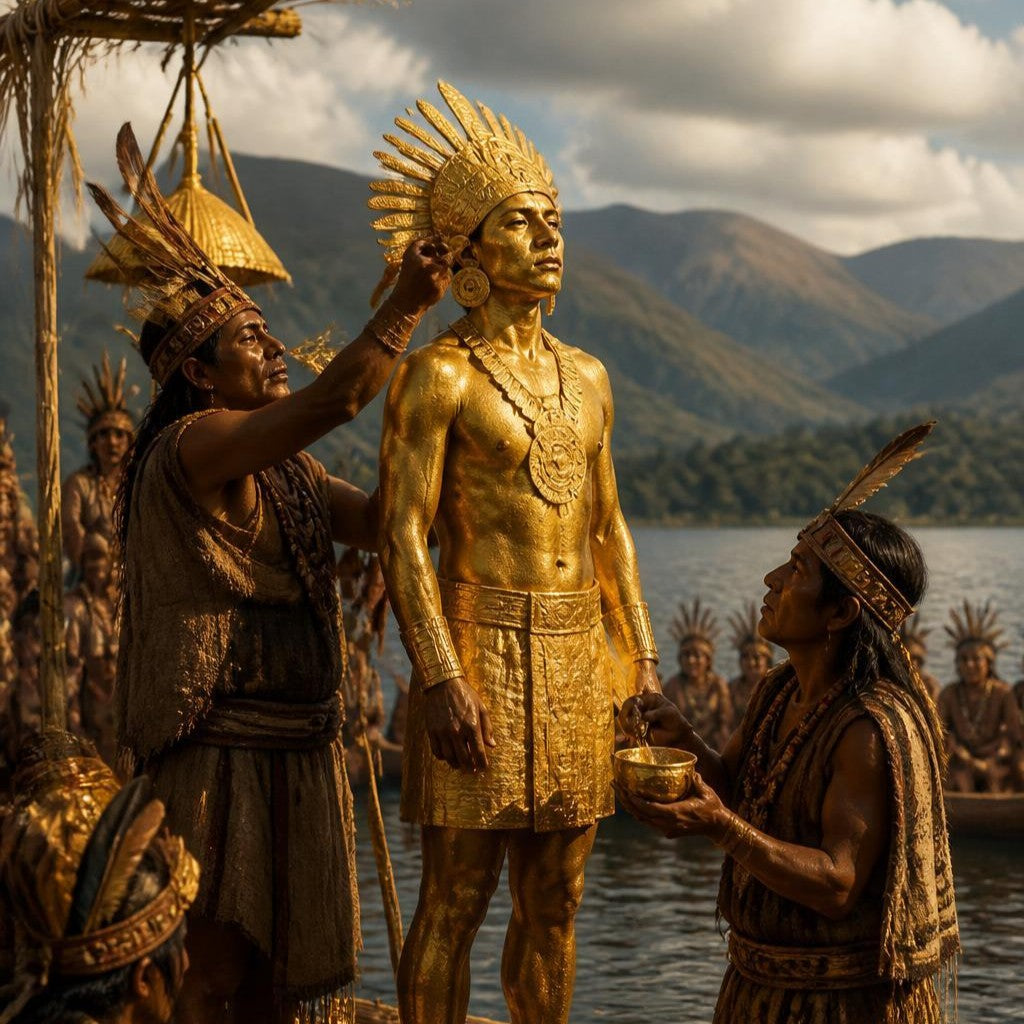
Places such as Guatavita were associated with ceremonies and stories that later gave rise to the famous legend of El Dorado. Offerings could include objects made of gold, precious stones, and other items considered valuable.
Emeralds are also associated with these offering practices. For the Muisca, giving valuable objects to their deities was a way of maintaining a relationship of respect and reciprocity with the forces of nature.
Where Did They Obtain Emeralds?
The territories where some of Colombia's main emerald deposits are found were relatively close to areas inhabited by the Muisca.
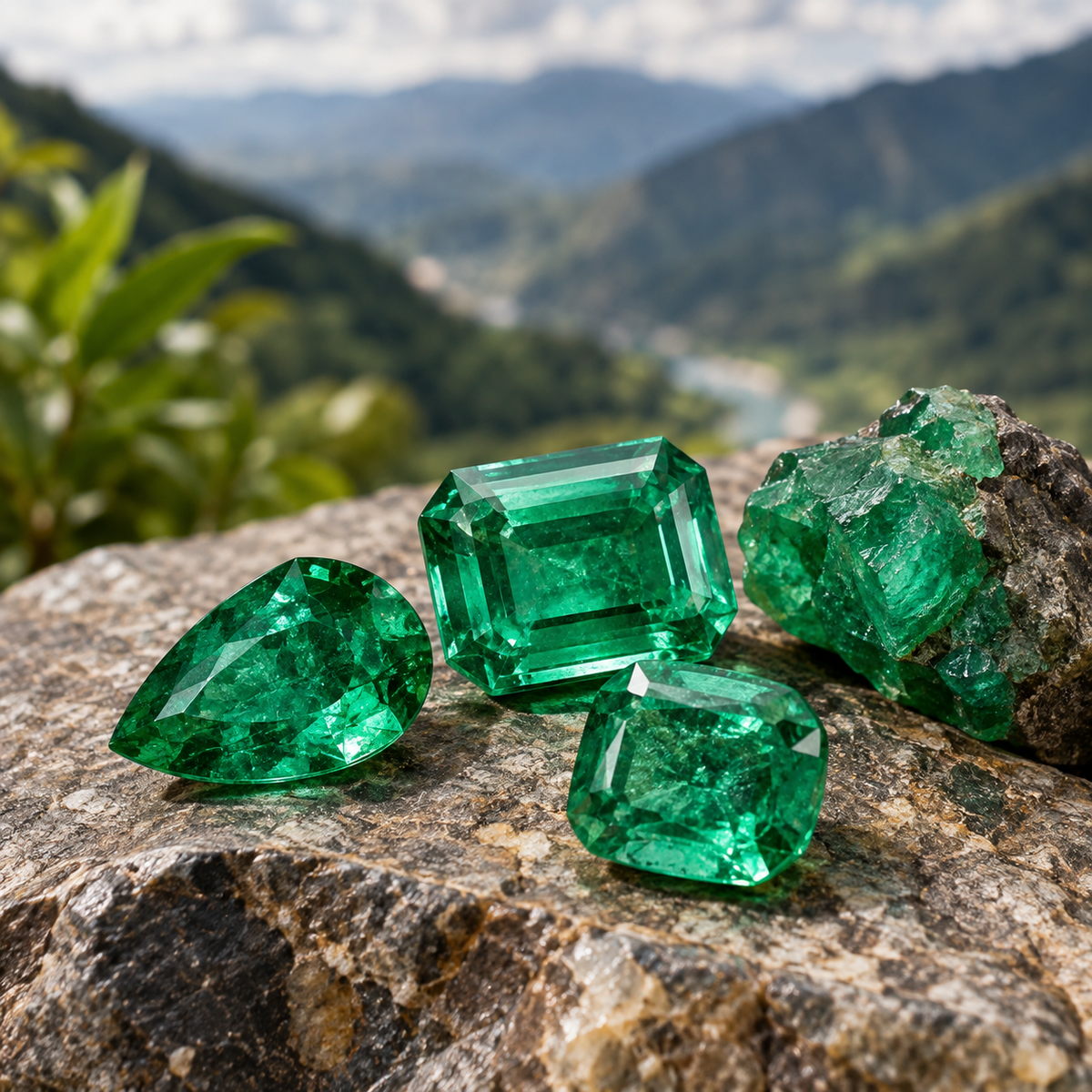
The region of Muzo, in Boyacá, is particularly important. Indigenous peoples knew about and made use of emerald deposits long before the arrival of the Spanish.
Extraction was carried out using the tools and methods available at the time. There were no large modern mining operations; knowledge of the land and the characteristics of the rocks was essential for finding the stones.
In addition, emeralds could circulate through trade networks connecting different Indigenous communities.
Emeralds as Objects of Exchange
Although emeralds had a strong spiritual meaning, they could also have social and commercial value.
Indigenous peoples exchanged different products between regions. Salt, cotton, food, ceramics, gold objects, and precious stones could all be part of these trade networks.
Because of their rarity and beauty, emeralds could become highly valued objects within these exchanges.
This shows that a single stone could have several meanings at the same time: it could be a religious offering, a cultural symbol, and an object of exchange.
What Happened to Emeralds After the Arrival of the Spanish?
The arrival of the Spanish profoundly changed the history of Colombian emeralds.
The conquistadors quickly became aware of the value that Indigenous peoples placed on these stones. Emeralds began to be extracted and sent outside the region, eventually reaching Europe and different parts of the world.
Over the centuries, Colombia became one of the countries best known for the quality and color of its emeralds.
However, the history of these stones began long before modern mining. Indigenous peoples already knew where the deposits were, used the emeralds, and attributed deep meaning to them.
A Story That Lives On
Today, when we talk about Colombian emeralds, we often think about their green color, rarity, or value in jewelry. But behind every stone lies a much older story.
Long before they became rings, necklaces, or collectible pieces, emeralds were part of the relationship Indigenous peoples had with nature and their beliefs.
The connection between the Muisca and emeralds reminds us that these stones are important not only because of their beauty. They are also part of Colombia's history and cultural heritage.
At Emerald By Love, we believe that knowing this history allows us to appreciate each Colombian emerald even more. From its origins in the mountains of Colombia to the moment it reaches your hands, every stone carries with it a part of our country's history.
Paula Bonilla
Social Communicator and Journalist, Universidad Sergio Arboleda, Colombia