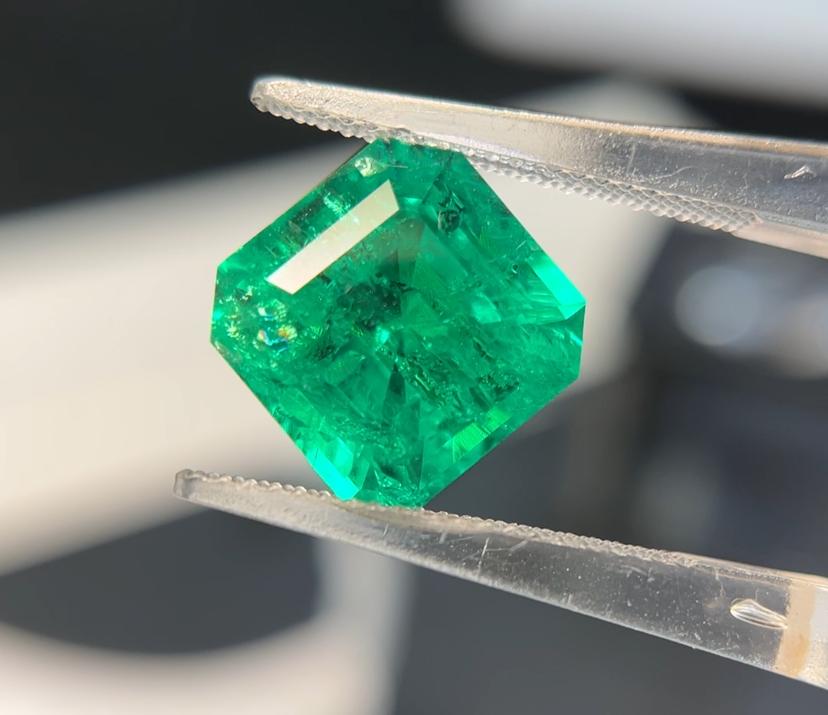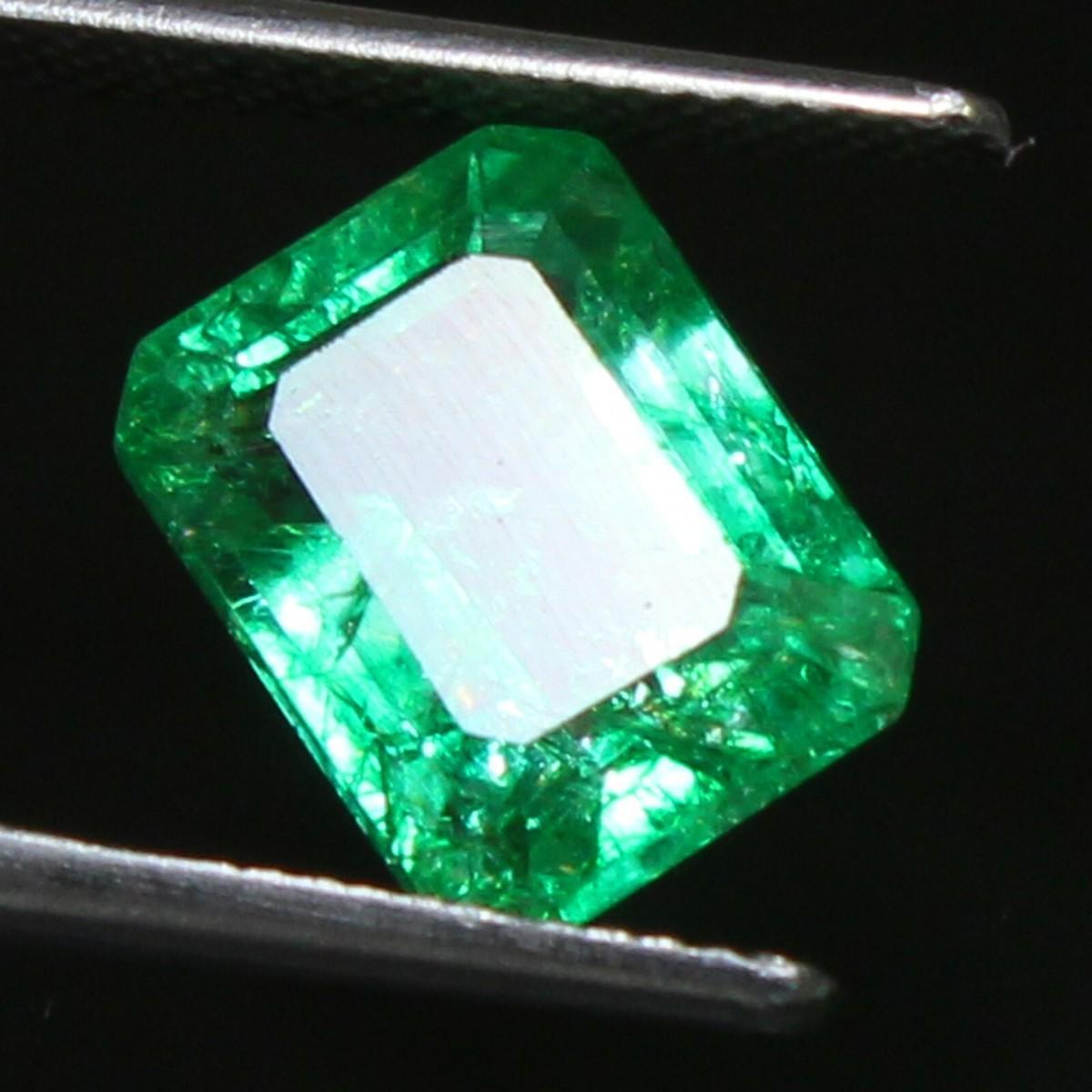
Common Mistakes When Photographing a Colombian Emerald with Your Phone
Photographing a Colombian emerald may seem simple: just take out your phone, focus on the stone, and snap a picture. However, capturing its true green color, brilliance, and distinctive characteristics can be more challenging than it seems.
Emeralds interact with light in unique ways. As a result, a photograph can make a stone appear lighter, darker, or even a different shade than it actually is.
If you have ever taken a picture of an emerald and, after looking at it on your screen, thought it did not look anything like the stone in front of you, you have probably made one of these common mistakes.
In this article, we will explain the most common mistakes people make when photographing a Colombian emerald with a phone and how to avoid them.
Common Mistakes When Photographing an Emerald with Your Phone
1. Using the Flash Directly on the Emerald
One of the most common mistakes is using your phone's flash, thinking it will make the gemstone's color stand out.
In reality, direct light can create overly intense reflections, white spots, and glare that hide important details of the emerald.
How to avoid it:
-
Take advantage of indirect natural light.
-
Position yourself near a window, but avoid direct sunlight hitting the stone.
-
If you need additional lighting, use a soft, diffused light source.
The goal is to illuminate the emerald without creating reflections that prevent you from seeing its characteristics.
2. Photographing It Under Lights with Different Color Temperatures
Lighting has a significant influence on how we perceive an emerald's color.
A yellow light bulb, a very cool white light, or a combination of different light sources can change the appearance of its green hue.
For example, an emerald photographed under warm lighting may look more yellowish, while cool lighting can give it a bluish appearance.
How to avoid it:
Use a single light source, preferably indirect natural light. This will give you a more consistent reference for the stone's color.
3. Holding Your Phone Too Close
When we want to capture every detail of an emerald, it is natural to bring our phones as close to the stone as possible.
However, doing so can cause the camera to lose focus, distort proportions, or produce blurry images.
How to avoid it:
-
Maintain an appropriate distance between your phone and the gemstone.
-
Use macro mode if your device has this feature.
-
Tap the screen over the emerald to focus.
-
Avoid excessive digital zoom.
Remember, a close-up photograph is not necessarily a more detailed photograph.
4. Not Cleaning the Emerald Before Taking the Picture
Fingerprints, dust, and oil residue can remain on an emerald's surface and affect the final photograph.
Even when they are barely noticeable to the naked eye, these elements can create spots, reduce visual clarity, and produce unwanted reflections.
How to avoid it:
Carefully clean the jewelry before photographing it. You can use a soft cloth and follow the appropriate cleaning recommendations for the gemstone and its setting.
Keep in mind that some emeralds undergo oil or resin treatments. Therefore, avoid using chemicals, ultrasonic cleaners, or aggressive cleaning methods without consulting a specialist.
5. Overediting the Color of the Photograph
This is one of the most important mistakes, especially when sharing or selling an emerald online.
Increasing saturation too much, changing the contrast, or applying filters can make an emerald appear to have a much more intense green color than it actually does.
The result may be an eye-catching photograph, but one that does not accurately represent the original gemstone.
How to avoid it:
-
Avoid filters that alter green tones.
-
Do not increase saturation excessively.
-
Make only basic adjustments, such as exposure and white balance.
-
Always compare the photograph with the actual emerald.
A good photograph should represent the stone, not change its characteristics.
6. Choosing Backgrounds That Compete with the Emerald's Color
The background also influences how we perceive a gemstone.
Photographing an emerald against brightly colored surfaces, busy patterns, or overly shiny materials can distract the viewer and affect how its color is perceived.
How to avoid it:
Choose simple, neutral backgrounds such as white, gray, or matte black. These help keep the focus on the gemstone and make its characteristics easier to appreciate.
7. Ignoring the Emerald's Internal Characteristics
Natural emeralds can contain internal inclusions known as jardins. These characteristics are part of their natural formation and can provide important gemological information.
A common mistake is trying to hide them completely through lighting, camera angles, or editing.
On the contrary, a well-taken photograph can help reveal some of these details without exaggerating or distorting them.
How to avoid it:
Try different angles and distances to find lighting that allows you to appreciate both the gemstone's color and its internal characteristics.
Remember that not all inclusions are the same, and evaluating them requires gemological knowledge.
8. Assuming a Photograph Can Determine Whether an Emerald Is Colombian
This is a particularly important point.
A photograph taken with a phone can help you observe some of an emerald's visual characteristics, but it cannot independently confirm its geographical origin, authenticity, treatments, or commercial value.
Two emeralds may look similar in a photograph and still have significant differences from a gemological perspective.
Determining these characteristics requires specialized evaluation and, when appropriate, testing by a gemological laboratory.
Additional Tips for Photographing an Emerald with Your Phone
Before taking a picture, keep these recommendations in mind:
-
Find good lighting: Indirect natural light is usually an excellent option.
-
Clean your camera lens: A dirty lens can affect image sharpness.
-
Keep your phone steady: Use both hands or a tripod to prevent blurry photographs.
-
Turn off filters: Try to preserve the gemstone's actual colors.
-
Experiment with different angles: Even a slight change can affect how light interacts with the emerald.
-
Avoid excessive editing: Keep the image as close to reality as possible.
A Photograph and the True Beauty of a Colombian Emerald
Photography is a wonderful tool for sharing the beauty of a Colombian emerald, but it has its limitations.
Color, transparency, reflections, inclusions, and the way light travels through the gemstone can look considerably different from one screen to another.
That is why, although a good photograph can give us an idea of what an emerald looks like, it can never replace the experience of seeing it in person or having it professionally evaluated by a gemologist.
At Emerald By Love, we work with natural Colombian emeralds and understand that every stone has its own characteristics. Its color, jardins, and interaction with light are all part of what makes it different from any other gemstone.
If you are thinking about purchasing a Colombian emerald or already own a piece of jewelry and would like to learn more about its characteristics, our team can guide you so you can make an informed decision.
Paula Bonilla
Social Communicator and Journalist, Universidad Sergio Arboleda, Colombia