Archaeological Research Related to Ancient Emeralds
Emeralds were symbols of power, wealth, and spirituality for numerous ancient civilizations, and they continue to fascinate people today. Thanks to archaeological research, we now have a better understanding of how these gemstones were mined, traded, and used long before the advent of modern mining.
Over the past few decades, archaeologists, historians, and gemologists have uncovered jewelry, tools, tombs, and ancient mining sites that have helped reconstruct the history of emeralds, from Ancient Egypt to the pre-Columbian cultures of the Americas. These discoveries not only demonstrate the importance of emeralds in antiquity but also highlight the extraordinary value they have always held.
Why Are Emeralds Important to Archaeology?
Precious gemstones help archaeologists understand key aspects of ancient societies, including:
-
Trade routes connecting different continents.
-
Mining techniques used thousands of years ago.
-
Religious and spiritual beliefs.
-
The development of ancient jewelry-making.
-
The economic and political power of rulers.
Emeralds are especially valuable because gemological analysis can determine their geological origin, revealing how these gemstones traveled between different cultures.
The Earliest Historical Records of Emeralds
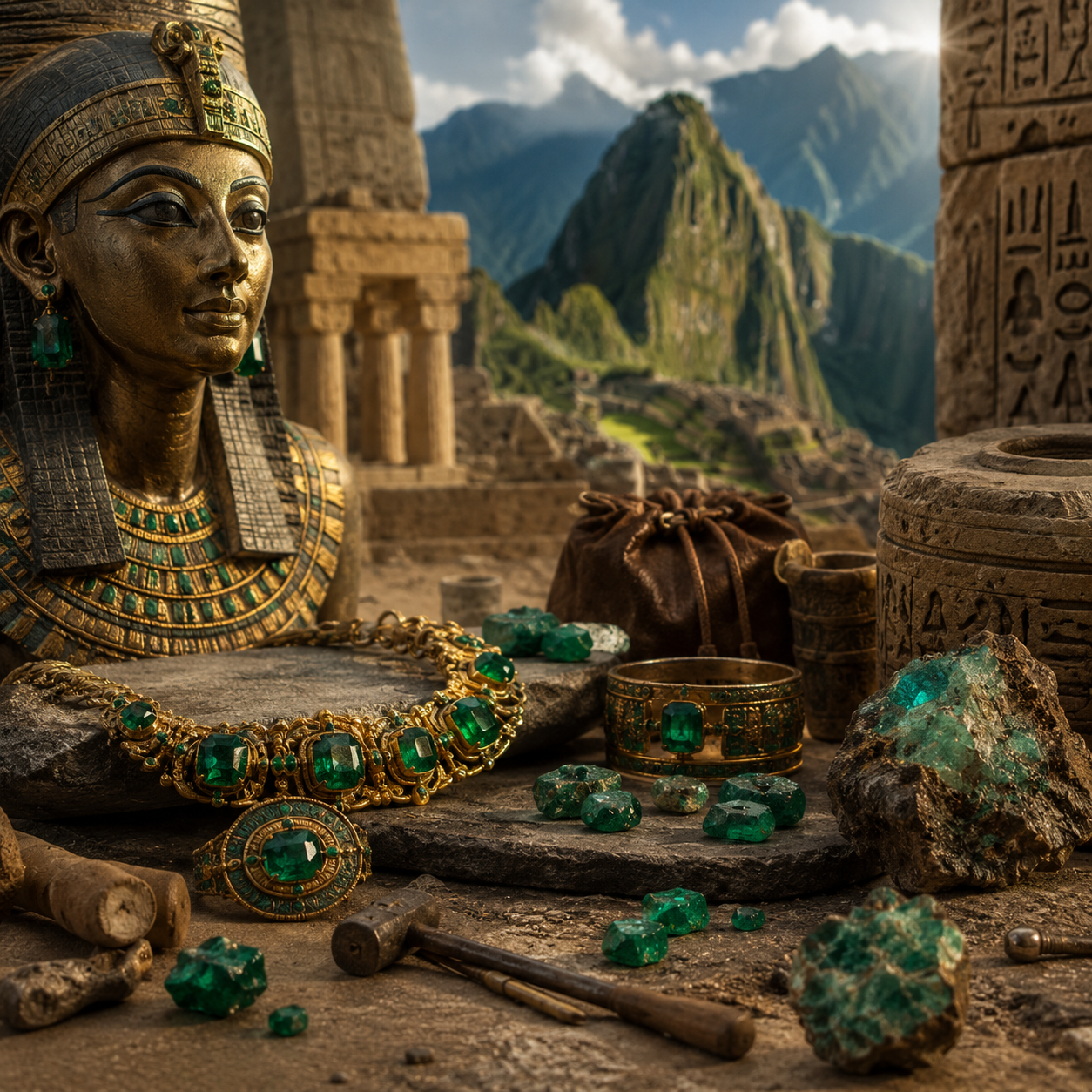
Although Colombia is now recognized as the source of the world's finest emeralds, the earliest known emerald mines were located in Egypt. More than 2,000 years ago, the so-called "Cleopatra's Mines" supplied the Egyptian Empire with emeralds used in royal necklaces, amulets, crowns, and religious artifacts.
For centuries, these mines were believed to be the world's primary source of emeralds until Spanish explorers later discovered the extraordinary emerald deposits of Colombia.
Archaeological Discoveries in Egypt
Archaeological excavations in Egypt's Eastern Desert have uncovered ancient mining tunnels containing stone and metal extraction tools, Roman inscriptions, remains of miners' settlements, and even fragments of emerald jewelry.
These discoveries demonstrate that emerald mining was a highly organized activity of great economic importance. Research also indicates that many of these mines remained active during the Roman occupation.
Research on Pre-Columbian Emeralds
One of the greatest archaeological breakthroughs came from studying Colombia's Indigenous cultures. Long before the arrival of the Spanish, civilizations such as the Muisca possessed extensive knowledge of emeralds and used them for ceremonial and commercial purposes.
Archaeological investigations have uncovered emeralds in:
-
Ceremonial sites.
-
Religious offerings.
-
Burial sites.
-
Trade objects.
-
Indigenous treasures.
Unlike gold, many Indigenous communities regarded emeralds as deeply spiritual objects associated with nature and fertility.
The Discovery of Ancient Trade Routes
One of the most fascinating aspects of archaeological research is reconstructing how precious gemstones traveled across civilizations.
Numerous studies indicate that emeralds moved across vast distances through trade routes connecting:
-
Africa.
-
The Middle East.
-
Europe.
-
Asia.
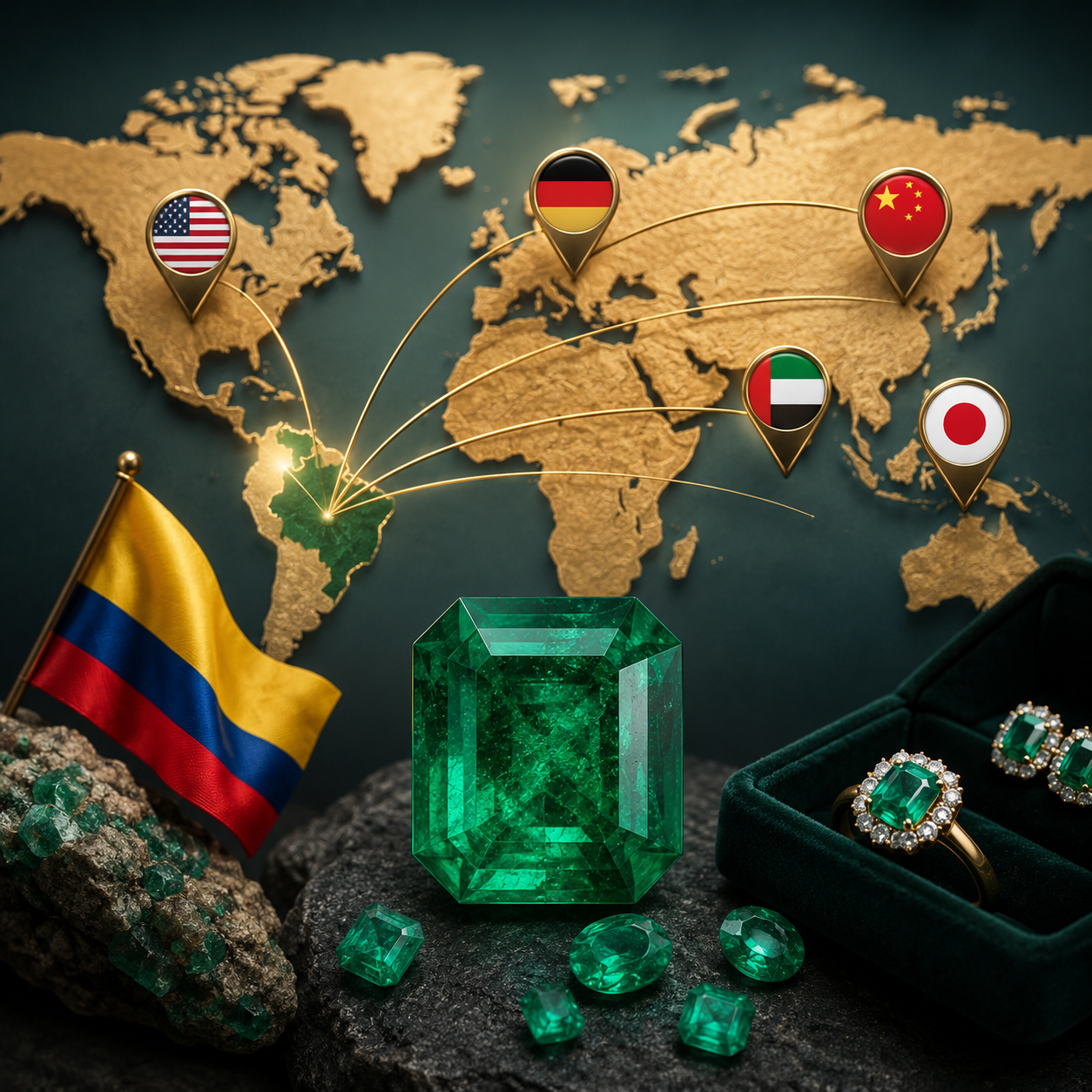
After the 16th century, Colombian emeralds began arriving in Spain and were subsequently distributed throughout the world, reaching India, Persia, and the Ottoman Empire.
Many historical artifacts preserved today contain Colombian emeralds that traveled thousands of miles.
Ancient Mining Techniques
Archaeological findings reveal that ancient mining was entirely manual.
Excavated tools include:
-
Stone hammers.
-
Chisels.
-
Wooden levers.
-
Torches.
-
Ropes used to descend into mining tunnels.
Extracting emeralds required exceptional skill to avoid fracturing the crystals.
These techniques evolved gradually over centuries into the modern mining methods used today.
Emeralds Found in Ancient Tombs and Historical Treasures
- The Crown of the Andes (16th–17th Century)
Crafted in gold and adorned with 453 Colombian emeralds totaling more than 1,500 carats.
It includes the famous Atahualpa Emerald, weighing approximately 45 carats.
The Crown of the Andes is considered one of the masterpieces of colonial Latin American goldsmithing.
- La Lechuga (1700–1707)
A magnificent religious monstrance created in Colombia.
It contains 1,485 Colombian emeralds, along with diamonds, rubies, and numerous other precious gemstones.
It is regarded as one of the most important colonial masterpieces in the Americas.
- The Mogul Emerald (1695)
An impressive carved emerald weighing 217.80 carats.
It features Islamic inscriptions and intricate floral engravings.
It is one of the most famous historical gemstones of the Mughal Empire and was likely used as a ceremonial amulet.
- Funeral Necklaces from Ancient Egypt
Numerous archaeological excavations have uncovered necklaces, amulets, and ornaments featuring emeralds in the tombs of nobles and members of the royal family.
These gemstones symbolized eternal life, fertility, and protection in the afterlife.
- Emerald Rings from the Roman Empire (1st–2nd Century AD)
Archaeologists have discovered numerous gold rings set with emeralds in Roman necropolises.
They represented wealth, social status, and good fortune among affluent Roman families.
- The Cheapside Hoard Jewelry (London, 17th Century)
Although not a funerary discovery, this remarkable archaeological treasure includes some of the earliest European jewelry crafted with Colombian emeralds following the Spanish conquest of the Americas.
It contains watches, pendants, and numerous pieces of exceptional historical value.
- Mughal Empire Jewelry
In addition to the Mogul Emerald, rings, pendants, ceremonial turbans, and other royal ornaments decorated with large Colombian emeralds have survived.
These pieces demonstrate how Colombian emeralds reached the royal courts of India through colonial trade networks.
- Roman Necklaces and Earrings Preserved in Museums
The Metropolitan Museum of Art preserves several Roman necklaces and rings featuring emeralds dating from the 1st and 2nd centuries AD, considered outstanding examples of classical jewelry craftsmanship.
What Do These Discoveries Teach Us About Colombian Emeralds?
Although many archaeological discoveries focus on Egypt and Europe, research conducted in Colombia has demonstrated that Colombian emeralds possess unique geological characteristics.
Their vivid green color, distinctive natural inclusions, and exceptional geological formation make them easily distinguishable from emeralds found elsewhere in the world. For this reason, Colombian emeralds continue to be the most sought-after by collectors, jewelers, and museums worldwide.
The Importance of Preserving Ancient Jewelry
Every emerald recovered during an archaeological excavation represents another piece of humanity's historical puzzle.
Preserving these remarkable treasures allows us to better understand ancient civilizations, study the evolution of mining, learn about the earliest jewelry-making techniques, identify historic trade routes, and safeguard cultural heritage for future generations.
Thanks to the combined efforts of archaeologists, historians, and gemologists, every new discovery expands our understanding of the relationship between humanity and one of the world's most admired gemstones.
Emerald By Love: Tradition and Authenticity in Every Colombian Emerald
Archaeological research demonstrates that emeralds have accompanied humanity for thousands of years as symbols of prestige, beauty, and cultural heritage. At Emerald By Love, we honor this legacy by offering carefully selected natural Colombian emeralds, beautifully set in 18K gold jewelry or available as loose gemstones for collectors and investors.
Every purchase includes certificates of authenticity and expert guidance, allowing you to understand the origin and unique characteristics of your emerald. When you choose Emerald By Love, you are acquiring more than a precious gemstone—you are becoming part of a history and tradition that has made Colombian emeralds the most admired in the world.
Paula A. Bonilla
Social Communicator and Journalist from Sergio Arboleda University, Colombia.