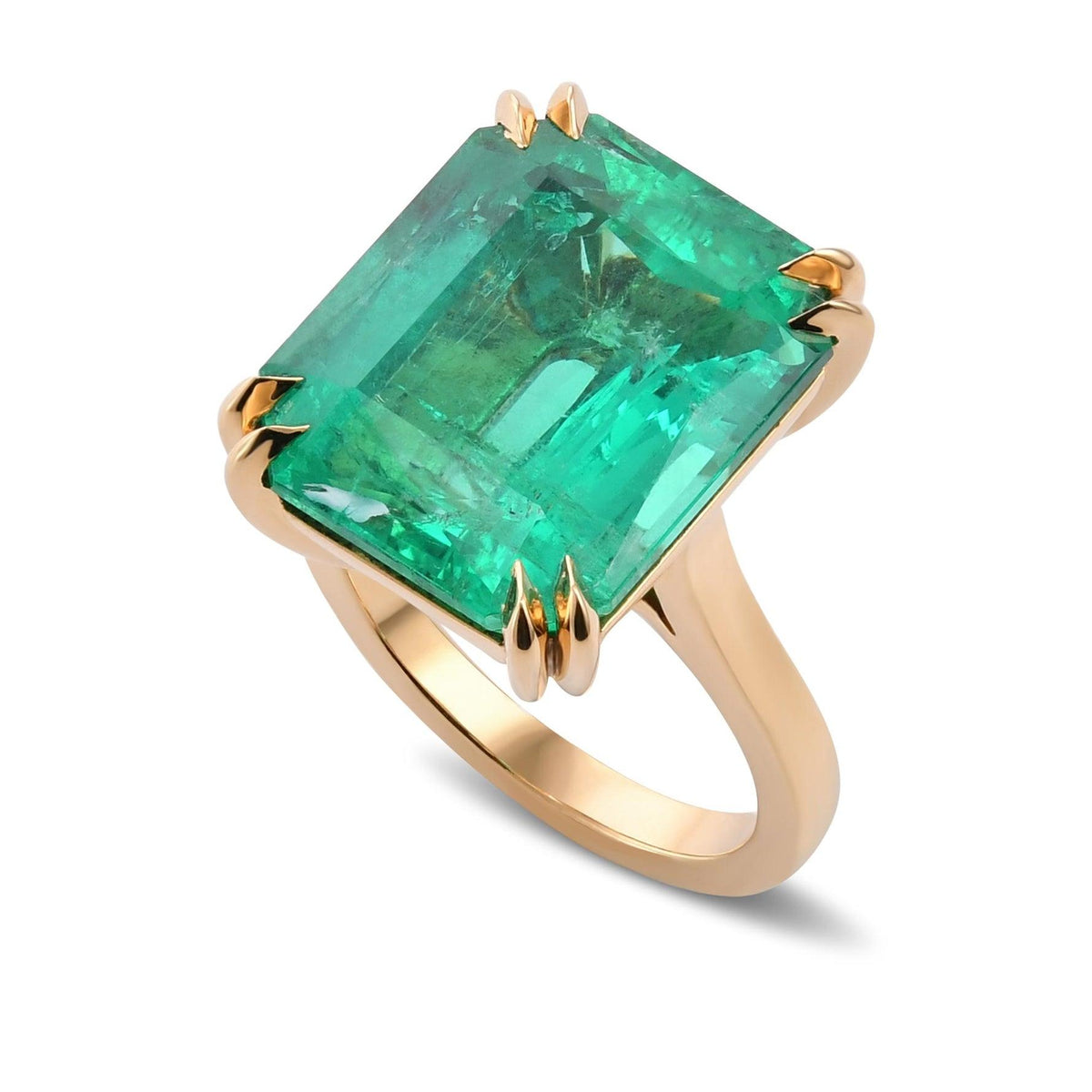
Article: Why Do Some Colombian Emeralds Have Concentrated Color in Certain Areas?
Why Do Some Colombian Emeralds Have Concentrated Color in Certain Areas?
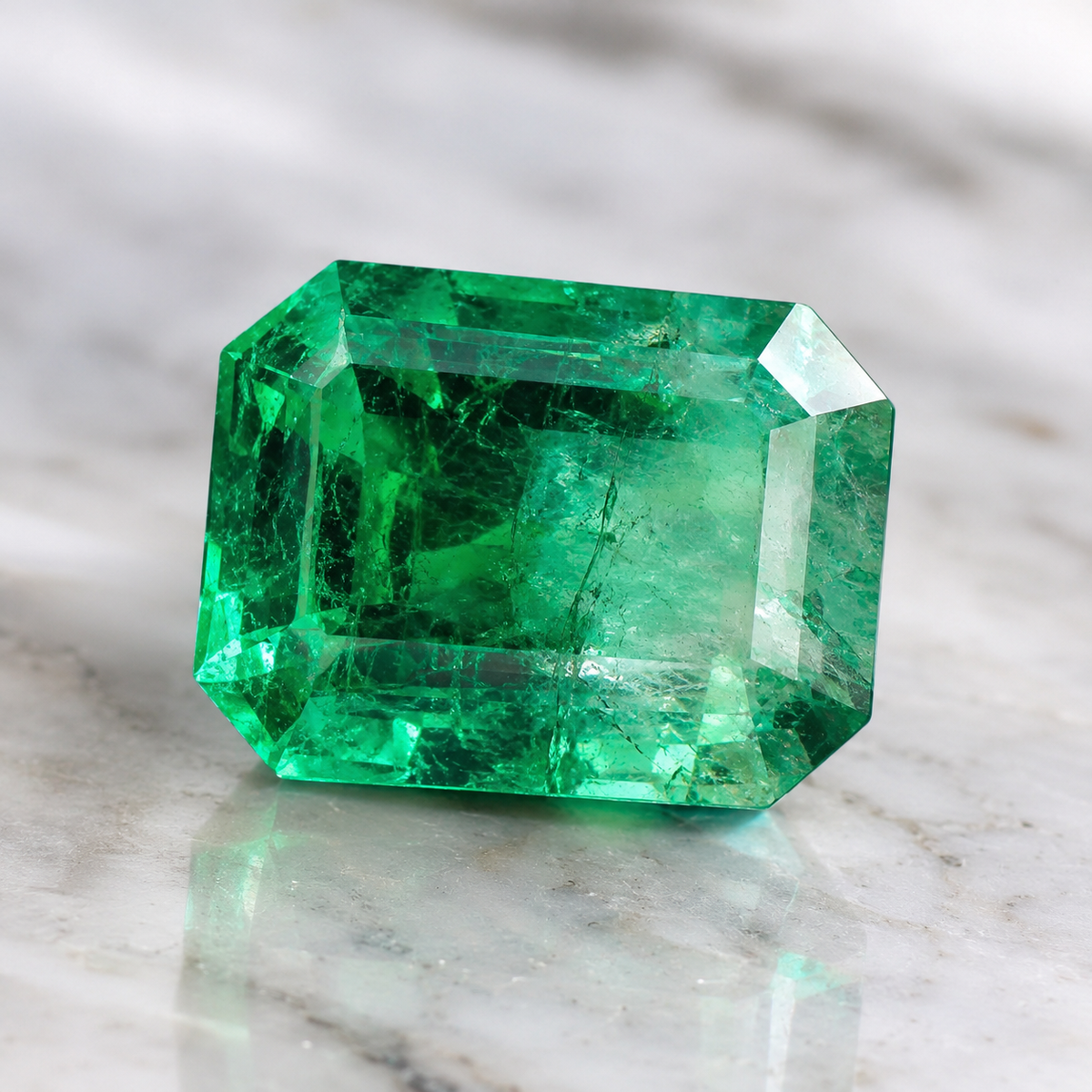
Have you ever looked at a Colombian emerald and noticed that some areas display a much more intense green than others? A single gemstone can feature deep green zones alongside lighter areas, creating contrasts that become especially noticeable as the stone moves or receives light from different angles.
This phenomenon can be quite fascinating, particularly when comparing several emeralds. But why does it happen? Is it a natural characteristic of the gemstone? Does it have anything to do with its quality or the way it was cut?
In this article, we will answer these questions so that when you come across an emerald with intense color in certain areas, you can better understand whether it is worth investing in or if another gemstone might be a better choice.
Color Is Not Always Distributed Evenly
Colombian emeralds form through complex geological processes involving fluids rich in chemical elements that circulate through surrounding rocks.
Their green color is primarily caused by the presence of small amounts of chromium and, in some cases, vanadium within the crystal structure of beryl.
However, these elements are not necessarily incorporated evenly as the crystal grows. This is why a single emerald can display different intensities of green in different areas.
In other words, the color we observe may be the result of the specific conditions that influenced the growth of each part of the crystal.
Crystal Growth Can Create Color Zoning
An emerald does not form overnight. Its growth takes place over long periods and may occur under changing chemical and environmental conditions.
As the crystal develops, variations can occur in the availability of the elements responsible for its color.
This can create areas with higher concentrations of chromium or vanadium and others where these elements are less abundant.
The result is an uneven color distribution that may appear as:
-
Deep green areas alongside lighter sections.
-
Color bands that follow specific crystal growth directions.
-
Concentrations of color near certain areas of the gemstone.
-
Differences in tone between the center and the edges.
These characteristics can be part of the natural history of each emerald.
Can the Cut Make the Color Look More Concentrated?
Absolutely! The way an emerald is cut also influences how we perceive its color.
During the cutting process, the specialist must carefully examine the gemstone's color distribution, inclusions, transparency, and internal characteristics.
The orientation of the gemstone and the positioning of its facets can make certain green areas appear more intense, while others look lighter.
Additionally, the way light travels through the stone affects the color intensity we perceive.
This is why two emeralds with similar natural characteristics can look very different after being cut.
Is an Emerald with Darker Areas Considered Higher Quality?
Not necessarily. Finding areas of intense green does not automatically mean that an emerald has higher quality or value.
To evaluate a Colombian emerald, several factors must be considered together:
-
Color: Hue, intensity, and distribution of the green.
-
Transparency: How easily we can see through the gemstone.
-
Inclusions: Natural internal characteristics commonly found in emeralds.
-
Cut: Proportions, symmetry, and how well the crystal's characteristics have been considered during the cutting process.
-
Treatments: The presence and degree of substances used to improve the gemstone's appearance.
An uneven color distribution can be a natural characteristic rather than a flaw. Its importance depends on how it affects the overall appearance of the gemstone.
How Can You Identify Color Concentrations?
When looking at a Colombian emerald, you can try a simple exercise: observe it from different angles and under different lighting conditions.
-
Pay attention to the areas where the green appears deeper and compare them with sections where the gemstone looks lighter.
-
You can also observe whether the color differences follow specific directions or appear as small areas distributed throughout the stone.
-
Remember that photographs do not always capture these characteristics accurately. Lighting, camera exposure, and screen settings can all change the way we perceive the green color.
For this reason, whenever possible, observing the gemstone in person and under different lighting conditions is the best way to understand its true appearance.
Every Emerald Has a Different Story
One of the most fascinating characteristics of Colombian emeralds is that no two crystals are exactly alike. Their natural formation, geological conditions, and individual growth patterns give each gemstone its own distinctive characteristics.
Color concentrations are part of this diversity and remind us that we are looking at a gemstone formed by nature over millions of years.
At Emerald By Love, we believe that understanding these details allows you to appreciate each emerald even more. Because behind every piece of jewelry is a natural gemstone with characteristics that make it different from any other.
Would you like to learn more about the characteristics of Colombian emeralds? At Emerald By Love, we are here to help you find a gemstone that matches your taste, preferences, and expectations.
Paula Bonilla
Social Communicator and Journalist, Universidad Sergio Arboleda, Colombia