The Green War: The Struggle for Colombian Emeralds
Behind the beauty of Colombian emeralds lies a complex history that many people are unaware of. One of the most significant chapters in that history is the Green War, a conflict that transformed Colombia's emerald-producing region and left a lasting mark on the industry.
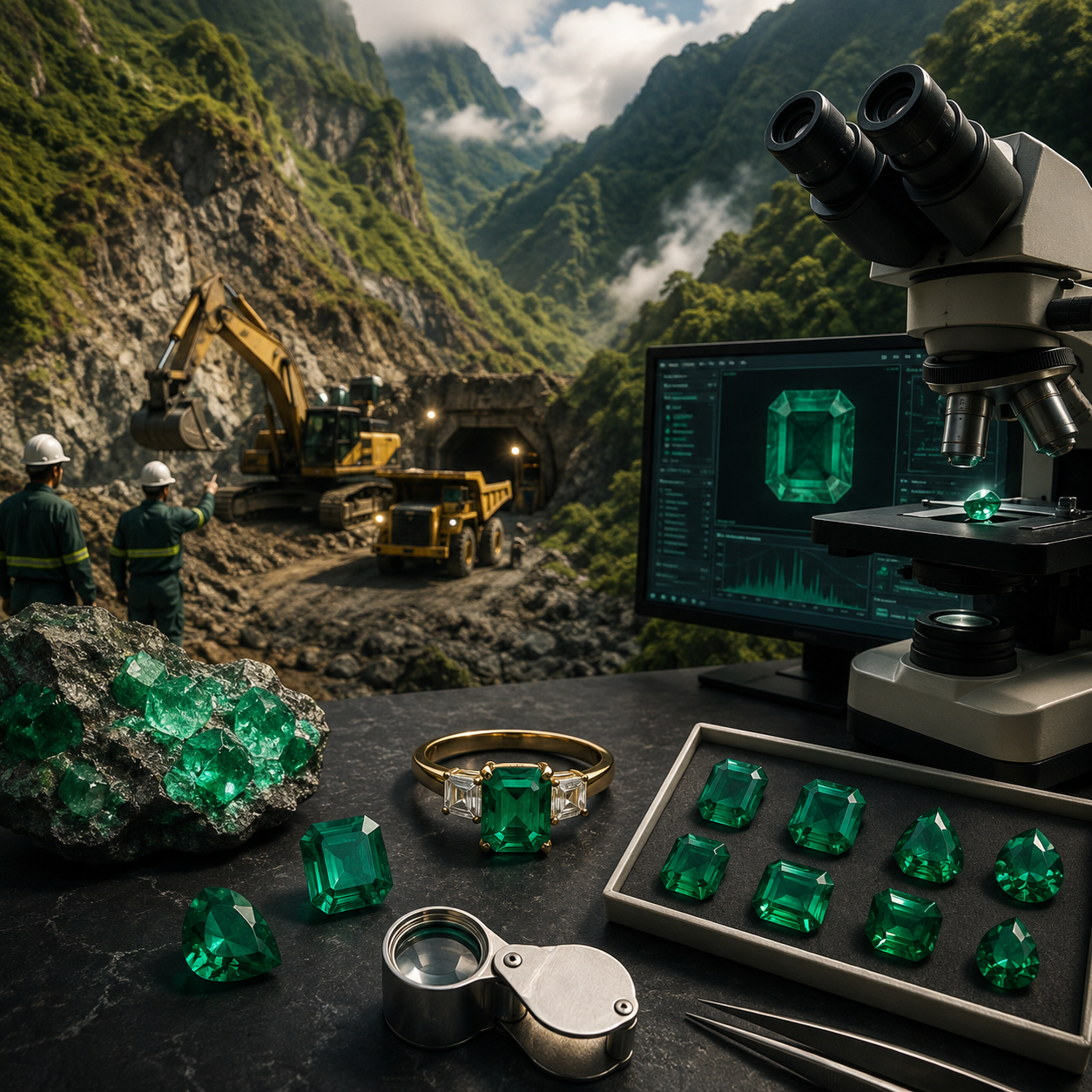
Today, thanks to a much more regulated mining sector, international certifications, and companies committed to transparency, buying a Colombian emerald is very different from what it was several decades ago.
In this article, you'll learn what the Green War was, why it happened, and how the Colombian emerald industry evolved into one of the world's most respected gemstone markets.
What Was the Green War?
The Green War was a series of violent conflicts that took place primarily between the 1960s and the early 1990s in the emerald-mining region of western Boyacá, Colombia.
The conflict centered on control of Colombia's emerald mines, home to some of the most valuable emeralds on Earth. Different business groups, influential families, and armed organizations fought for control over the mines and the trade of these precious gemstones.
The name "Green War" comes from the enormous economic value of Colombia's "green gold"—its emeralds.
Where Did the Green War Take Place?
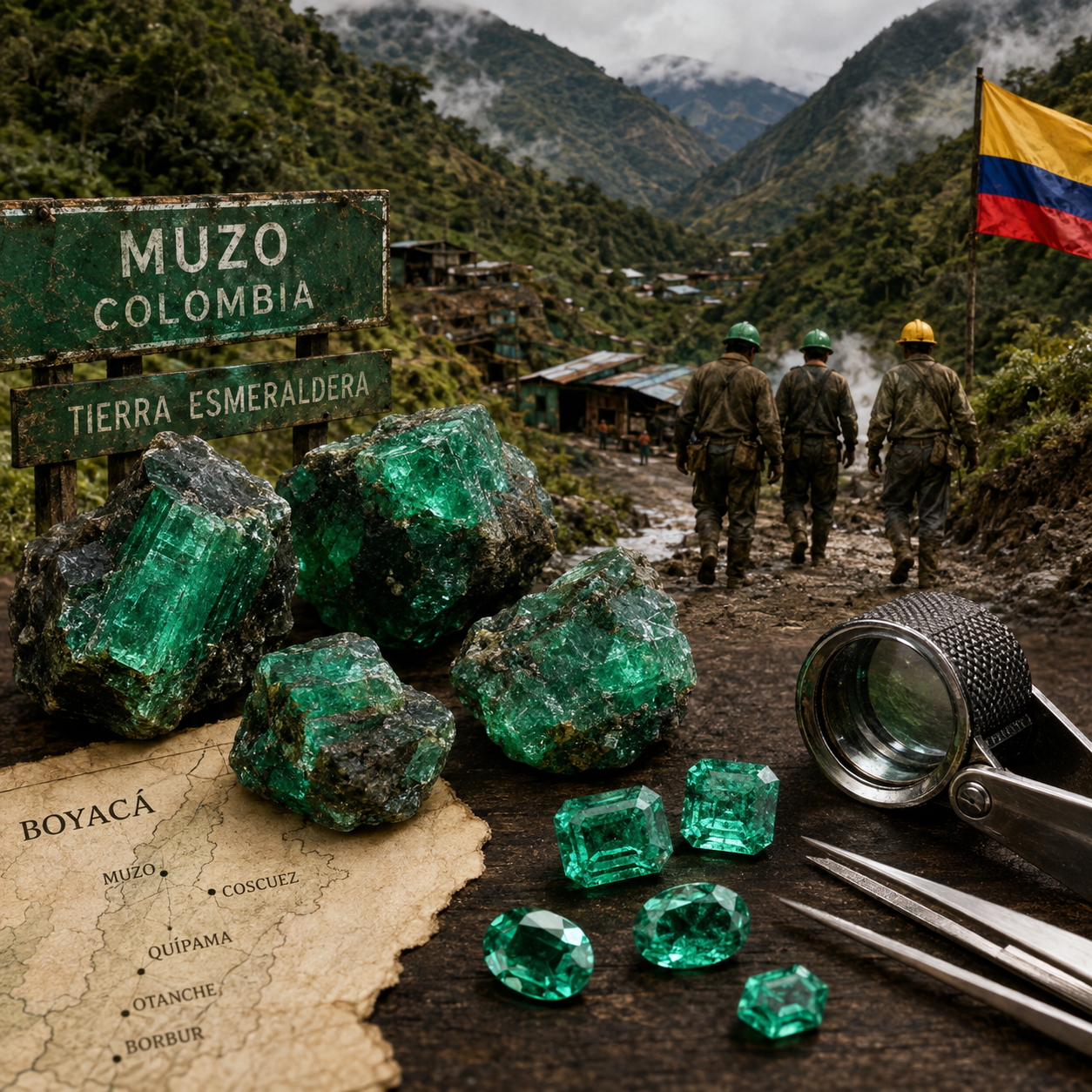
Most of the conflict occurred in historic emerald-mining towns, including:
- Muzo
- Coscuez
- Quípama
- Otanche
- Borbur
These regions are still famous today for producing some of the finest Colombian emeralds ever discovered.
Why Did the Green War Begin?
Several factors contributed to the conflict.
1. The Extraordinary Value of Colombian Emeralds
Colombian emeralds have always been highly sought after around the world. Their exceptional value made control of production and trade extremely desirable.
2. Disputes Over Mine Ownership
For many years, disagreements over mining rights led to ongoing conflicts between different groups seeking control of valuable emerald deposits.
3. Limited Government Presence
At the time, many mining regions had limited government oversight, allowing disputes to be settled through violence rather than legal institutions.
4. Economic Interests
The mines produced gemstones worth millions of dollars, making territorial control a highly contested objective.
The Consequences of the Green War
The conflict had profound consequences for Boyacá and for Colombia's emerald industry.
Among its effects were:
- Thousands of lives were lost.
- Many families were displaced.
- Local communities suffered through decades of violence.
- The international reputation of Colombia's emerald industry was significantly affected.
How Did the Green War End?
In the early 1990s, leaders within the emerald sector promoted peace agreements that greatly reduced the violence.
Over time, the Colombian government strengthened mining regulations, improved oversight of gemstone trading, and encouraged the formalization of the industry.
Although isolated conflicts related to illegal activities emerged in later years, they never reached the scale of the Green War.
How Has the Colombian Emerald Industry Changed?
Today's emerald industry is very different from what it was decades ago. Important advances include:
- Stronger mining regulations.
- Controlled export procedures.
- Gemological certifications.
- Greater gemstone traceability.
- Companies operating under international standards.
- Increased confidence among both domestic and international buyers.
What Can We Learn from the Green War?
History shows how a natural resource of extraordinary value can become both a source of prosperity and conflict when strong institutions and clear regulations are lacking.
The Green War also highlights the importance of promoting responsible mining, ensuring legal trade, encouraging transparency throughout the supply chain, and preserving the historical heritage of Colombia's mining regions.
Today, Colombian emeralds represent not only luxury and beauty but also the progress of an industry that has evolved toward more responsible and transparent practices.
Colombian Emeralds Remain One of Nature's Greatest Treasures
Despite this difficult chapter in history, Colombia continues to be the world's leading source of high-quality emeralds.
The mines of Muzo, Chivor, Coscuez, and other renowned regions continue to produce extraordinary gemstones admired by collectors, jewelers, and gemstone enthusiasts worldwide for their exceptional color, clarity, and origin.
Every Colombian emerald tells a geological story that began millions of years ago and forms part of Colombia's remarkable natural heritage.
Emerald By Love: Sharing the Story Behind Every Colombian Emerald
At Emerald By Love, we believe a Colombian emerald is worth far more than its beauty. It also represents history, culture, and the evolution of an industry that has learned from its past to build a future founded on transparency and trust.
That's why we are committed to sharing educational content about the fascinating world of Colombian emeralds—their origin, mining regions, geological formation, history, and the people who have helped make them a symbol of Colombia.
In addition to offering fine jewelry handcrafted in 18K gold with certified Colombian emeralds, we want every customer to understand the true value of the gemstone they wear. Knowing its story is one of the best ways to appreciate one of the world's greatest natural treasures.
Paula A. Bonilla
Social Communicator and Journalist
Universidad Sergio Arboleda, Colombia