Magical Colombian Emeralds
Colombian emeralds are admired not only for their green color. Some of them hide shapes, patterns, and optical effects that almost seem to be drawn inside the stone. This is the case with trapiche emeralds, the famous oil drop inclusions, patterns that resemble butterfly wings, and the fascinating cat’s-eye effect.
What makes these features especially interesting is that they are not artificially created. They form naturally while the emerald is deep within the earth. Its inclusions, internal structure, and the way light passes through the crystal can create these distinctive effects.
So, when you come across an emerald with one of these characteristics, you are not simply looking at a green gemstone. You are seeing a small glimpse of the geological history that took place for that emerald to exist. In this article, we explain a little more.
What Makes These Emeralds So Special?
Not all emeralds display these effects. Some are extremely rare and can attract significant interest among collectors and gemologists.
1. Trapiche Emerald
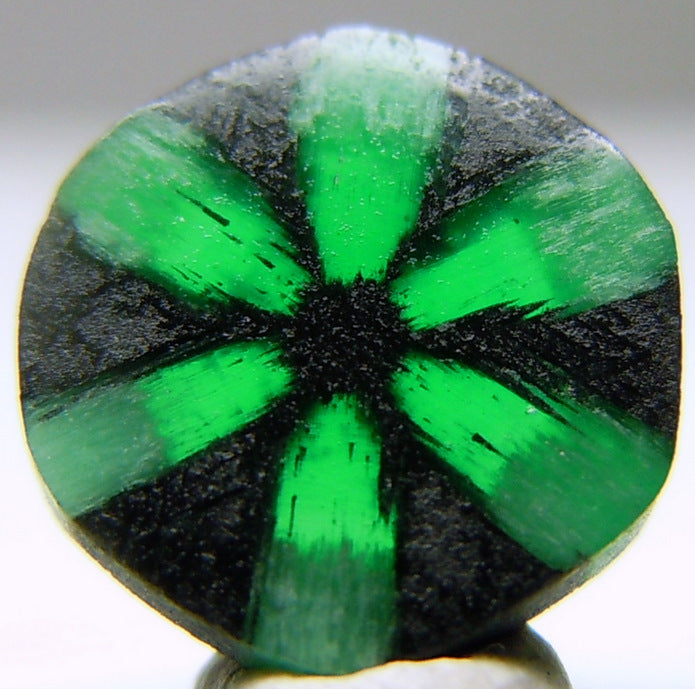
The trapiche emerald is one of Colombia’s most recognizable emerald varieties. Its main characteristic is a radial pattern that usually divides the stone into different sectors, creating a figure that resembles the spokes of a wheel.
The name “trapiche” is related to the traditional mills once used in Colombia to process sugar cane, because of the visual similarity between the gemstone’s pattern and the wheels of these mills.
A trapiche emerald may display green areas alternating with darker or lighter sections, forming a naturally occurring geometric structure.
Its appearance is not the result of a design created by the cutter. The pattern forms naturally as the crystal grows.
2. The Famous “Oil Drop” Effect
The oil drop effect is an optical phenomenon mainly associated with certain Colombian emeralds. When the stone is properly oriented and viewed under suitable lighting, a silky or slightly undulating area may appear, resembling a drop of oil inside the gemstone.
This effect is related to specific internal characteristics of the emerald and the way light travels through the material.
It is important not to confuse the term “oil drop” with the oil traditionally used to treat some emeralds. They are two different concepts: one describes a visual phenomenon in the gemstone, while the other refers to a clarity treatment.
3. Butterfly Wings
The term “butterfly wings” is used to describe certain inclusion patterns that, when viewed inside an emerald, can resemble the open wings of a butterfly.
These internal structures can create symmetrical or branching shapes that become especially interesting when viewed under magnification.
As with other internal patterns, the “wings” are not a design added to the stone. They are part of its natural structure and can provide information about the conditions under which the crystal formed.
4. Cat’s-Eye Emerald
Cat’s-eye is an optical phenomenon known as chatoyancy. It occurs when certain internal inclusions, generally arranged in a parallel pattern, reflect light and create a bright line across the surface of the gemstone.
As the stone is moved or the direction of the light changes, this line can shift, creating the characteristic cat’s-eye effect.
In emeralds, this phenomenon is uncommon, so a Colombian emerald displaying well-defined chatoyancy can be particularly interesting from a gemological perspective.
Are These Emeralds More Valuable?
There is no rule stating that an emerald displaying one of these phenomena will automatically have a higher value.
The value of an emerald depends on multiple factors, including color, transparency, clarity, cut, size, origin, treatments, and the individual characteristics of the stone.
In specimens with rare optical phenomena, collector interest and the rarity of the effect may also influence value.
For this reason, two Colombian emeralds with similar visual characteristics can have very different values.
How Can You Tell If an Emerald Has One of These Phenomena?
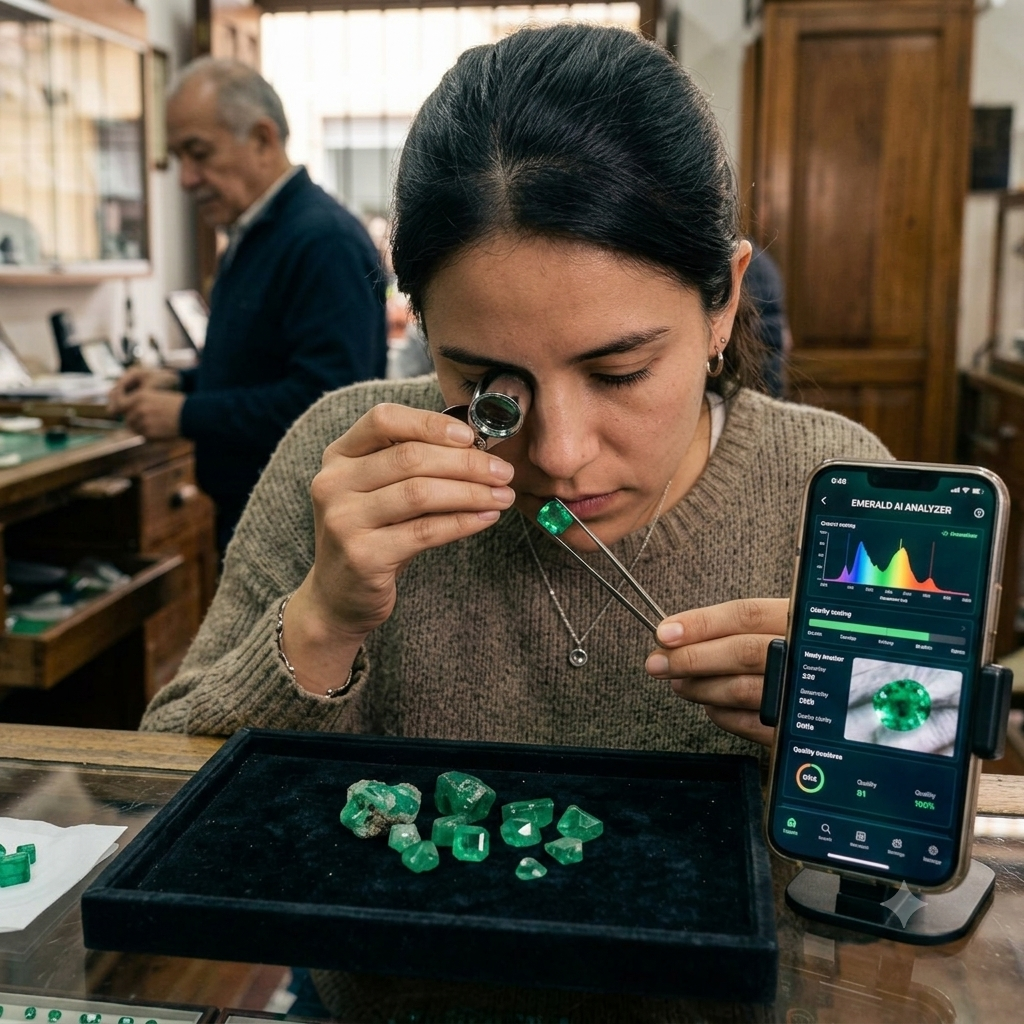
Observation should be carried out under appropriate conditions. A jeweler’s loupe or microscope can reveal internal structures that are not visible to the naked eye.
It is also important to distinguish between a natural phenomenon, an inclusion, and an effect created by the cut or lighting.
For particularly valuable stones, a gemological report can help document the gemstone’s characteristics, nature, and, when applicable, its treatments.
Emerald By Love: Nature’s Own Creations
Emeralds with patterns such as trapiche, structures resembling butterfly wings, or oil drop effects show something fascinating: every crystal can tell a different story about its formation deep beneath the earth.
In Colombia, where emeralds have formed under particular geological conditions, these characteristics contribute to the remarkable diversity found among natural emeralds.
For a collector, understanding these phenomena allows you to look at an emerald in a different way—not only for its green color, but also for what is happening inside the crystal.
Paula Bonilla
Social Communicator and Journalist, Sergio Arboleda University, Colombia