How to Tell if an Emerald Is Natural or Synthetic
If you're thinking about buying an emerald piece of jewelry, or you already have one and started wondering, it’s completely normal to ask yourself: how can you tell if an emerald is natural or synthetic? Believe me, it’s one of the most common questions people have when they begin to take an interest in these incredible gemstones.
Nowadays, there are lab-created emeralds that can look almost identical to natural ones at first glance. But don’t worry — here I’ll explain everything you need to know so you can feel confident about what you’re buying.
Colombian Emeralds: The Most Desired in the World
When we talk about natural emeralds, we inevitably have to talk about Colombian emeralds. They are considered the finest in the world because of their intense green color, brilliance, and that depth that seems to have a life of its own.
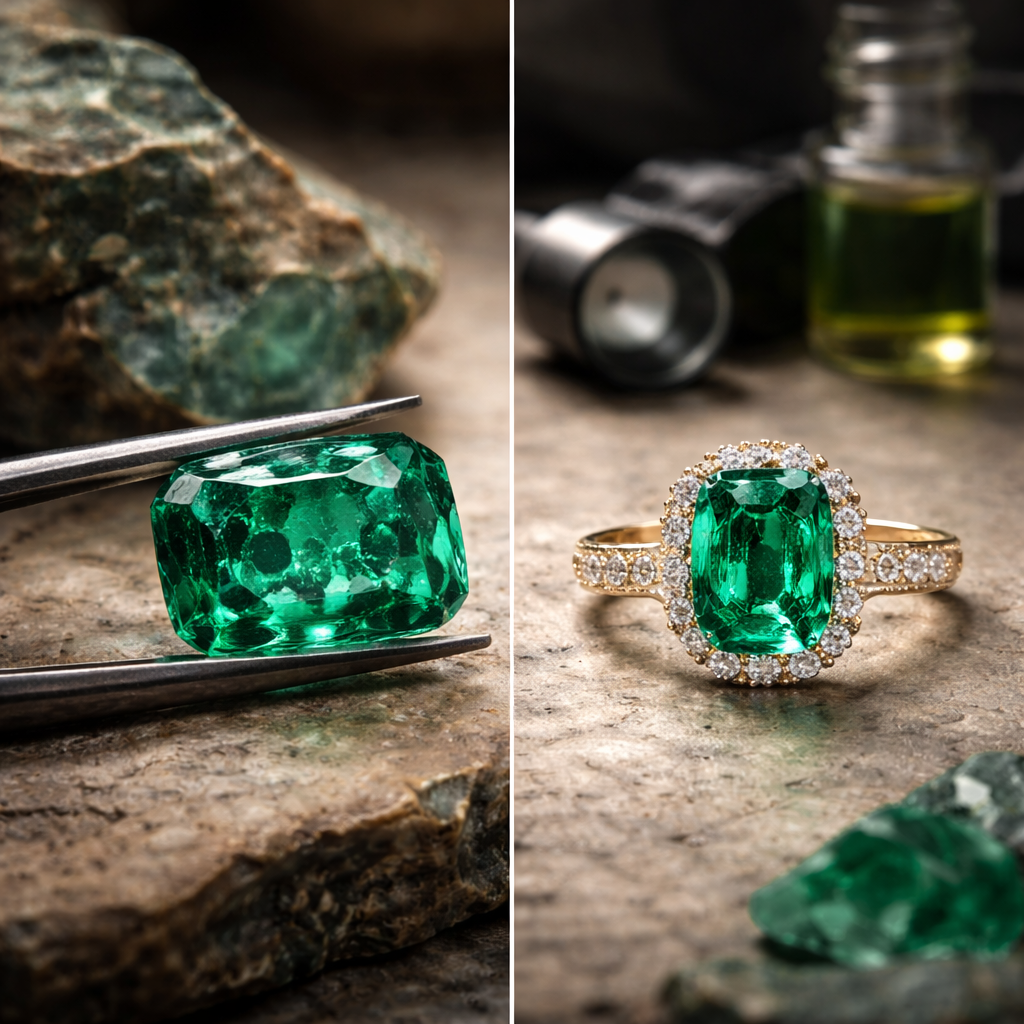
Colombia produces emeralds that were formed millions of years ago under unique geological conditions. That natural origin is what gives them their character, their inclusions, and their authenticity. It’s not just a green stone — it’s history, pure nature, and exclusivity.
What Is a Natural Emerald?
A natural emerald is a gemstone that formed in the earth over millions of years. It was not created by humans. It develops when minerals such as beryllium, chromium, and vanadium combine under specific pressure and temperature conditions.
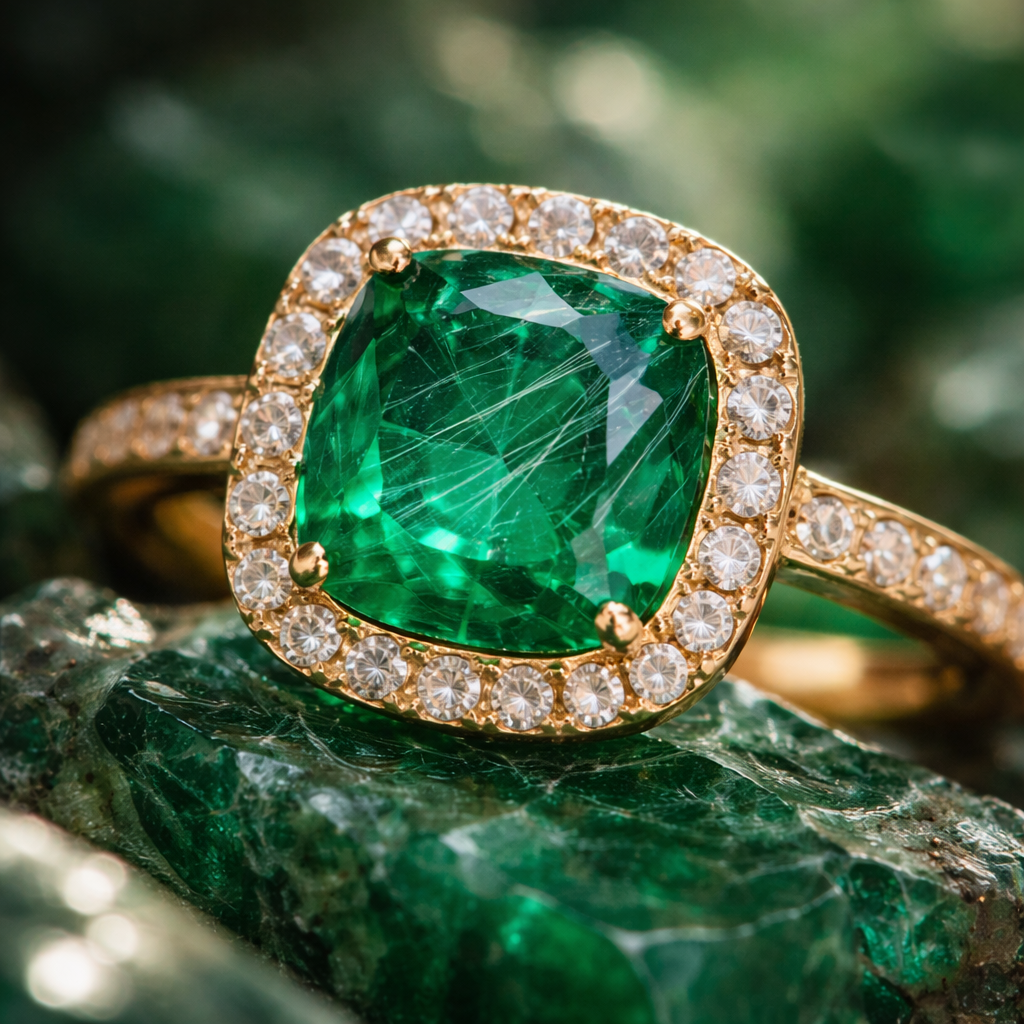
Most importantly: natural emeralds almost always have inclusions. Those small internal “marks” are not serious flaws — they are signs of authenticity. In gemology, they are even known as the emerald’s “garden.”
What Is a Synthetic Emerald?
A synthetic emerald is a gemstone created in a laboratory that has the same chemical composition as a natural emerald, but it was not formed in the earth. It is produced in months, not millions of years.
Visually, it can look very similar. The color can be intense, and it often has fewer inclusions, which makes some people think it is “more perfect.” However, that perfection can also be a sign that it is not natural.
Tips to Identify a Natural Emerald
Here are 5 signs that can help you recognize a natural emerald:
-
It has internal inclusions: small fractures, clouds, or internal lines are normal.
-
It is not perfectly clean: an emerald that looks too perfect may raise suspicion.
-
Depth of color: natural green usually has subtle variations and undertones.
-
Gemological certificate: always request a certificate of authenticity from a recognized laboratory.
-
Reasonable pricing: high-quality natural emeralds are not extremely cheap.
Tips to Identify a Synthetic Emerald
Now, here are 5 common signs of a synthetic emerald:
-
Excessive internal perfection: almost no visible inclusions.
-
Curved inclusions or repetitive patterns (common in lab-grown stones).
-
Very uniform and artificially intense color.
-
A price that is too low for its size and clarity.
-
Lack of certification or clear information about its origin.
Important: For 100% certainty, it’s always best to consult a professional gemologist.
Which Is Better: Natural or Synthetic?
It depends on what you are looking for. If you want an affordable stone that is visually attractive and you don’t mind that it was created in a laboratory, a synthetic emerald can be an option.
But if you are looking for investment, exclusivity, history, long-term value, and a connection to nature, the answer is clear: a natural emerald will always be superior. Not only because of its origin, but also because of its market value and meaning.
Emerald By Love: The Best of Natural Emeralds
If you are looking for authentic natural Colombian emeralds, at Emerald By Love we work exclusively with carefully selected and certified stones. Each piece of jewelry is designed to highlight the true beauty of the emerald, without filters or artificial enhancements.
We don’t just sell jewelry — we share pieces with history, formed by nature and transformed into luxury. Because when you choose a natural Colombian emerald, you choose something unique, irreplaceable, and eternal.
If you would like to learn more about how to identify a natural emerald or choose the perfect one for you, we are here to help.
Paula A. Bonilla
Social communicator and journalist from Sergio Arboleda University in Colombia. Passionate about continuously learning about precious gemstones and fine national jewelry. Currently working for one of the most important jewelry houses in Bogotá, Emerald By Love. The brand has over 40 years of experience in emeralds and two physical stores located in downtown Bogotá, Colombia.