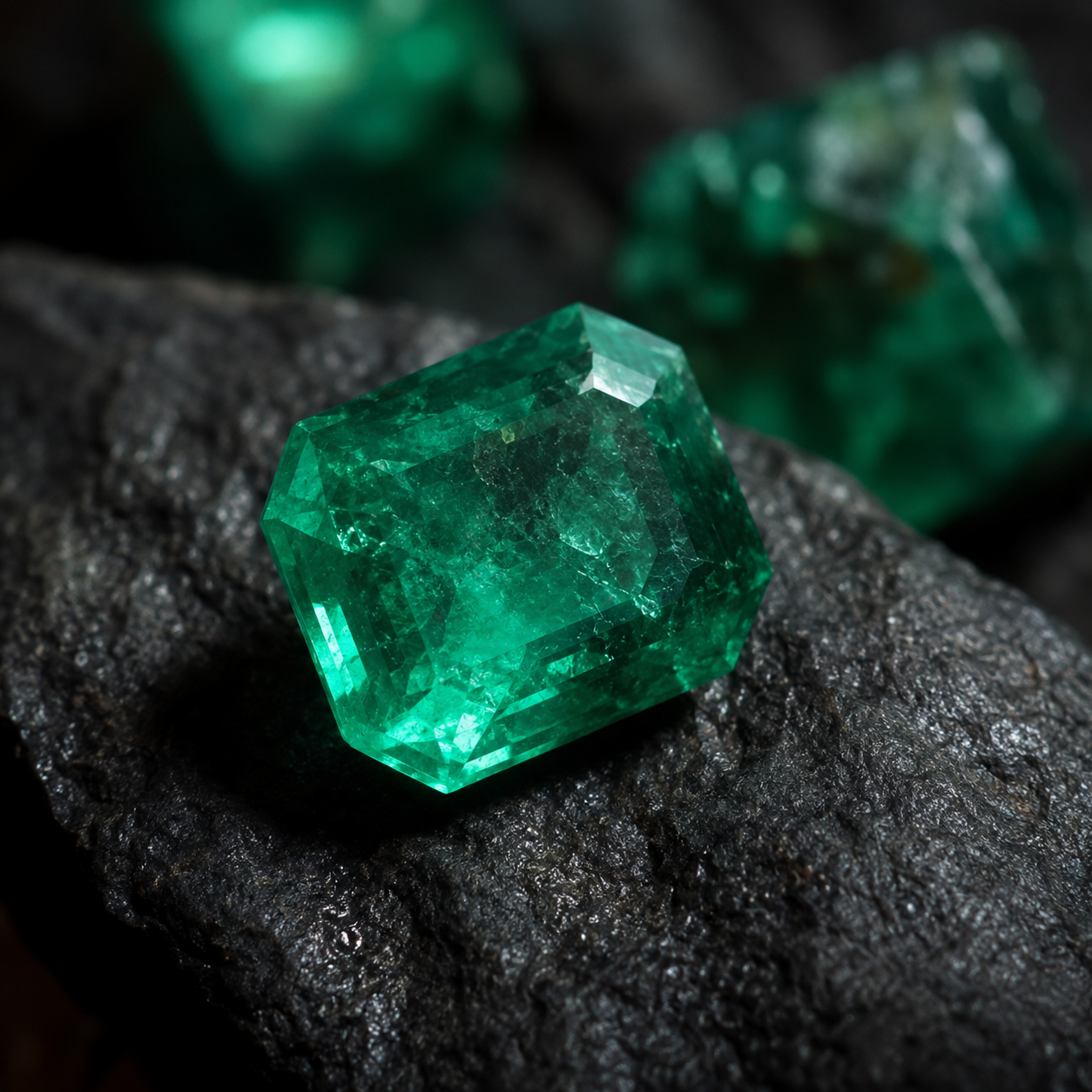
Difference Between Natural, Synthetic, and Treated Colombian Emeralds
When buying Colombian emeralds, one of the most common topics is gemstone treatments and enhancements. Today, there is a great deal of confusion about what it means for an emerald to be natural, treated, or synthetic.
But don't worry. In this article, we will help answer those questions, explain why Colombian emeralds are so highly valued, show you how to distinguish between different types of emeralds, and help you choose the right option based on your budget.
Colombian Emeralds: The Finest in Their Natural State
Colombian emeralds are considered the finest in the world thanks to their extraordinary color, brilliance, and the geological richness of Colombia’s emerald deposits. For centuries, mines such as Muzo, Chivor, and Coscuez have produced exceptional gemstones that have become favorites among prestigious jewelry houses and international museums.
What makes Colombian emeralds unique is their vivid, pure green color, often displaying fewer bluish or yellowish tones than emeralds from other regions. In addition, each stone contains natural inclusions known as “gardens,” small traces of its geological formation that serve as proof of authenticity and natural origin.
What Are Natural Colombian Emeralds?
A natural Colombian emerald is a gemstone that formed naturally within the Earth over millions of years. Its green color is primarily caused by the presence of chromium and vanadium within the crystal structure of beryl, the mineral family to which emeralds belong.
Main Characteristics of Natural Colombian Emeralds
- Intense and vibrant green color.
- Natural inclusions or “gardens.”
- Every stone is unique and one of a kind.
- High value in the international market.
- May be found with or without clarity-enhancement treatments.
- Considered one of the most exclusive gemstones in the world.
Treated Colombian Emeralds: Oil, Perma, and Other Enhancements
Because emeralds form under complex geological conditions, it is normal for them to contain small internal fractures. To improve their appearance, transparency, and brilliance, some emeralds receive specialized enhancement treatments such as the following:
Oiled Emeralds
The most traditional and internationally accepted treatment is oiling. This process involves introducing transparent oils, usually cedarwood oil, into the gemstone’s microscopic fractures to make them less visible. The treatment improves the emerald’s appearance without altering its natural nature.
More than 99% of emeralds sold worldwide receive some degree of clarity enhancement through oils or similar fillers.
Oil Enhancement Classification
F1 (Minor)
- Very small amount of oil.
- Highly valued in the market.
- Very natural appearance.
F2 (Moderate)
- Greater amount of oil.
- Improved visual appearance.
- More affordable price.
F3 (Significant)
- Large amount of oil.
- Lower market value compared to F1 and F2 stones.
Perma Treatment
Perma treatment uses special resins or polymers to fill fractures within the emerald. Unlike oil, it offers greater durability because it does not evaporate easily over time. However, it is generally less appreciated by collectors and high-end buyers because it represents a more significant intervention in the gemstone’s appearance.
Is a Treated Emerald Still Natural?
Yes. A treated emerald is still a natural emerald mined from the Earth. The treatment only enhances its visual clarity and does not change its origin or mineral composition. The most important factor is that the treatment is fully disclosed to the buyer.
Synthetic and Lab-Grown Emeralds: What Is the Difference?
Many people use these terms interchangeably, but it is important to understand the distinction.
Lab-Grown Emeralds
Lab-grown emeralds are gemstones created by humans in controlled environments that replicate the natural conditions under which emeralds form. They possess virtually the same chemical composition, hardness, and physical properties as natural emeralds, but their origin is artificial.
Synthetic Emeralds
In gemology, a synthetic emerald is an emerald produced in a laboratory through processes such as hydrothermal growth or flux growth. It has the same chemical composition as a natural emerald but was not formed by nature.
What About Imitation Emeralds?
Imitations are not real emeralds. They may be made from glass, dyed quartz, synthetic spinel, or other green materials designed to resemble an emerald. Their chemical composition is completely different, and their value is significantly lower.
Emerald By Love: Quality Colombian Emeralds
Emerald By Love specializes in authentic Colombian emerald jewelry, carefully selected directly in Colombia under strict quality standards. Each piece is designed to highlight the natural beauty of the gemstone while providing complete transparency regarding its characteristics, origin, and treatments.
The brand works with carefully selected Colombian emeralds and accompanies its jewelry with detailed gemstone information, allowing every client to know exactly what they are purchasing. For those seeking an authentic, elegant jewel that reflects the richness of one of the world’s most admired gemstones, Emerald By Love is an excellent choice for discovering the true beauty of Colombian emeralds.
Paula A. Bonilla
Social Communicator and Journalist from the Sergio Arboleda University in Colombia.