Article: Cutting a Colombian Emerald: Giving Up Part of Its Weight
Cutting a Colombian Emerald: Giving Up Part of Its Weight
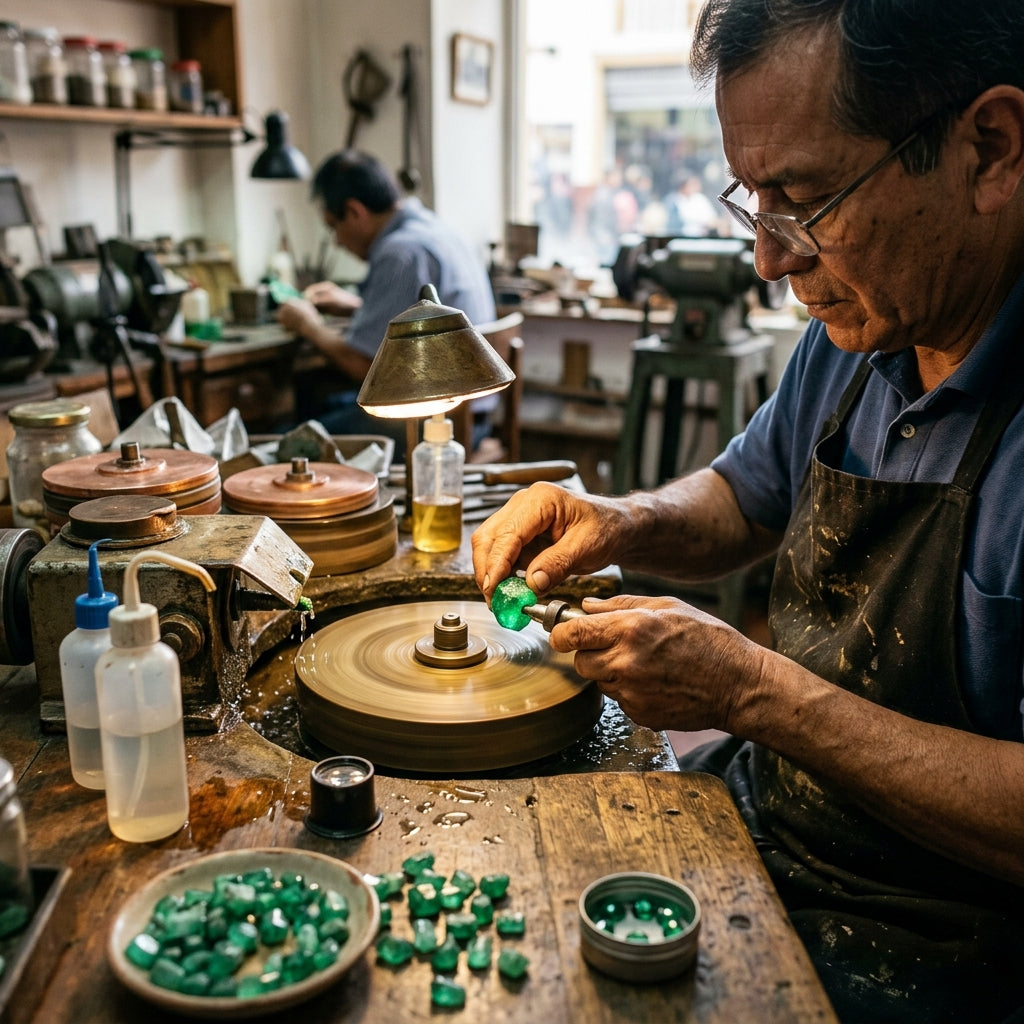
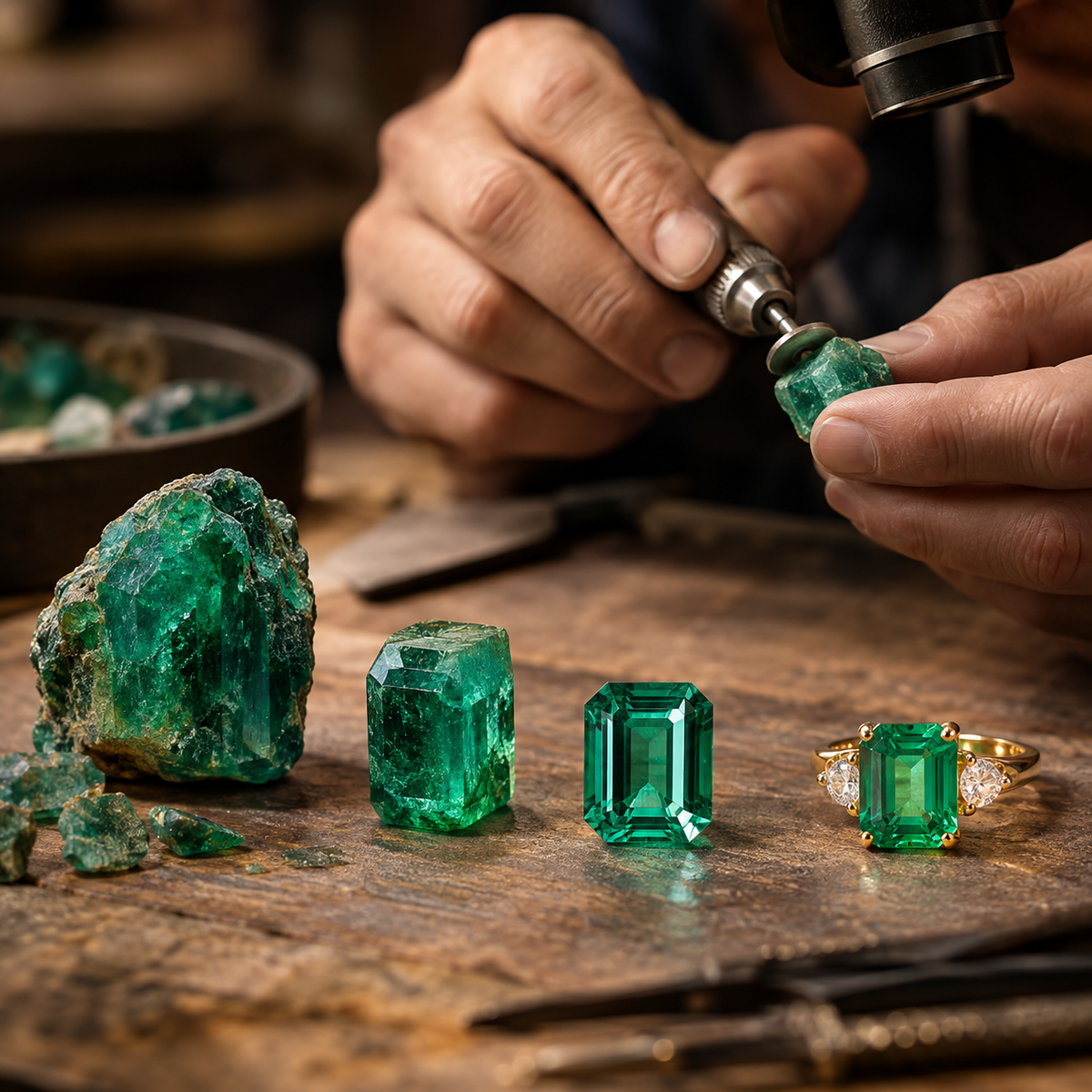
When a Colombian emerald comes out of the mine, it is still a long way from becoming a piece of jewelry. Before it can become a ring, necklace, or pair of earrings, it often needs to pass through the hands of a gem cutter, whose job is to shape the stone and bring out the characteristics that make each gem special.
However, there is something few people know: achieving a well-cut emerald sometimes means giving up part of its original weight.
Although this may seem like a difficult decision, especially when dealing with a large or valuable stone, this process is essential to making the most of the gem's qualities and achieving a worthwhile result.
But why does an emerald lose part of its weight during cutting? Is it possible to preserve all of its original weight? And how does a gem cutter decide how much material to remove? Let's find out.
Why Must Part of an Emerald Be Removed During Cutting?
Natural Colombian emeralds form through geological processes that can produce crystals with different shapes, sizes, colors, inclusions, and fractures. For this reason, when a gem is extracted from the mine, it does not always have the ideal shape to be transformed directly into a cut gemstone.
The gem cutter's job is to examine the rough crystal and determine how to transform it into a gemstone with a defined shape, good proportions, and an attractive appearance.
To achieve this, certain parts of the stone may need to be removed. This can happen, for example, when there are areas with fractures that could compromise the gem's stability, surface irregularities, or sections that make it difficult to achieve the desired design.
In other cases, material is removed to improve the way light travels through the emerald, correct its proportions, or achieve a specific shape, such as an emerald cut, oval, round, or pear-shaped gemstone.
Carat Weight: Why Does It Matter So Much?
In the world of gemstones, weight is measured in carats. One carat equals 0.2 grams, meaning that five carats equal one gram.
This measurement is important because an emerald's weight can influence its price. However, it is not the only factor that determines its value.
Other characteristics are also considered, including color, transparency, inclusions, cutting quality, treatments, and the gem's origin when it can be reliably established.
For example, a Colombian emerald with a higher carat weight will not necessarily have a higher price than a smaller one. If the smaller stone has a more attractive color, a better overall appearance, and a higher-quality cut, it could be worth more.
For this reason, preserving every fraction of a carat is not always the best decision. A heavier stone may lose some of its appeal if it has unfavorable proportions, significant fractures, or an appearance that does not allow its color to be appreciated properly.
How Much Weight Can an Emerald Lose During Cutting?
There is no single weight-loss percentage that applies to all Colombian emeralds. The amount of material removed depends on the crystal's original shape, size, internal characteristics, surface condition, and the type of cut the gem cutter aims to achieve.
Some rough crystals have a shape that allows a considerable portion of the material to be preserved. Others have irregularities, fractures, or areas that must be removed to obtain a stable and visually appealing gemstone.
It is also important to remember that cutting involves more than simply giving the stone an external shape. The gem cutter must also create its facets, adjust its proportions, and aim for an appropriate distribution of light.
All of this can result in a considerable reduction in the stone's original weight. Imagine a rough emerald weighing 10 carats. After examining its characteristics, the gem cutter determines that a properly cut gemstone weighing 3 carats can be obtained. In this hypothetical example, 30% of the original weight would be preserved.
This does not mean that all emeralds lose the same percentage of their weight. Every crystal is different and requires an individual assessment before the cutting process begins.
The Gem Cutter Must Balance Weight, Color, and Beauty
One of the most important decisions during the cutting process is finding the right balance between preserving weight and achieving an attractive appearance.
If the gem cutter tries to retain too much material, the result may be a stone with unfavorable proportions. On the other hand, removing more material than necessary can also mean losing weight and potential value that could have been preserved.
For this reason, several aspects of the emerald must be evaluated before cutting begins:
-
The shape of the rough crystal: Determines which cuts can make the best use of the available material.
-
Color: The gemstone's orientation and proportions can influence how we perceive its color.
-
Inclusions and fractures: Help identify areas that require special care and, in some cases, sections that may be better removed.
-
Transparency: Internal characteristics can affect the stone's appearance and influence cutting decisions.
-
The final design: A rectangular emerald requires a different distribution of material than an oval or round gemstone.
This evaluation requires experience, gemological knowledge, and technical skill. A poor decision can affect both the yield of the rough material and the gemstone's final appearance.
Why Is Cutting So Important for Colombian Emeralds?
Colombia is internationally recognized for its natural emeralds, and every crystal extracted from its mines has its own characteristics. Two stones of similar size may require very different cutting approaches.
The gem cutter's work is especially important because it involves interpreting these characteristics and making decisions that can influence the gemstone's appearance, durability, and material yield.
A good cut cannot change an emerald's origin or, on its own, guarantee superior quality. However, it can help showcase the stone's natural qualities and produce a gemstone with suitable proportions for use in jewelry.
That is why there is much more behind a cut emerald than tools and precision. There is also experience, patience, and an understanding of each crystal's unique characteristics.
From Rough Emerald to a Piece of Jewelry
When we look at a finished Colombian emerald, it is easy to focus on its color, brilliance, and shape. However, we rarely think about the material that had to be removed to achieve that result.
Every decision made during cutting influences the transformation of the stone and the way its characteristics will be appreciated once the process is complete.
At Emerald By Love, we value every step behind a natural Colombian emerald, from its origin to its transformation into a piece of jewelry. Understanding the gem cutter's work helps us appreciate why every stone is different and why its value depends on much more than its weight.
Paula Bonilla
Social Communicator and Journalist, Sergio Arboleda University, Colombia